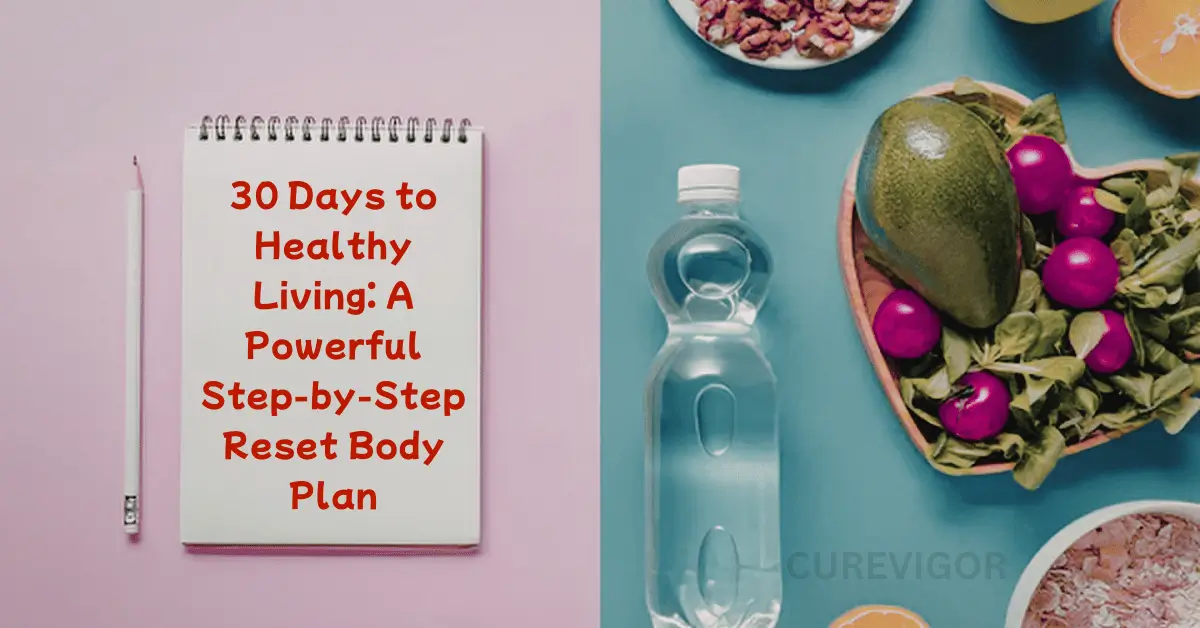
Reset body naturally with our ultimate 30-day guide. Simple steps to cut sugar, add whole foods, move daily, and reduce stress. No gym membership or special products required.
How to Reset Body in One Month
The truth, however, is that genuine, lasting change doesn’t happen in an instant. It happens through a deliberate and kind process of resetting your body.
A 30-day journey toward healthy living is not about punishment or severe restriction.
It is about giving your system a chance to step off the hamster wheel of poor habits and remember what it feels like to be truly well.
This guide is designed to walk you through that month, week by week, with a focus on building a foundation that supports you long after the thirty days are over.
This is not a diet; it is a personal experiment in feeling better, and the results can be truly life-changing.
| Quick Overview | |
| Focus | General wellness through lifestyle changes |
| Products Needed | None |
| Cost | Free |
| Dietary Changes | Reduce sugar, eat more whole foods and greens |
| Exercise | Daily walking and enjoyable movement |
| Key Habits | Sleep, stress management, hydration, and meal prep |
| Best For | Anyone wanting a natural, self-guided health reset |
| Time Commitment | 30 days, with habits designed to last |
Days 1–10: The Kickstart Phase
The first ten days of your reset are the most critical. This is the period when you are likely to face the strongest cravings and the biggest mental hurdles.
Your body is used to operating on a certain fuel, and when you start to change that fuel, it will protest.
Think of this phase as clearing out the clutter in a messy room. You have to take everything out, sort through it, and wipe down the surfaces before you can organize it beautifully.
This initial stage is about creating space for the good stuff to come in. It requires a bit of grit and a lot of self-compassion.
Be gentle with yourself if you feel tired or irritable. These feelings are simply signs that a change is happening. Focus on the big wins during this time, and do not worry about being perfect.
Hydration and Detox

Why cutting sugar is the first step to resetting your body.
When we talk about resetting your body, we must start with the one ingredient that has the most powerful and pervasive hold on our modern diets: sugar.
It hides in bread, sauces, salad dressings, and, of course, in obvious treats like soda and candy.
Cutting sugar is not just about losing weight; it is about calming the constant inflammation in your body and giving your taste buds a chance to heal.
I remember the first time I tried to cut out added sugar; the first three days felt incredibly difficult. I had headaches and felt tired by mid-afternoon.
But after that initial hump, something shifted. Food started to taste different. Strawberries tasted sweeter, and carrots had a new depth of flavor. This is your body’s detox process at work.
Alongside cutting sugar, water becomes your best friend. Often, when we think we are hungry, we are actually just thirsty.
By committing to drinking half your body weight in ounces of water each day, you are actively helping your kidneys and liver flush out toxins. Carry a large, reusable water bottle with you wherever you go.
Add a slice of lemon or a few sprigs of mint to make it feel like a treat. This combination of removing the sugar and flooding your system with pure hydration is the single most effective way to kickstart your entire 30-day reset.
It wakes up your cells and prepares them to receive the nourishment they truly need.
Movement and Momentum

Finding an exercise groove that fits a healthy, active living style
The word “exercise” often brings to mind images of crowded gyms and complicated weight machines, which can feel overwhelming when you are just starting your journey to healthy, active living.
For the first ten days, I encourage you to throw that idea out the window. Instead of forcing yourself into a rigid workout plan, focus on finding movement that feels good. The goal here is momentum, not intensity.
Think about what you enjoyed as a child. Did you love riding your bike? Did you enjoy dancing in your room? Reconnect with that simple joy of moving your body without judgment.
Start with a daily commitment to a brisk 20-minute walk. Listen to a podcast or just the sounds of your neighborhood. Notice how your breathing deepens and your mind clears.
This simple act builds the neural pathway that says, “I am someone who moves.” From there, you can experiment.
Try a beginner yoga video online, stretch for ten minutes when you wake up, or park farther away from the grocery store.
The key is to build momentum by proving to yourself that you can show up consistently.
When movement is not a punishment but a celebration of what your body can do, it stops being a chore and becomes a vital part of your healthy, active living style.
This foundation of consistency is far more valuable than one intense workout that leaves you sore and unwilling to move for the rest of the week.
The Whole Food Foundation
Incorporating more greens for a healthy living diet
As you cut out the processed foods and added sugars, you must fill that void with something satisfying and alive: whole foods. This is where you lay the foundation for a healthy diet.
The goal is to eat food that looks as close to its natural state as possible. An apple, not applesauce.

A baked potato, not potato chips. Chicken breast you cook yourself, not chicken nuggets.
This shift is profound because whole foods are packed with the fiber, vitamins, and minerals that your body has been craving.
Fiber, in particular, is essential during this reset because it helps stabilize blood sugar and keeps you feeling full and energized.
Now, let’s talk specifically about greens. Leafy greens like spinach, kale, and arugula are nutritional powerhouses. They are low in calories but incredibly high in nutrients that support every system in your body.
If you are not used to eating them, start by adding a handful of spinach to your morning smoothie. You won’t even taste it, but you will get the benefits. Add a simple side salad to your lunch and dinner.
The goal is not to become a raw-food enthusiast overnight, but to consciously add these elements to your plate and infuse it with life and color.
This focus on whole foods and greens is what lays the groundwork for sustainable energy and a deep sense of well-being that no processed food can provide.
Days 11–20: Building Sustainable Habits
Congratulations, you have made it through the hardest part. By day 11, the initial sugar cravings have likely subsided, and you are probably sleeping a little better and feeling a bit clearer.
Now is the time to build on that momentum by layering in habits that will make this new way of living sustainable.
This phase is less about drastic change and more about refinement and integration. You are moving from simply surviving the reset to actually thriving within it.
Think of these ten days as the construction phase, where you build the sturdy walls and a reliable roof for your new, healthy home.
The Power of Rest
Prioritizing sleep as a pillar of mindful well-being
In our culture, we often brag about how little sleep we can get by on, treating it as a badge of honor. But when you are on a journey to reset your body, you must flip that mindset completely.
Sleep is not optional; it is a pillar of mindful wellbeing. During deep sleep, your body repairs muscles, consolidates memories, and regulates hormones that control hunger and stress.
If you are not sleeping enough, you are essentially undoing all the good work you are doing during the day with your food and movement.
I have personally found that when I am sleep-deprived, my willpower plummets, and I reach for quick energy in the form of caffeine and sugar.
To prioritize rest, you have to create a routine around it. Start by setting a consistent bedtime and wake-up time, even on weekends.
An hour before bed, put your phone away. The blue light from screens tricks your brain into thinking it is still daytime. Instead, read a book, take a warm bath, or do some light stretching.
Create a sanctuary in your bedroom that is cool, dark, and quiet. Viewing sleep as a non-negotiable part of your health, rather than lost time, transforms your entire approach to wellness.
It is in these quiet hours that your body truly heals and resets, preparing you for another day of mindful choices.
Stress Management
Using meditation and yoga to sustain your holistic lifestyle program
Even with perfect nutrition and regular exercise, chronic stress can sabotage your 30-day reset.
Stress raises cortisol levels, which can lead to increased belly fat storage and intense cravings for comfort food.
To build a truly holistic lifestyle program, you must address what is going on in your mind, not just your body. This is where practices like meditation and yoga become invaluable.
They are not just trendy activities; they are ancient, proven tools for calming the nervous system and bringing you into the present moment.
When you are present, you are less likely to eat mindlessly in front of the TV or snap at a loved one because you are feeling overwhelmed.
You do not need to sit on a cushion for an hour to meditate. Start with just five minutes a day. Use an app, or simply sit quietly and focus on the sensation of your breath moving in and out of your body.
When your mind wanders, gently bring it back. This simple practice builds your “mental muscle.” Similarly, yoga combines movement with breath, offering a double benefit.
It stretches out the tight muscles caused by stress and forces you to focus on your body, pulling your mind away from its endless to-do list.
By integrating these practices, you are not just managing stress; you are building resilience. You are creating a calm inner environment where your healthy habits can take root and flourish.
Strategic Meal Prep
How a nutrition plan for healthy living saves time and calories
One of the biggest obstacles to maintaining a healthy living diet is the dreaded 6 p.m. question: “What’s for dinner?”
When you are tired and hungry, the path of least resistance often leads to takeout or a processed boxed meal.
This is why strategic meal prep is the secret weapon of those who successfully maintain their health goals. It is the bridge between having good intentions and actually following through.
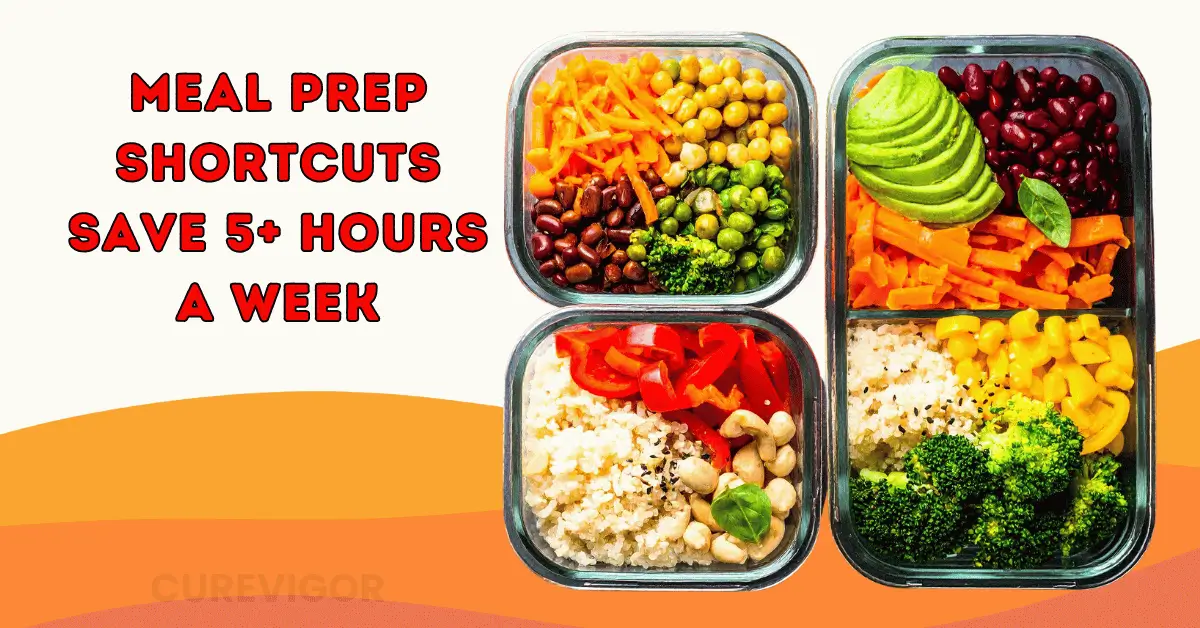
Meal prep does not have to mean spending your entire Sunday cooking complicated meals. It simply means doing a little bit of work in advance to set yourself up for success during the busy week.
Start by choosing two or three simple dinners to make for the week. On your prep day, wash and chop all your vegetables. Cook a big batch of quinoa or brown rice.
Marinate your chicken or fish. When everything is ready to go, throwing together a healthy meal on a Tuesday night takes fifteen minutes instead of an hour. This strategy is a powerful form of self-care.
It ensures that you have control over your ingredients. saving you hundreds of unnecessary calories from added oils, sugars, and sauces found in restaurant food.
By investing a small amount of time upfront, you guarantee that your nutrition plan for healthy living is easy to follow, which is key to making it last.
Days 21–30: Consistency and Maintenance
You are in the final stretch. By now, the new choices you have been making are starting to feel less like effort and more like your new normal.
The last ten days of this reset are about solidifying your gains and looking toward the future.
This phase is about moving from a 30-day “program” to a lifelong lifestyle. The practices you have built are now ready to become a permanent part of who you are.
This is an empowering time, as you get to reflect on how far you have come and consciously decide how you want to live your life going forward.
Long-Term Discipline
Tips for leading a healthy lifestyle after the 30 days are up
As the 30 days come to a close, a common fear arises: “What happens on day 31?” It is easy to fall back into old patterns if you do not have a plan.
Leading a healthy lifestyle long-term is not about perfection; it is about having the long-term discipline to make good choices most of the time while still allowing for flexibility.
The goal is not to be a prisoner to your diet but to have a healthy relationship with food where you are in control. One helpful tip is to adopt the 80/20 rule. Aim to stick to your whole foods and healthy habits 80 percent of the time.
For the other 20 percent, allow yourself to enjoy a slice of birthday cake or a nice meal out without guilt.
Another key to long-term success is to keep challenging yourself. Boredom can be a major threat to consistency. Once you feel comfortable with your walking routine, try a new fitness class.
If you have mastered one healthy recipe, try another. Keep learning about nutrition and wellness. The more you understand the “why” behind your choices, the more motivated you will be to stick with them.
Remember that discipline is like a muscle. It might get tired, but the more you use it, the stronger it becomes. By viewing this as a lifelong practice rather than a short-term fix, you set yourself up for lasting health and happiness.
Tracking Your Progress
Measuring non-scale victories for better health and a better life
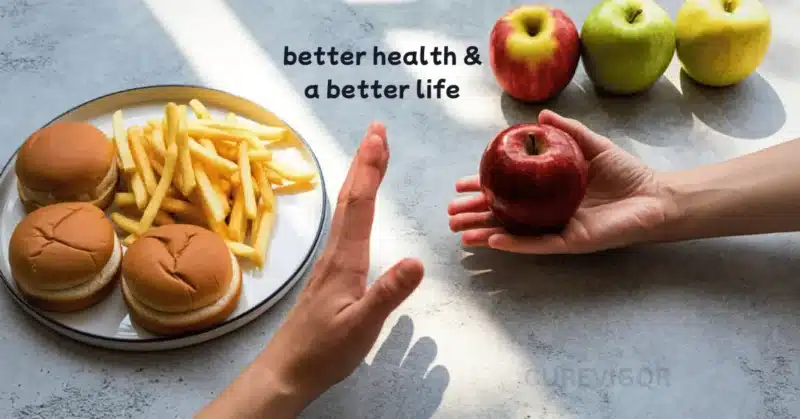
It is natural to want to step on the scale to see if your 30-day reset has “worked.” While weight can be one measure of change, it is often the least interesting and most misleading one.
The scale cannot tell you that you have more energy to play with your kids. It cannot measure the pride you feel when you easily climb a flight of stairs without getting winded.
These are the non-scale victories, and they are the true indicators of better health and a better life. Focusing on these wins keeps you motivated because they are felt deeply and happen regularly.
Start paying attention to the subtle shifts. Notice how your skin looks clearer. Observe that your digestion has improved.
Feel the difference in your clothes fitting more comfortably. Perhaps you realize your mood is more stable, or you are no longer reaching for that afternoon coffee. These are all powerful signs that your body has reset and is functioning better.
I encourage you to write these victories down in a journal. On days when you feel discouraged, looking back at this list will remind you of the profound progress you have made.
Your health journey is about so much more than a number on a screen; it is about the quality of your daily life.
Community and Support
Why is my healthy lifestyle better when shared with others
There is a reason why every major wellness movement involves some form of community. Going it alone is hard.
When you try to maintain a healthy lifestyle in a bubble, every social event and every family dinner can feel like a test of willpower.
But when you share your journey with others, it becomes a shared adventure. Tell your family what you are doing and why it matters to you. You might be surprised to find they want to support you.
Invite your partner to go for an evening walk with you. Get your kids involved in choosing a new vegetable to try at the store.
Outside of your immediate circle, seek out like-minded people. This could be a friend who also wants to get healthier, a local running group, or even an online community focused on whole foods cooking.
Sharing recipes, celebrating each other’s non-scale victories, and leaning on someone when you are struggling make the entire process feel lighter and more fun. We are social creatures, and we thrive on connection.
When you build a supportive community around your health goals, you create an environment where your healthy lifestyle is not just accepted but celebrated.
It transforms the journey from a solitary chore into a shared, joyful experience.
The Long-Term Benefits of a Healthy Lifestyle
Stepping back and looking at the full picture, the purpose of this 30-day reset is to give you a glimpse of what is possible.
The benefits of committing to this path extend far beyond the physical changes you see in the mirror.
They seep into every corner of your existence, changing how you feel, think, and interact with the world.
This final section is a reminder of the “why” that will carry you forward. These are the gifts that keep on giving, long after the initial 30 days are over.
Natural Energy Boost

Feeling revitalized through nutrition for healthy living
Remember the mid-afternoon slump that used to send you searching for candy or another cup of coffee?
One of the most profound and immediate long-term benefits of a healthy lifestyle is the steady, natural energy you get from proper nutrition.
When you fuel your body with whole foods, you provide it with a slow-burning source of energy.
Complex carbohydrates, healthy fats, and lean proteins work together to keep your blood sugar stable throughout the day.
This means no more spikes and crashes. Instead, you experience a calm, focused energy that lasts from morning until night.
This revitalization is not just a feeling; it is biology at work. Your cells are finally getting the micronutrients they need to produce energy efficiently.
You are no longer asking your body to run on empty or on poor-quality fuel.
This newfound energy allows you to be more present and engaged in your life. You have the stamina to pursue hobbies, the drive to excel at work, and the liveliness to connect deeply with loved ones.
Nutrition for healthy living is not about restriction; it is about providing your body with the high-quality energy it needs to let you live your life to the fullest.
Mental Clarity and Mood
The link between wellness and happiness
The connection between your gut and your brain is one of the most exciting areas of health science today. What you eat directly affects your brain chemistry and, therefore, your mood and mental clarity.
A diet high in processed foods and sugar can lead to brain fog, anxiety, and even depression. Conversely, a diet rich in whole foods, healthy fats, and antioxidants supports brain health.
When you reset body, you are also resetting your mind. The mental fog lifts, and you may find it easier to concentrate on tasks and remember details.
This clarity brings with it a sense of calm and emotional stability. You are no longer on the blood sugar roller coaster that can cause irritability and mood swings.
Furthermore, caring for yourself through good food and exercise sends a powerful message to your subconscious: “I am worthy of care.”
This boosts self-esteem and fosters a more positive outlook on life. The pursuit of wellness is, in many ways, a pursuit of happiness.
By nourishing your body, you create the chemical and emotional conditions for a more peaceful, joyful, and clear-headed existence.
Habit Transformation
Setting the stage for developing healthy habits for life
Perhaps the greatest long-term benefit of this 30-day journey is the transformation of your identity. You are not just someone who is “trying to eat better.” You become someone who values their health.
You become someone who moves their body. You become someone who prioritizes sleep. This shift in self-perception is the cornerstone of developing healthy habits for life. The 30 days serve as proof.
They provide the evidence you need to believe in your own ability to change.
Once a habit is truly formed, it requires far less mental energy to maintain. You no longer have to debate with yourself about whether to go for a walk; you just go.
You no longer agonize over a food choice; you instinctively reach for what you know will make you feel good. This is the ultimate goal of a reset: to make healthy living your automatic default setting.
The habits you have built this month set the stage for a future where wellness is not an afterthought but the very foundation of a vibrant, fulfilling, and resilient life. You have not just changed what you do; you have changed who you are.
Final Summary on How to How to Reset Body in One Month
Place this section at the very end of your article, before the call to action.
Your 30-Day Reset at a Glance
- Days 1 to 10 focus on the foundation. You cut out added sugar and processed foods while flooding your body with water. You find movement you actually enjoy, like walking or dancing, instead of forcing yourself into grueling workouts.
Whole foods and leafy greens become the stars of your plate, giving your body the nutrients it has been craving. - Days 11 to 20 build lasting habits. You prioritize sleep as a non-negotiable part of your health routine, aiming for seven to nine hours each night.
You add stress management practices like meditation or yoga to calm your nervous system. Meal prep becomes your secret weapon, saving you time and keeping you on track when life gets busy. - Days 21 to 30 lock in consistency. You adopt the 80/20 rule: you eat well most of the time while allowing flexibility for special occasions.
You track non-scale victories like better energy, clearer skin, and improved mood instead of obsessing over the scale. You share your journey with others, building a support system that makes healthy living sustainable. - The long-term benefits transform your life. You enjoy steady, natural energy all day long without crashes. Your mental clarity improves, and your mood becomes more stable.
Most importantly, you shift your identity from someone trying to be healthy to someone who simply lives a healthy life by default.
Ready to start your 30-day reset? You have everything you need right now. No products to buy, no programs to join.
Just you, your kitchen, and your commitment to feeling better. Share this guide with a friend who might want to join you, and take that first step today. Your body will thank you.
Read more Health Balance articles.
You might like: