Struggling to build fitness habits for night shifts? Get simple workout, nutrition, and recovery tips made for irregular schedules. Start today.
Most fitness advice is designed for people who wake up with the sun, and it quickly fails when you follow it while working nights.
This guide covers fitness routines for night-shift workers that can handle irregular hours, low energy, and disrupted sleep. You’ll learn when to train, what to eat, how to stay consistent, and how to recover properly.
The article contains some general information on fitness and lifestyle. It should not be regarded as medical advice, and you should consult a doctor before beginning a new exercise program, in particular if you already have a health problem or are diagnosed with a sleep disorder.
Making Fitness a Habit
A single tough workout barely moves the needle. A habit, done consistently over weeks and months, changes how you feel, sleep, and function on night shift.
Habits remove decision fatigue. When exercise becomes automatic, tied to your shift instead of your motivation, you stop relying on willpower every single day. This matters even more on a night schedule, where energy and mood already swing more than a typical daytime routine.
Consistency also compounds. Small, repeated efforts build strength, stability, and energy over time in a way that occasional intense sessions never do.

A person who walks 15 minutes most days will likely see better long-term results than someone who trains hard once a week and skips the rest.
There’s a mental side too. A steady fitness habit gives structure to a schedule that often feels chaotic. It becomes one predictable part of the day, even when shifts rotate, or sleep gets disrupted.
That’s why the rest of this guide focuses on habit building first, then workout specifics. Get the habit right, and the fitness follows.
Why Fitness Is Extra Hard on Night Shifts
The night shift affects not only your working hours but also your energy levels, your appetite, and your motivation. Understanding why makes it easier to apply the guidance below.
Circadian Rhythm Disruption and Low Workout Motivation
Your circadian rhythm is your body’s internal clock, set to keep you active during the day and resting at night. Working at night goes against this pattern every day.
This discrepancy is a major cause of reduced motivation to exercise on a night-shift schedule, even though you have the time and energy to train.

How Poor Sleep and Fatigue Kill Exercise Consistency
People who work shifts know about shift work sleep disorder, in which sleep becomes shorter and lower quality because you are working against your body’s internal clock.
Poor sleep reduces motivation, slows reaction time, and makes exercise feel harder than it should. Consistency declines first, long before strength or fitness decreases.
The Impact of Irregular Meal Timing on Metabolism and Energy
When you eat, it affects your metabolism and energy stability. Night shift workers often eat late, skip meals during their shift, or overeat afterward.
As a result, their energy levels become difficult to predict, which in turn makes it hard to arrange workouts around them. You usually need to fix meal times before you can maintain any fitness habits.
The Number One Rule for Building Fitness Habits as a Night Shift Worker
Base your workouts on your shift rather than the clock, since this one rule addresses more consistency issues than any workout plan does. The rest of this guide follows this principle.
Anchor Workouts to Your Shift, Not the Clock
For night shift workers, there is no such thing as a morning or evening time for a workout. In this case, choose a point that is related to your shift, for example, right before you go to work or the moment when you get home, and use that as your fixed workout reference.
Although the time on the clock will vary with your schedule, the reference point will stay the same.
Why Consistency Beats Intensity for Shift Workers
A short, easy workout beats one intense session. Do it four times a week instead. This matters most on the night shift. Your energy and sleep quality already swing daily. Build the habit first. Add intensity later. Wait until the habit feels automatic. This usually takes a few consistent weeks.
The 15-Minute Rule to Beat Procrastination
On low-energy days, do a 15-minute session instead of the full workout. Most people who start tend to want to keep going once they begin.
Even on days when this doesn’t happen, 15 minutes is still enough to keep the habit going, since in the early weeks it’s more important to maintain the habit than the workout itself.
Best Times to Workout on Night Shifts
No single time suits everyone; be aware of the compromises involved with each option below before choosing.
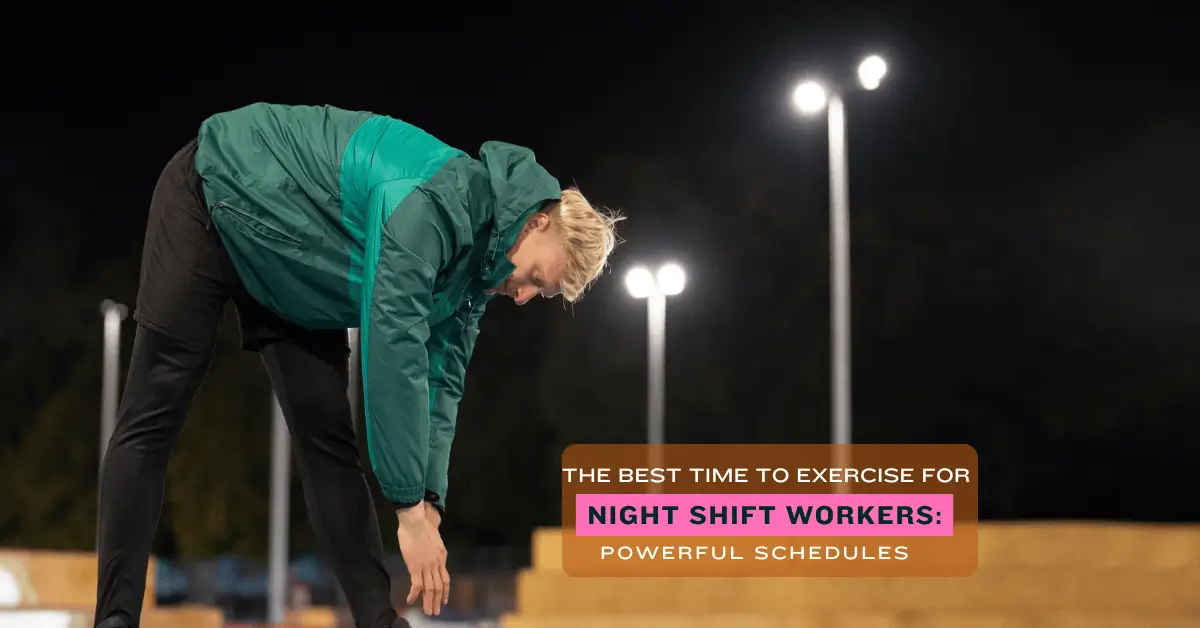
Pre-Shift Workouts: Boost Energy and Focus for the Night
Training before a shift can help increase alertness and concentration for the coming hours. This is especially helpful for people who feel sluggish at the start of a shift. The downside is that it leaves less time to recover before physically demanding tasks, so keep pre-shift sessions light to moderate.
Mid-Shift Movement Breaks: Fight Fatigue and Blood Sugar Crashes
Breaks during a shift, for example, a quick walk or a few minutes of stretching, can help counteract the energy slump that usually occurs halfway through a night shift. Of course, this doesn’t replace a full workout, but it can help keep your energy more stable for the rest of the shift.
Post-Shift Workouts: Pros, Cons, and Recovery Considerations
Training immediately after a shift is convenient, but intense sessions can affect your ability to fall asleep afterward. When you train after your shift, choose lower-intensity activities and include a brief cool-down before bed. For more information on protecting your sleep during a workout, refer to our related guide on post-shift workout tips.

Night Shift Workout Routine: What to Do and When
The choice of exercise is just as important as the time you choose. Below is guidance on how to organize a routine for shift workers.
Strength Training for Metabolism and Muscle Retention on Night Shifts
Strength training two to three times each week helps maintain muscle and a steady metabolism. It is efficient and quick to do full-body workouts with simple movements, such as squats, rows, and presses. When energy is limited, keep sessions under 30 minutes.
Cardio for Night Shift: Low-Impact Options to Protect Sleep
Low-intensity cardio for night-shift workers, such as walking, cycling, or swimming, raises your heart rate without overstimulating the nervous system, making it easier to do without disrupting sleep afterward. Schedule high-intensity cardio earlier in your wake period rather than right before your main sleep session.
Mobility and Stretching to Counter Long Hours of Sitting or Standing
Most night shifts require long periods in a single position, whether sitting or standing. Carrying out a brief mobility exercise, which takes only five to ten minutes and focuses on the hips, shoulders, and lower back, helps reduce the stiffness caused by this and is easy to fit in.

Nutrition Habits That Support Fitness on Night Shifts
Nutrition timing matters more on night shifts than almost any other factor discussed in this guide.
Meal Timing Strategies to Fuel Workouts Without Messing Up Sleep
Aim for a light, balanced meal about an hour before training, and avoid large or heavy meals near your main sleep period. Keeping regular meal timing, even when your shift schedule changes, helps stabilize your energy levels and makes your workouts more predictable.
Hydration and Caffeine Rules for Shift Workers
Drinking water steadily during your shift is more effective for maintaining energy and concentration than relying on caffeine alone. When you do use caffeine, take it earlier in your shift and avoid it about six hours before your intended bedtime, as it can delay sleep onset for many people.
Easy Protein and Fiber Snacks to Avoid Energy Crashes
Things like combining Greek yogurt with fruit, pairing a boiled egg with vegetables, or having a small handful of nuts can help prevent the energy crashes caused by sugary or highly processed snacks over a long shift.

How to Stay Motivated When Your Schedule Keeps Changing
Motivation tends to disappear, yet a few habits can keep you going even when motivation isn’t present.
Habit Stacking: Link Exercise to an Existing Night Shift Routine
Link your workout to an activity that you currently carry out without giving it any thought, for example, right after your pre-shift coffee or right before your post-shift shower.
This eliminates the need to remember or decide, which is often the main obstacle when you have a busy schedule.
Use a 2-Day Rule to Prevent Falling Off Track.
Don’t skip a workout for two days in a row. Missing one day is perfectly normal, but missing two days in a row is when habits typically start to break down altogether.
This simple rule is easier to follow than any complicated schedule and helps keep the habit strong even during unavoidable difficult weeks.
Track Progress with Energy Levels, Not Just Weight
Weight and strength figures advance slowly and can be discouraging at first, whereas tracking your energy levels, sleep quality, and mood each day shows progress sooner and keeps your motivation based on changes you can actually feel.
Recovery: The Missing Piece of Fitness for Night Shift Workers
Most fitness programs focus only on workouts and say nothing about recovery; on the night shift, people should give recovery equal attention.
Sleep Hygiene Tips to Recover After Training
Lower the light level, stay away from screens, and finish your workout at least 60 to 90 minutes before your main sleep period. These habits support both recovery from training and the deep sleep your body needs to get any benefit from exercise.
Stress Relief Techniques to Lower Cortisol and Prevent Burnout
Simple stress-relief tools, such as breathing slowly, taking short walks, or spending a few minutes in quiet, can help control cortisol levels and reduce the risk of burnout that comes from combining shift work with a new fitness routine. Recovery isn’t optional; it’s part of the plan.
Active Recovery Days That Fit a Rotating Schedule
When your energy is low, or you’ve worked several shifts in a row, swap one full workout for light activity, such as walking or gentle stretching. This way, you keep the habit going without stressing your body more than it can handle.
Common Mistakes That Kill Fitness Habits on Night Shifts
- Doing hard workouts right before bed can make it take longer to fall asleep. It can also reduce the workout’s recovery benefits.
- Skipping meals and then eating too much after the gym can cause energy crashes and make it harder to maintain consistent training.
- Copying a nine-to-five workout plan without accounting for recovery is unlikely to work well, since shift work already adds physical and mental stress, and a plan designed for a normal schedule generally requires less volume and more built-in recovery.
Sample: 1-Week Fitness Plan for Night Shift Workers
This plan is a preliminary example, so adjust the days and intensity to your real shift schedule.
| Day | Focus | Time Needed |
| Day 1 | Full-body strength | 20 minutes |
| Day 2 | Walk or light cardio | 15 to 20 minutes |
| Day 3 | Full-body strength | 20 minutes |
| Day 4 | Mobility and stretching | 10 minutes |
| Day 5 | Full-body strength | 20 minutes |
| Day 6 | Walk or light cardio | 15 to 20 minutes |
| Day 7 | Active recovery or rest | Optional |
No Equipment Workout Options for Home or Break Room
Bodyweight exercises such as squats, push-ups, lunges, planks, and step-ups meet most of the requirements of a strength training session without equipment and work just as well at home or in a break room during a movement break in the middle of a shift.
How to Adjust the Plan on Days Off
A day off is a good opportunity for a longer session or for doing something you enjoy, for example, going on a hike or playing a sport.
Nevertheless, you should stick to the same basic principle, namely consistency rather than intensity, so that the days off help to maintain the habit rather than providing an excuse to give it up completely.
FAQ
Q. How long does it take to establish a fitness habit if you work at night?
Most people find that a workout begins to feel automatic after three to four weeks, although this varies from person to person.
Night shifts can slow this process because energy levels and sleep change, so you should be more patient than you would on a normal daytime schedule.
Q. Should one choose to work out before or after a night shift?
Neither option is inherently better. Workouts before the shift can increase alertness for the coming hours, and light workouts after the shift can support a wind-down routine if you keep them light.
Choose the option that matches your energy patterns, and adjust it if one regularly disrupts your sleep.
Q. Is it still possible to lose weight or build muscle if you work at night?
Certainly, night shift work by itself doesn’t stop progress; consistent training, proper nutrition, and enough sleep still produce the same results regardless of the shift. The real problem is logistics, not biology, which is why this guide addresses it.
Q. What type of exercise is best for night shift workers?
Low-impact strength training and light cardio tend to work best for most night shift workers. Think bodyweight squats, walking, or short cycling sessions rather than high-intensity circuits.
These options build fitness without overloading a body that’s already managing disrupted sleep and irregular energy. Mobility work is worth adding too, especially if your job keeps you standing or sitting for long stretches.
Q. When should I work out if I work the night shift?
There’s no single right answer here; it depends on your energy and your sleep window. Pre-shift workouts can sharpen focus for the hours ahead, while post-shift sessions fit naturally into a wind-down routine if you keep them light.
The real rule is consistency; pick one point relative to your shift and stick with it. Avoid anything intense in the final hour before you plan to sleep.
Q. What happens to your body when working the night shift?
Your circadian rhythm, the internal clock that expects daylight activity and nighttime rest, ends up working against your schedule.
Over time, this can affect sleep quality, energy levels, and appetite. Many night shift workers also notice less predictable hunger and harder-to-manage stress. None of this is permanent or unmanageable, but it does mean routines built for a normal daytime schedule usually need adjusting.
Q. Is it good to go to the gym after a 12-hour shift?
It can work well if you keep the session light and finish with a proper cool-down. A long 12-hour shift already puts real demand on your body, so this isn’t the time for a personal-best attempt.
A short walk, some stretching, or a light strength session usually supports recovery better than pushing hard. Save higher-intensity training for a day when you’re not heading straight into sleep afterward.
Final Thoughts: Make Fitness Automatic on Night Shifts
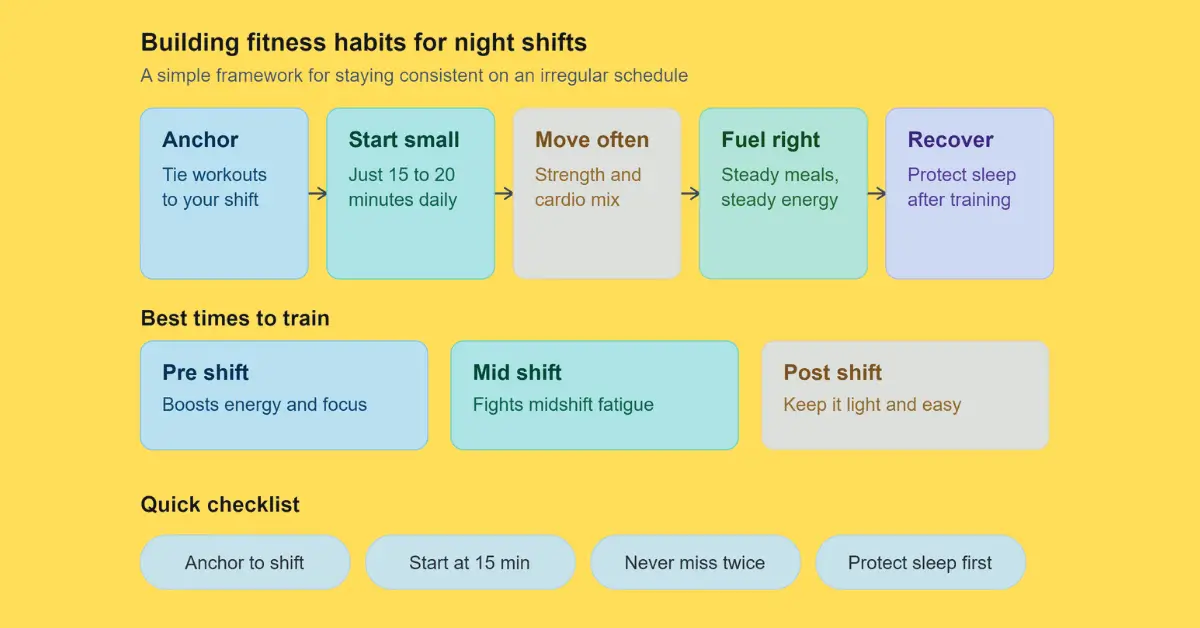
Start Small and Protect Your Sleep First
The one thing you should take from this guide is this: you must protect your sleep, and only then should you go on to establish fitness habits, not the other way round.
A fitness routine that takes away your sleep won’t last, no matter how good the plan looks on paper.
How Building Fitness Habits Improves Energy, Mood, and Long-Term Health
Regular movement, even in small amounts, generally leads to more stable energy and mood over time, along with the long-term health benefits linked to frequent physical activity.
This happens on night shifts as on any other shift pattern, once you establish a routine that suits the shift rather than opposing it.
Quick Checklist to Start Your First Night Shift Workout This Week
• Pick one anchor point tied to your shift, not a clock time.
• Start with 15 to 20 minutes, not a full hour
• Choose one workout type from this guide that fits your energy pattern.
• Apply the 2-day rule if you miss a session
• Track energy and sleep, not just weight, for the first month
Read more about night shift workers’ health.