Learn about mindfulness for busy people, including one-minute practices, mindful routines, digital breaks, boundaries, and tips for night shift workers.
When every hour already seems occupied, “find some time for yourself” can sound unrealistic. Work, family, household responsibilities, messages, errands, commuting, and endless small tasks can leave very little space for quiet.
But mindfulness does not require an empty schedule.
Just as physical exercise keeps the body active and fit, mindfulness is like mental exercise. We train our attention to slow down, notice what is happening, and respond more thoughtfully, rather than strengthening our muscles.
A few minutes of mindfulness can help us stay mentally present and create space for ourselves, even when life seems to go on forever, just as a few minutes of exercise can fit into a hectic day.
We can practice mindfulness in a few minutes, or even a few seconds, by deliberately bringing our attention back to the present moment.
A mindful breath before opening an email, a phone-free cup of coffee, a short walk without scrolling, or a quiet transition between work and home can all become opportunities to pause.
People with hectic schedules, such as night shift workers whose job, sleep, and personal routines sometimes deviate from the typical daytime norm, may find this strategy very helpful.
The goal is not to escape a busy life. It is to become more present while living it.
What Is Mindfulness?
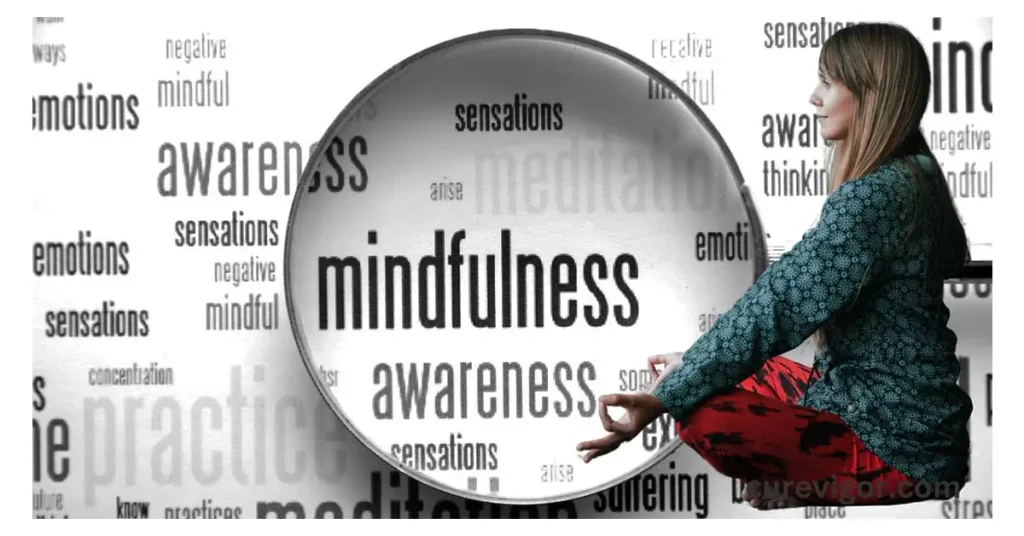
Mindfulness means intentionally paying attention to the present moment without immediately judging or reacting to what we notice. We can focus on breathing, physical sensations, sounds, thoughts, emotions, or an everyday activity.
While they are connected, mindfulness and meditation are not the same. Focusing attention on breathing, a sound, a mantra, or another object can all be part of the systematic practice of meditation.
You can practice mindfulness during meditation, but you can also incorporate it into ordinary activities such as eating, walking, working, or listening to someone.
The National Center for Complementary and Integrative Health describes mindfulness as maintaining awareness of the present moment without judgment.
Do We Need 30 Minutes to Practice Mindfulness?
No. We can begin with one minute of mindful attention. A longer meditation session may suit some people, but you can also practice mindfulness during short pauses and everyday activities.
For busy people, starting with a realistic practice they can repeat consistently is often more practical than creating an ambitious routine that quickly becomes another obligation.
The important skill is simple:
Notice → pause → return your attention.
When our mind wanders, we do not need to criticize ourselves. We notice that attention has moved elsewhere and gently bring it back.
How to Find Time for Mindfulness When We’re Busy
The easiest way to make mindfulness fit a busy schedule is to stop treating it as another large task.
Instead of asking, “Where can we find 30 free minutes?” we can ask:
Which moments already exist in our day that we can experience more intentionally?
That change makes mindfulness much easier to practice.
Start With One Minute
Choose one predictable point in the day and practice for one minute.
We might do it:
- After waking
- Before opening email
- Before starting work
- During a break
- After arriving home
- Before getting into bed
Sit or stand comfortably. Relax the shoulders. Notice the natural rhythm of breathing. Follow a few breaths from beginning to end.
When thoughts appear, notice them and return to breathing.
That’s it.
We don’t need to achieve complete silence in the mind. The repeated act of noticing and returning is the practice.
Use the Transition Moments in Your Day
Busy schedules contain dozens of transitions.
We move from the bedroom to the kitchen, from home to work, from one meeting to another, from work to the commute, and from the front door to our evening routine.
These moments can become natural mindfulness anchors.
Before moving into the next activity, pause for 20–30 seconds.
Notice:
- How the body feels
- Whether the shoulders are tense
- What emotions are present
- What thoughts are occupying attention
- What we are about to do
Then continue.
This tiny pause can prevent the entire day from feeling like one continuous chain of tasks.
Turn Everyday Activities Into Mindfulness
We don’t have to sit down and meditate to practice mindfulness.
While drinking coffee or tea: notice the temperature, aroma, flavor, and physical sensations instead of immediately reaching for the phone.
While eating: pay attention to taste, texture, chewing, and the pace of the meal.
While walking: notice footsteps, breathing, movement, sounds, and the environment.
While showering: notice the water’s temperature and sensation instead of mentally rehearsing the next ten tasks.
The activity itself doesn’t have to change—only our attention.
Take a Five-Minute No-Input Break
Many people take physical breaks, but few take mental breaks.
A five-minute break can quickly become five minutes of social media, messages, news, or videos. Instead, occasionally create a short period with no new information.
Put the phone aside.
Look outside.
Walk slowly.
Stretch.
Sit quietly.
Notice your breathing.
The purpose is not to force relaxation. It is simply to give the mind a temporary break from constant incoming information.
Simple Ways to Make More Time for Yourself
Mindfulness can help us notice where our attention goes, but finding meaningful personal time may also require practical boundaries.
Set Boundaries Around Your Time
Sometimes we are not short of time because every activity is essential. We are short on time because too many activities have become obligations.
Ask:
- Which commitments genuinely matter?
- Which requests can wait?
- What can be delegated?
- Which activities repeatedly consume time without adding much value?
- When does work actually end?
- Which interruptions can be reduced?
A simple boundary can protect more personal time than another complicated productivity technique.
We can say:
“We can’t take that on right now, but we can revisit it later.”
Protecting our time is not selfish. Without reasonable boundaries, recovery can become the first thing we sacrifice when the schedule gets demanding.

Reduce Digital Distractions
Our phones can turn small gaps in the day into continuous streams of information.
We can create more mental space by:
- Turning off nonessential notifications
- Keeping phones away during meals
- Creating phone-free conversations
- Checking messages at deliberate times
- Avoiding unnecessary app switching
- Taking short screen-free breaks
The goal is not to reject technology.
It is to stop letting every notification decide what deserves our attention.

Stop Trying to Multitask Everything
Mindfulness becomes easier when we practice doing one thing at a time.
When eating, eat.
When talking, listen.
When walking, walk.
When working on an important task, give that task our attention.
We will still get distracted. That is normal. Each time we notice the distraction and return, we strengthen the habit of intentional attention.
Schedule Personal Time
If we treat personal time as optional, it is often the first thing we remove from the day.
We can therefore schedule it like another legitimate commitment.
It might be:
- Ten minutes of quiet time
- A short walk
- Reading
- Stretching
- Journaling
- Sitting outdoors
- Drinking a favorite beverage without a screen
- Practicing mindfulness
It does not have to be impressive.
Personal time is valuable because it is yours, not because it lasts a certain number of minutes.
Mindfulness for Night Shift Workers

Night shift workers face a different version of the same problem: there may be little separation between work, personal responsibilities, and sleep.
When most people are starting their day, we may be preparing for bed. When family and friends are active, we may be working. When our shift ends, we may need to transition quickly from work mode into daytime sleep.
Mindfulness can help create small boundaries within this unusual schedule.
Before the Night Shift
Before starting work, take one or two minutes to pause.
Instead of immediately checking messages or worrying about what could go wrong during the shift, notice your body and breathing.
Ask:
- How are we feeling right now?
- Are we already tense?
- What deserves our attention tonight?
- What can wait until later?
This creates a deliberate starting point rather than entering the shift in a state of automatic urgency.
During the Shift
When an appropriate break is available, use part of it to reset mentally.
Put the phone away.
Relax the jaw and shoulders.
Take several comfortable breaths.
Notice sounds around you.
Feel your feet or hands.
Then return to the next task.
Even two or three minutes can provide a useful pause between demanding periods.
You can also incorporate mindful movement into ordinary work. While walking, notice your feet’s movement. While standing, notice the body’s contact with the floor. While stretching, pay attention to physical sensations rather than rushing through the movement.
Create a Work-to-Home Transition
One of the most useful mindfulness practices for night shift workers can happen after the shift.
Before leaving work, identify what has been completed and write down anything that genuinely needs attention later.
Then take a few breaths and consciously mark the end of the work period.
During the commute home, remain fully attentive if driving. If traveling as a passenger, you can use part of the journey to reduce stimulation rather than immediately consuming another stream of information.
The purpose is to create a psychological boundary:
Work is finished. Recovery is beginning.

Practice Mindfulness Before Daytime Sleep
Before bed, a short body-awareness routine can help create a consistent transition toward rest.
We can:
- Reduce unnecessary stimulation.
- Put the phone aside.
- Notice the breathing.
- Relax the face, jaw, shoulders, and hands.
- Notice sensations throughout the body.
- Allow thoughts to appear without trying to solve every problem immediately.
We should not use mindfulness as a promise that we will fall asleep instantly. The goal is to create a calmer transition from activity to rest.
For night shift workers, mindfulness is not about becoming perfectly calm during every shift. It is about creating small, repeatable moments that separate work, recovery, and personal time.
A Simple 5-Minute Mindfulness Routine
When we want something more structured, this five-minute routine is enough to get started.
Minute 1: Breathe
Sit comfortably and notice each natural inhalation and exhalation.
Minute 2: Relax
Notice the jaw, forehead, shoulders, hands, and abdomen. Let unnecessary tension soften.
Minute 3: Notice
Bring attention to physical sensations. Notice whether the body feels tired, restless, comfortable, or tense.
Minute 4: Observe
Notice thoughts without following every thought. When attention wanders, gently return to breathing or physical sensations.
Minute 5: Choose
Ask:
What quality do we want to bring into the next part of the day?
Choose one:
- Patience
- Focus
- Calm
- Kindness
- Curiosity
- Presence
Then continue with the day.
How to Make Mindfulness a Sustainable Habit
The biggest challenge is usually not learning mindfulness. It is continuing to practice when life becomes busy.
The solution is to make the habit small enough to survive difficult days.
Instead of saying, “We will meditate every morning for 30 minutes,” start with a specific, manageable behavior:
After brushing our teeth → one minute of breathing.
Before opening email → three mindful breaths.
After lunch → five-minute walk.
Before leaving work → one-minute transition pause.
Before bed → brief body awareness.
This approach connects mindfulness to something already happening.
Anchor → Attention → Return
A simple way to remember the entire practice is
Anchor: Choose what deserves attention.
Attention: Stay with it.
Return: When the mind wanders, gently come back.
That last step matters.
A distracted mind is not evidence that mindfulness is failing. Recognizing distraction and returning attention is the exercise.
What Does Research Say About Mindfulness?
Research suggests that mindfulness and meditation may benefit stress, anxiety-related symptoms, and sleep quality, although results vary by practice, population, and outcome.
NCCIH notes that some research supports mindfulness-based approaches for anxiety and depression symptoms and that mindfulness meditation may help improve sleep quality, while also emphasizing that parts of the evidence remain preliminary or inconsistent.
This distinction matters: mindfulness can be a useful self-care and stress-management practice, but it should not be presented as a universal treatment or a replacement for appropriate medical or mental-health care.
Mindfulness practices are generally considered to have few risks, although some people report negative experiences such as increased anxiety or difficult emotions. If a practice consistently causes distress, we should stop and seek appropriate professional guidance.
Common Mindfulness Mistakes Busy People Make
Trying to Do It Perfectly
We do not need perfect concentration. Attention will wander.
Starting With Too Much
A 30-minute routine that lasts three days is less useful than a one-minute practice we can realistically repeat.
Expecting Immediate Calm
Mindfulness doesn’t guarantee every situation will feel relaxing. Sometimes it simply helps us notice what we are experiencing more clearly.
Turning Mindfulness Into Another Productivity Task
We do not need to maintain a perfect streak or measure every session.
Waiting for the Perfect Environment
Real life is noisy. Children interrupt. Phones ring. Work becomes demanding. We can still practice returning our attention.
FAQs About Mindfulness for Busy People
Q. How much time do we need for mindfulness?
No single amount of time works for everyone. Beginners can start with one minute and gradually increase the duration if it feels useful. Short practices during transitions, meals, walks, and breaks can make mindfulness easier to maintain.
Q. Can we practice mindfulness without meditation?
Yes. You can practice mindfulness during ordinary activities such as eating, walking, drinking tea, showering, listening, or working. The key is to pay deliberate attention to the present experience rather than doing the activity automatically.
Q. Can mindfulness help with stress?
Mindfulness-based practices may help reduce symptoms of stress and anxiety for some people. Research is encouraging, although outcomes vary across different programs and individuals.
Q. Can we practice mindfulness while working?
Yes. Short pauses before meetings, mindful transitions between tasks, focused single-tasking, and brief breathing exercises can all bring mindfulness into the workday.
Q. What if our mind keeps wandering?
That is normal. Notice that attention has wandered, then gently return to the breath, body, sounds, or activity. Repeatedly returning is an important part of mindfulness practice.
Q. Can night shift workers practice mindfulness?
Absolutely. Night shift workers can use mindfulness before the shift, during appropriate breaks, at the end of work, during the commute as safely appropriate, and before daytime sleep. The most useful practice fits the worker’s actual schedule.
Bottom Line: Make Mindfulness Fit Your Life
Mindfulness does not require us to find an empty hour in an already crowded day.
We can begin with one breath before opening an email, one quiet cup of coffee, one phone-free meal, one short walk, one pause between tasks, or a few minutes of awareness before sleep.
For night shift workers, those small practices can become especially valuable during the transitions between work, home, and daytime rest.
The aim is not to eliminate every stressful moment or become perfectly calm. It is to become more intentional about where our attention goes.
We don’t have to wait for life to slow down before making time for ourselves. We can start by being more present with the time we already have.
Read more about night shift workers’ health.
You might like to read: