

By creating a comfortable resting environment, you can improve the quality of your sleep, reduce stress, and wake up feeling refreshed. Learn the bedroom mistakes ruining your sleep and simple ways to fix them naturally.
Sleep should feel natural. Yet many people spend hours tossing, turning, waking up tired, or struggling to stay asleep through the night. In many cases, the problem is not stress alone. The real issue is the bedroom itself.
How to Fix a Poor Sleep Environment When Creating a Good Sleep Environment
A noisy room, bright lights, poor air quality, clutter, uncomfortable bedding, and late-night screen habits quietly work against deep rest.

Even healthy people can feel drained when their sleep environment disrupts their body’s natural rhythm.
Creating a good sleep environment does not require expensive renovations or luxury furniture. Small adjustments can improve sleep quality, reduce nighttime awakenings, and help the body recover more effectively.
According to research from the Sleep Foundation, factors such as bedroom temperature, noise levels, lighting, and mattress comfort play major roles in sleep quality and overall sleep duration. Studies are published by the National Library of Medicine.
Also, show that poor sleep environments are strongly connected to increased stress, fatigue, mood changes, and lower daily productivity.
“A good laugh and a long sleep are the best cures in the doctor’s book.” — Irish Proverb.
If your bedroom feels overstimulating instead of relaxing, these mistakes may be keeping you awake.
Why Creating a Good Sleep Environment Matters
The brain constantly responds to its surroundings, even during sleep. Light exposure, temperature changes, sounds, and physical comfort all influence how quickly the body enters deep sleep stages.
When the environment feels unsafe, uncomfortable, or overstimulating, the nervous system stays alert. That makes it harder to fall asleep and easier to wake up repeatedly during the night.
A healthy sleep environment supports:
- Faster sleep onset
- Better REM and deep sleep
- Lower stress levels
- Reduced fatigue
- Improved focus and mood
- Better immune health
The bedroom should signal safety and calmness. Every object, sound, and habit inside the room either supports sleep or disrupts it.
Bedroom Mistake #1: Too Much Artificial Light
Bright Rooms Confuse the Brain
One of the biggest problems in poor sleep environments is excessive light exposure at night. Bright LED bulbs, hallway lights, televisions, and phone screens suppress melatonin production.
Melatonin is the hormone that helps the body recognize the time for bedtime. When light blocks its release, the brain stays active longer.
Even dim light can affect sleep quality.
Research from Northwestern University found that sleeping with moderate room lighting increased heart rate and insulin resistance compared to sleeping in darkness.
How to Fix It
Creating a good sleep environment starts with darkness.
Use these simple adjustments:
- Install blackout curtains
- Turn off overhead lights one hour before bed.
- Use warm-toned, bedside lamps.
- Cover blinking electronics
- Avoid scrolling on phones in bed.
- Use night mode filters after sunset.
If complete darkness feels uncomfortable, choose a dim, amber nightlight rather than a blue-white one.
Bedroom Mistake #2: The Room Is Too Warm
Temperature Strongly Affects Sleep Cycles
Many people underestimate how much temperature influences sleep quality.
The body naturally cools down before sleep. A hot room interferes with this process and can cause the following:
- Frequent awakenings
- Sweating
- Restlessness
- Lighter sleep
Sleep experts often recommend keeping the bedroom between 60 and 67°F (15 and 19°C) for optimal rest.
Warm bedrooms are especially difficult for night shift workers trying to sleep during daytime heat.
How to Improve Bedroom Temperature
Creating the best sleep environment often means cooling the room slightly.
Helpful solutions include:
- Use breathable cotton bedding.
- Keep air circulating with fans.
- Lower thermostat settings at night
- Avoid heavy blankets unless necessary.
- Open windows when the weather allows
- Limit heat-producing electronics near the bed.
Cooling the room by even a few degrees may significantly improve sleep depth.
Bedroom Mistake #3: Noise Interruptions Throughout the Night
Small Sounds Can Disrupt Deep Sleep
The brain continues monitoring sounds during sleep. Traffic, barking dogs, snoring, television noise, and household activity can trigger brief awakenings without full awareness.
Over time, fragmented sleep can lead to fatigue and mental exhaustion.
A study published in the journal Noise & Health linked nighttime environmental noise to poorer sleep quality and heightened stress responses.
Practical Ways to Reduce Bedroom Noise
A peaceful sleep atmosphere supports uninterrupted rest.
Try these methods:
- Use white noise machines.
- Try soft fan sounds
- Wear comfortable earplugs
- Add rugs and curtains to absorb sound.
- Keep phones on silent mode.
- Close windows facing busy streets
White noise works especially well for people living in urban environments or busy households.
Bedroom Mistake #4: Clutter Creates Mental Stress
Messy Bedrooms Increase Cognitive Load
A cluttered room can quietly increase stress and overstimulation.
Piles of laundry, work materials, cables, and visual chaos trigger the brain’s unfinished-task alert. That makes relaxation harder.
Many adults dealing with overthinking notice that physical clutter often mirrors mental clutter.
Creating a good sleep environment means creating emotional calm, too.
“Your bedroom should feel like a retreat, not a storage unit.”
Simple Decluttering Tips for Better Sleep
You do not need a perfectly minimal room. Focus on reducing overstimulation.
Start with:
- Clearing bedside surfaces
- Removing unnecessary furniture
- Organizing visible cords
- Keeping laundry off the floor
- Limiting work-related items in the bedroom
Small visual improvements can make the room feel lighter and more peaceful.
Bedroom Mistake #5: Uncomfortable Bedding and Mattress Issues
Physical Discomfort Disrupts Sleep
A poor mattress or unsupportive pillow forces the body into awkward sleeping positions. This creates tension in the neck, shoulders, hips, and back.

Many people adjust to discomfort gradually without realizing how much it affects sleep quality.
Signs your bedding may be the problem:
- Morning stiffness
- Neck pain
- Back soreness
- Waking frequently to reposition
- Feeling unrested despite enough sleep hours
Building a Comfortable Sleep Environment
Comfort matters more than luxury.
Focus on support and breathability.
Helpful upgrades include:
- Medium-support mattresses for spinal alignment
- Pillows suited to sleep position
- Breathable sheets
- Lightweight seasonal blankets
- Mattress protectors for hygiene
Comfortable sleep environments support physical recovery and reduce nighttime movement.
Bedroom Mistake #6: Screens and Devices Near the Bed
Technology Keeps the Brain Alert
Phones and tablets stimulate the brain emotionally and mentally. News, social media, work emails, and videos increase alertness right before sleep.
Blue light exposure also delays melatonin production.
Many adults dealing with stress stay mentally “on” long after lying down.
Create a Tech-Free Sleep Zone
Creating the best environment for sleep often requires healthier digital boundaries.
Practical changes include the following:
- Charge phones away from the bed.
- Avoid doomscrolling at night.
- Stop checking emails before sleep.
- Use traditional alarm clocks instead of phones.
- Replace screen time with reading or journaling.
The goal is not perfection. Even reducing nighttime device use helps calm the nervous system.
Bedroom Mistake #7: Poor Air Quality
Stuffy Air Can Affect Sleep and Breathing
Air quality strongly impacts nighttime comfort.
Dust, allergens, humidity, and stale air may contribute to the following:
- Snoring
- Dry throat
- Congestion
- Restless sleep
- Headaches
People often focus on mattresses and lighting while completely ignoring airflow.
How to Improve Sleep Air Quality
Creating a healthy sleep environment includes cleaner air.
Helpful steps:
- Open windows daily when possible
- Wash bedding regularly
- Use air purifiers if needed.
- Keep humidity balanced
- Vacuum carpets often
- Avoid smoking indoors
Indoor plants may also help rooms feel fresher psychologically, though ventilation remains the most important factor.
Bedroom Mistake #8: Using the Bed for Everything
The Brain Needs Clear Associations
Working, eating, watching TV, and scrolling endlessly in bed trains the brain to associate the mattress with activity rather than sleep.
Over time, bedtime itself can trigger alertness.
This is common among people working from home or dealing with anxiety.
Rebuild Healthy Sleep Associations
Try to reserve the bed mainly for:
- Sleep
- Rest
- Relaxation
Avoid turning the bed into an office or entertainment center.
Even small behavior changes can strengthen healthy sleep cues.
Bedroom Mistake #9: Ignoring Smell and Atmosphere
Sensory Comfort Matters
The senses influence emotional regulation more than many people realize.
Strong odors, stale air, harsh lighting, and uncomfortable textures may quietly increase tension.
A calm bedroom environment encourages relaxation before sleep begins.
Create a Relaxing Sleep Atmosphere
Simple sensory improvements include:
- Soft warm lighting
- Fresh sheets
- Calming scents like lavender
- Comfortable textures
- Gentle evening routines
A bedroom does not need to look perfect online. It simply needs to feel safe and restful.
The Bedroom Should Feel Emotionally Safe
The nervous system responds to the emotional atmosphere.
A stressful room often creates stressful sleep.
Harsh lighting, clutter, work reminders, loud devices, and emotional tension make relaxation harder.
Creating a good sleep environment means turning the bedroom into a peaceful retreat instead of another stressful space.
Soft textures, calm lighting, fresh sheets, and quiet surroundings help signal safety to the brain.
Many people sleep better when the room feels emotionally comforting rather than overstimulating.
“Sleep is the best meditation.” — Dalai Lama.
The Ideal Bedroom Setup for Better Sleep
Creating a good sleep environment becomes easier when everything works together.
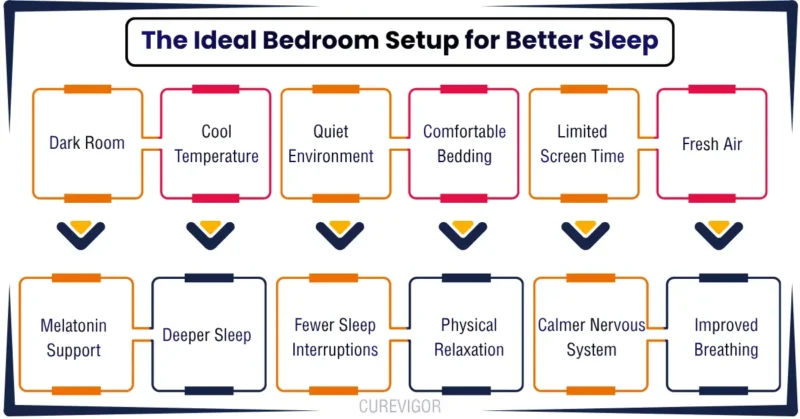
When multiple factors improve at once, sleep quality often improves faster.
Small Nighttime Habits That Support Better Sleep
The bedroom matters, but so do routines.
Helpful evening habits include the following:
- Keeping consistent sleep schedules
- Dimming lights early
- Avoiding heavy meals late at night
- Reducing caffeine in the evening
- Practicing quiet relaxation before bed
These habits support the environment rather than fight against it.
Creating a Good Sleep Environment for Stress and Overthinking
Stress changes sleep patterns quickly.
People who overthink often carry mental pressure into bed. The brain stays active even when the body feels exhausted.
A calming sleep environment helps reduce that mental overstimulation.
Soft lighting helps the brain slow down. Quiet surroundings reduce alertness. Cooler temperatures relax the body.
Simple nighttime routines also help.
A warm shower, calming tea, light stretching, journaling, or quiet breathing exercises can prepare the mind for rest.
The goal is not to force sleep. The goal is to create conditions where sleep feels natural again.
Signs Your Sleep Environment Is Improving
Positive sleep changes often happen gradually.
Common signs include:
- Falling asleep faster
- Waking less often
- Feeling calmer at bedtime
- Better morning energy
- Improved concentration
- Reduced irritability
Better sleep often improves emotional resilience, too.
FAQs on Creating a Good Sleep Environment
Q. What is a good sleep environment?
A good sleep environment is a bedroom setup that promotes deep, comfortable sleep. It usually includes darkness, cool temperatures, low noise, clean air, and comfortable bedding.
A calm atmosphere also helps the brain relax faster. Small changes in the room can significantly improve sleep quality.
Q. Why is creating a good sleep environment important?
Creating a good sleep environment helps the body recover properly during the night. Poor sleep settings can increase stress, fatigue, irritability, and brain fog.
Better surroundings support deeper sleep and better mental health. The bedroom environment affects sleep more than many people realize.
Q. What temperature is best for sleeping?
Most sleep experts recommend keeping the bedroom cool, usually around 60–67°F (15–19°C).
Cooler rooms help the body lower its internal temperature naturally. Hot rooms often cause restless sleep and frequent waking. Breathable bedding can also improve comfort.
Q. Does clutter affect sleep quality?
Yes. Clutter can increase mental stress and make the brain feel overstimulated before bedtime.
A messy room often creates visual distraction and emotional tension. Creating a cleaner, calmer bedroom may help people relax more quickly and sleep more peacefully.
Q. How do phones affect sleep?
Phones and screens expose the eyes to blue light, which can delay melatonin production. Social media and notifications also keep the brain mentally active at night.
As a result, it becomes more difficult to unwind and naturally fall asleep. Sleep quality can be enhanced by limiting screen time before bed.
Q. Can a poor sleep environment cause fatigue?
Yes. Poor sleep environments often lead to fragmented and low-quality sleep. Even if someone stays in bed for many hours, noise, light, discomfort, or stress can prevent deep rest.
Over time, this may lead to chronic tiredness, poor concentration, and mood changes.
Final Thoughts on Creating a Good Sleep Environment
A poor sleep environment quietly drains physical and mental energy night after night. Many people blame themselves for exhaustion when the bedroom itself is working against healthy rest.
Creating a good sleep environment does not require perfection. It requires intention.
Darkness, comfort, cool temperatures, quiet surroundings, clean air, and calming routines all help the body feel safe enough to rest deeply.
The goal is not to build a flawless bedroom. The goal is to create a space where the mind can soften, the nervous system can slow down, and sleep can happen more naturally.
Small, continuous changes often lead to the biggest improvements over time.
If this guide helped you understand how creating a good sleep environment affects your health, share it with someone struggling with stress, fatigue, or restless nights. Small bedroom changes can lead to better sleep, calmer mornings, and a healthier daily life.
Read more about night shift workers’ health.
You might like: