
The best antioxidant foods for shift workers include berries, dark leafy greens, fatty fish, nuts and seeds, turmeric, green tea, dark chocolate, cruciferous vegetables, tomatoes, and legumes.
These foods deliver polyphenols, flavonoids, vitamins C and E, selenium, and omega-3s that neutralize the free radicals produced by circadian disruption and chronic sleep loss.
Because shift workers face elevated oxidative stress and inflammation, consuming a variety of colorful, antioxidant-rich whole foods across your work and recovery days is essential for protecting cellular health, immune function, and long-term wellness.
The Best Antioxidant Foods for Shift Workers

Working outside a traditional 9-to-5 schedule takes a real toll on your body. Every night shift disrupts your circadian rhythm, elevates inflammation, and increases the production of free radicals, unstable molecules that damage cells and accelerate aging.
Over time, this oxidative stress raises your risk for heart disease, metabolic issues, and chronic fatigue. The good news is that your diet can be your most powerful defense.
When you fill your plate with the best antioxidant foods for shift workers, you actively neutralize those free radicals, reduce inflammation, and give your body the resources it needs to repair and recover.
This guide walks you through the most effective antioxidant-rich foods, why they matter specifically for shift workers, and how to build meals that fit your unpredictable schedule.
Whether you work rotating shifts, permanent nights, or long, extended hours, this science-backed nutrition strategy will help you protect your energy, brain, and long-term health.
Why Shift Workers Need Antioxidants More Than Anyone
Your body naturally produces free radicals during normal metabolism. Under balanced conditions, antioxidants from your diet neutralize them before they cause harm. However, shift work throws that balance out.
Circadian misalignment dramatically raises oxidative stress markers and lowers the body’s natural antioxidant defenses, according to research from the National Institutes of Health (NIH). Combined with sleep deprivation, poor eating windows, and higher cortisol levels, shift workers experience a perfect storm of cellular damage.
You may notice that you get sick more easily, feel constantly tired, or struggle with brain fog even on days off. These symptoms often reflect oxidative stress that a strategic diet can help reverse.
Featured Snippet Opportunity
How Antioxidants Help Shift Workers:
Antioxidants help shift workers by neutralizing free radicals produced during circadian disruption, reducing chronic inflammation, supporting immune function, protecting brain cells, and enhancing recovery between shifts.
Consuming a variety of antioxidant-rich foods daily helps offset the cellular damage caused by irregular sleep and prolonged wakefulness.
- Fight cellular damage from oxidative stress.
- Lower systemic inflammation
- Strengthen immune defenses against illness.
- Protect the cardiovascular system.
- Support cognitive function and mental clarity.
Understanding Oxidative Stress in Shift Workers
Definition: Oxidative stress occurs when free radicals overwhelm your body’s antioxidant defenses, causing damage to cells, proteins, and DNA. For shift workers, this imbalance is amplified by disrupted melatonin production, a hormone that also acts as a powerful antioxidant.
Your goal should be to consume antioxidants from a wide variety of food sources. Hence, you cover multiple types: vitamins (C, E, A), minerals (selenium and zinc), and phytochemicals (flavonoids, carotenoids, and polyphenols).
The 10 Best Antioxidant Foods for Shift Workers
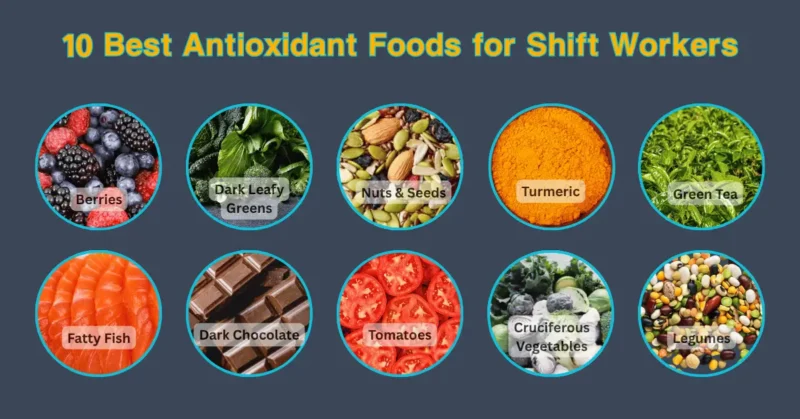
Here are the most powerful antioxidant foods you should build your meals around.
1. Berries (Blueberries, Strawberries, Blackberries, and Raspberries)
Berries top nearly every antioxidant list because they are packed with anthocyanins, vitamin C, and quercetin. These compounds specifically protect brain cells and reduce inflammation.
How to use: Add fresh or frozen berries to Greek yogurt, oatmeal, or smoothies before your shift. Keep a bag of frozen berries at home for quick recovery meals.
2. Dark Leafy Greens (Spinach, Kale, Swiss Chard)
Leafy greens deliver lutein, zeaxanthin, vitamin K, folate, and magnesium. They protect your eyes from screen strain and support cellular repair.
How to use: Blend into smoothies, sauté as a side dish, or add to salads and wraps. Aim for at least one serving per shift day.
3. Fatty Fish (Salmon, Sardines, Mackerel)
Fatty fish provides omega-3 fatty acids, astaxanthin (a powerful antioxidant), vitamin D, and selenium. Omega-3s specifically reduce the inflammation caused by shift work.
How to use: Consume fatty fish two to three times a week. Sardines in a can are a great quick supper or snack.
4. Nuts and Seeds (Walnuts, Almonds, Chia, Flax)
Nuts and seeds deliver vitamin E, selenium, magnesium, and healthy fats. Walnuts specifically support brain health, while flax and chia provide plant-based omega-3s.
How to use: Keep a container of mixed nuts at your workstation for a satisfying mid-shift snack.
5. Turmeric
Curcumin, one of nature’s best-studied anti-inflammatory substances, is found in turmeric. It combats the systemic inflammation that shift workers frequently experience.
How to use: Add to soups, curries, golden milk, or scrambled eggs. Combine with black pepper for maximum absorption.
6. Green Tea
Green tea provides catechins, especially EGCG, which offer powerful antioxidant and anti-inflammatory benefits. It also delivers gentle caffeine and L-theanine for calm alertness.
How to use: Drink 1–2 cups during your shift instead of energy drinks. Avoid within 6 hours of your target sleep time.
7. Dark Chocolate (70% Cocoa or Higher)
Dark chocolate is loaded with flavonoids that support heart health, brain function, and mood—all crucial for shift workers.
How to use: Enjoy 1–2 squares as a satisfying treat. Choose organic and low-sugar versions.
8. Cruciferous Vegetables (Broccoli, Cauliflower, Brussels Sprouts)
These vegetables contain sulforaphane, indole-3-carbinol, and vitamin C. They boost your body’s natural detoxification pathways and glutathione production.
How to use: Roast, steam, or add to stir-fries. Eat at least 3–4 servings per week.
9. Tomatoes
Lycopene, a carotenoid that protects the cardiovascular system—a major worry for shift workers—is abundant in tomatoes.
How to use: Enjoy cooked tomato sauces (lycopene is more bioavailable when cooked). Add fresh tomatoes to salads and sandwiches.
10. Legumes (Lentils, Beans, Chickpeas)
Legumes deliver polyphenols, fiber, protein, and stable energy. They help maintain balanced blood sugar during long shifts.
How to use: prepare batch soups, stews, or grain bowls that reheat easily for shift meals.
Comparison Table: Top Antioxidant Foods for Shift Workers
| Blueberries | Anthocyanins, Vitamin C | Brain protection | Pre-shift breakfast |
| Spinach | Lutein, Vitamin K | Eye and cellular health | Any meal |
| Salmon | Omega-3s, Astaxanthin | Inflammation reduction | Pre-shift dinner |
| Walnuts | Vitamin E, Omega-3s | Cognitive support | Mid-shift snack |
| Turmeric | Curcumin | Anti-inflammatory | Any meal |
| Green Tea | EGCG, Catechins | Alertness and antioxidant boost | Early shift |
| Dark Chocolate | Flavonoids | Mood and heart health | Mid-shift treat |
| Broccoli | Sulforaphane | Detoxification | Recovery meals |
| Tomatoes | Lycopene | Heart protection | Any meal |
| Lentils | Polyphenols, Fiber | Sustained energy | Pre-shift meal |
How to Build an Antioxidant-Rich Shift Worker Meal Plan
Sample Antioxidant-Rich Meal Plan for Shift Workers:
A shift worker’s antioxidant-rich meal plan should include a substantial pre-shift meal packed with protein, healthy fats, and colorful vegetables; mid-shift snacks of nuts, berries, or dark chocolate; and a light, easy-to-digest post-shift meal that supports sleep and recovery.
- Pre-shift meal (2–3 hours before work): Grilled salmon, quinoa, roasted broccoli, side salad with tomatoes and olive oil.
- Mid-shift snack 1: Greek yogurt with blueberries and walnuts.
- Mid-shift snack 2: Handful of almonds and one square of dark chocolate.
- Late-shift hydration: Green tea or herbal tea with lemon.
- Post-shift wind-down: Small bowl of oatmeal with cinnamon and berries, or a light lentil soup.
- Recovery day meals: Colorful vegetable stir-fries, turmeric curries, leafy green salads, and antioxidant-rich smoothies.
- Prioritize color variety on your plate.
- Include at least 3 antioxidant sources per meal.
- Avoid ultra-processed foods that increase oxidative stress.
Antioxidant-Rich Smoothie Recipes for Shift Workers
Smoothies are one of the easiest ways to pack a huge antioxidant punch into your day.
Recipe 1: Berry Brain Booster
- 1 cup mixed berries
- 1 cup spinach
- 1 tablespoon flax seeds
- 1 tablespoon almond butter
- 1 cup unsweetened almond milk
- Handful of ice
Recipe 2: Golden Turmeric Recovery
- 1 banana
- 1 teaspoon turmeric
- Pinch of black pepper
- 1 tablespoon chia seeds
- 1 cup coconut milk
- 1 date for sweetness
Recipe 3: Green Detox Power
- 1 cup kale
- 1 green apple
- 1 cucumber
- Juice of half a lemon
- 1 tablespoon hemp seeds
- 1 cup water
You should consider prepping smoothie packs in advance—portion ingredients into freezer bags for quick blending before or after your shift.
Common Nutrition Mistakes Shift Workers Make
- Relying on energy drinks and sugary snacks that increase oxidative stress
- Skipping vegetables because they seem inconvenient
- Eating heavy meals in the middle of the night when digestion is impaired
- Depending on processed convenience foods high in trans fats
- Not planning meals, leading to poor food choices when exhausted.
You can dramatically improve results by dedicating one hour per week to batch-cooking antioxidant-rich meals and snacks.
Hydration and Antioxidants Work Together
Water is essential for delivering antioxidants throughout your body. Dehydration reduces the effectiveness of even the best antioxidant foods. Aim for 3–4 liters of water daily, plus electrolytes if you sweat during your shift.
Herbal teas like green tea, rooibos, and hibiscus tea also provide antioxidants while supporting your hydration goals.
Antioxidant Supplements: Do Shift Workers Need Them?
While whole foods should always be your primary source of antioxidants, some shift workers benefit from targeted supplements. Common options include:
- Vitamin D3: Essential for shift workers with limited sunlight exposure.
- Omega-3 fish oil: Reduces systemic inflammation.
- Magnesium glycinate: Supports sleep quality and muscle recovery.
- Coenzyme Q10 (CoQ10): Supports cellular energy production.
- N-acetylcysteine (NAC): Boosts glutathione, your master antioxidant.
Before beginning supplementation, always seek medical advice. The synergistic effects of whole foods cannot be adequately replicated by isolated supplements.
Best Antioxidant Foods for Shift Workers Checklist
Use this practical checklist to bring more antioxidant power into your shift worker lifestyle. Check off each item as you implement it into your weekly routine.
Building Your Antioxidant Food Foundation
- Stock up on berries (fresh or frozen)—blueberries, strawberries, and raspberries.
- Keep dark leafy greens on hand—spinach, kale, and arugula.
- Buy fatty fish for the week — salmon, sardines, or mackerel.
- Store a variety of nuts and seeds—walnuts, almonds, chia, and flax.
- Add turmeric, ginger, and garlic to your spice collection.
Meal Preparation for Shift Days
- Batch cook 2–3 antioxidant-rich meals for the week.
- Prepare grab-and-go snack containers with nuts and dried fruit.
- Pre-portion smoothie ingredients into freezer bags.
- Cook a large pot of lentil or vegetable soup for easy reheating.
- Wash and chop vegetables in advance for quick meals.
Smart Choices During Your Shift
- Choose green tea over energy drinks during your shift.
- Pack Greek yogurt with berries as a mid-shift snack.
- Enjoy 1–2 squares of dark chocolate instead of sugary treats.
- Keep a bag of mixed nuts at your workstation.
- Drink water consistently — aim for 1 liter every 2–3 hours.
Recovery Day Nutrition Strategy
- Include at least 5 different colored vegetables on your plate.
- Prepare an antioxidant smoothie for breakfast.
- Cook a turmeric-based curry or golden milk for anti-inflammatory support.
- Add fatty fish to at least 2 meals per week.
- Enjoy a small square of dark chocolate as a treat.
Long-Term Antioxidant Habits
- Rotate different berries and greens weekly for variety.
- Track how you feel after 4 weeks of consistent antioxidant intake.
- Consult a healthcare provider about targeted supplements if needed.
- Avoid ultra-processed foods that increase oxidative stress.
- Combine antioxidant nutrition with quality sleep and hydration.
Quick Tip: Aim for a “rainbow plate” strategy — the more colors on your plate, the more diverse the antioxidants you consume. Combining the best antioxidant foods for shift workers with hydration, sleep hygiene, and stress management multiplies your body’s natural defense against shift work damage.
Key Takeaways
- Shift workers face significantly higher oxidative stress and inflammation than day workers.
- The best antioxidant foods for shift workers include berries, leafy greens, fatty fish, nuts, turmeric, green tea, dark chocolate, cruciferous vegetables, tomatoes, and legumes.
- Antioxidants protect your brain, heart, immune system, and cellular health.
- Build your meals around variety—aim for 5+ colors on your plate every day.
- Time your meals strategically: substantial pre-shift meals, light mid-shift snacks, and gentle post-shift options.
- Combine whole food antioxidants with proper hydration for maximum benefit.
- Supplements can support your diet but should not replace whole foods.
FAQ
Q. What are the best antioxidant foods for shift workers to eat during their shifts?
The best antioxidant foods to eat during your shift are those that are easy to grab, satisfying, and low in sugar. Berries, nuts, seeds, dark chocolate, Greek yogurt, hard-boiled eggs, hummus with vegetables, and green tea are ideal choices.
These foods deliver concentrated antioxidants without causing the blood sugar crashes typical of processed snacks. Preparing snack containers in advance ensures you always have healthy options available.
Avoid heavy, greasy foods during your shift, as digestion slows significantly at night. Antioxidant-rich snacks that are small and frequent help you stay energized and shield your cells from oxidative damage associated with working shifts.
Q. How do antioxidants help protect shift workers from long-term health risks?
Antioxidants help protect shift workers from long-term health risks by neutralizing free radicals generated by circadian disruption, chronic sleep loss, and elevated stress hormone levels.
These free radicals damage cells, proteins, and DNA, accelerating aging and increasing risks for cardiovascular disease, diabetes, cancer, and cognitive decline. Regular consumption of antioxidant-rich foods lowers inflammation, supports immune function, and enhances the body’s natural repair processes.
Research shows shift workers who follow anti-inflammatory diets have significantly better health outcomes than those on standard Western diets. Combining antioxidants with adequate sleep and hydration provides the strongest defense against shift work’s harmful effects.
Q. Can antioxidant foods really reduce inflammation caused by night shifts?
Yes, antioxidant foods can genuinely reduce the inflammation caused by night shifts when consumed consistently. Chronic inflammation is a well-documented consequence of circadian disruption.
Foods rich in omega-3s, curcumin, polyphenols, and vitamins C and E directly counter inflammatory pathways. For example, fatty fish, turmeric, berries, leafy greens, and green tea have measurable anti-inflammatory effects. Studies published in Nutrients and other peer-reviewed journals confirm that anti-inflammatory diets improve biomarkers in shift workers within 8–12 weeks.
Combine these foods with reduced intake of processed foods for maximum benefit. Diet alone won’t reverse all the damage from shift work, but it substantially reduces the inflammatory burden.
Q. What is the easiest antioxidant-rich breakfast for shift workers?
The easiest antioxidant-rich breakfast for shift workers is a Greek yogurt parfait or smoothie that requires minimal preparation. For a nutrient-dense supper, top plain Greek yogurt with chopped walnuts, chia seeds, mixed berries, and honey.
Alternatively, blend spinach, berries, banana, flax seeds, and almond milk for a quick smoothie. Overnight oats made with rolled oats, blueberries, and nuts are another excellent option you can prepare the night before.
These meals deliver multiple antioxidants, healthy fats, and protein to sustain your energy. Preparation takes less than five minutes, making them realistic even on your most exhausting mornings.
Q. Should shift workers take antioxidant supplements or focus on whole foods?
Shift workers should primarily focus on whole foods and use supplements only to fill specific gaps. Whole foods provide synergistic combinations of antioxidants, fiber, and phytochemicals that supplements cannot replicate.
However, certain supplements like vitamin D3, omega-3 fish oil, magnesium, and CoQ10 may benefit shift workers with limited sun exposure, poor dietary variety, or specific deficiencies. Before beginning supplements, always speak with a healthcare professional and have blood testing done to determine any true deficiencies.
By upsetting your body’s natural antioxidant balance, high-dose antioxidant supplements can occasionally be harmful. The safest and most efficient basis for the nutrition of shift workers is still whole foods.
Q. Which fruits have the highest antioxidant content for shift workers?
The fruits with the highest antioxidant content for shift workers are wild blueberries, blackberries, elderberries, pomegranates, goji berries, cherries, and Concord grapes. These fruits are packed with anthocyanins, resveratrol, and vitamin C.
Tart cherries offer the added benefit of naturally boosting melatonin, which can improve sleep quality. Pomegranate juice provides some of the highest measurable antioxidant activity of any beverage.
Include a variety of these fruits in your weekly rotation to maximize benefits. Fresh, frozen, or freeze-dried versions all retain most of their antioxidant properties. Pair fruits with healthy fats or protein to stabilize blood sugar and prevent energy crashes.
Q. How quickly will shift workers notice benefits from eating antioxidant-rich foods?
Shift workers typically notice benefits from eating antioxidant-rich foods within 2–4 weeks, with more significant improvements over 8–12 weeks. Early benefits include better energy levels, improved digestion, reduced brain fog, and fewer minor illnesses.
By 8–12 weeks, you may experience noticeable improvements in sleep quality, mood stability, skin clarity, and inflammation markers. Long-term consistent consumption (6+ months) provides the strongest protection against chronic disease risk.
Results depend on your baseline diet, sleep quality, hydration, and stress levels. Combining antioxidant-rich eating with proper sleep hygiene and stress management significantly multiplies the benefits. Patience and consistency deliver the best outcomes.
Conclusion
Choosing the best antioxidant foods for shift workers is one of the most powerful investments you can make in your long-term health. Your body faces unique challenges from working outside normal daylight hours, but nature offers an abundance of foods designed to protect and repair your cells.
Start by adding two or three antioxidant-rich foods to your daily routine—perhaps berries with breakfast, walnuts as a mid-shift snack, and leafy greens with dinner. Small, consistent changes create massive improvements over time.
Your schedule doesn’t have to negatively impact your health. You can protect your energy, thrive as a shift worker, and lower your risk of long-term illness with the correct diet, hydration, and lifestyle choices.
Take the first step today; your future self, feeling energized, clear-minded, and vibrant, will thank you for it. Start protecting your body today; add three antioxidant-rich foods from this guide to your next shift meal and feel the difference in your energy and recovery. You deserve to thrive.
Read more about night shift workers’ health.
You might like: