
Wondering what to eat at 3 AM during a night shift? Learn the best foods, meal timing strategies, hydration tips, and healthy snacks that help prevent energy slumps and support better sleep.
Eating during the night shift requires striking a balance between staying awake and avoiding digestive distress. The best strategy is to consume a light, protein-packed, and low-sugar meal to preserve energy without the inevitable crash, followed by easy-to-digest snacks.

Desperate for energy, you are staring at the vending machine in the break room at three in the morning. You may avoid the terrible sugar crash and stay awake till clock-out by knowing just what to eat at three in the morning. Now let’s fix your gasoline for the night shift.
Why the 3 AM Slump and Hunger Happen

Your Body Expects You to Sleep at 3 AM
Your circadian rhythm drops your core temperature and metabolism at 3 AM. This biological clock makes you feel sluggish and hungry, even if you ate recently. Your body is fighting its natural sleep drive.
Bottom line: Your 3 AM hunger is a biological trick, not true starvation.

Why Fatigue Often Feels Like Hunger
Sleep deprivation spikes ghrelin, the hormone that signals hunger. Your brain confuses extreme tiredness with a need for quick calories. Fatigue masks itself as a craving for junk food.
Bottom line: Drink water and rest your eyes before assuming you need a snack.
How Blood Sugar Affects 3 AM Cravings
Eating simple carbs causes a rapid spike and subsequent crash in blood glucose. This crash triggers intense cravings for more sugar to fix the energy dip. Blood sugar swings create a vicious cycle of 3 AM snacking.
Bottom line: Stable blood sugar eliminates false hunger pangs.
What to Eat at 3 AM for Steady Energy
THE 3 AM GOLDEN RULE
Pair a complex carbohydrate with a protein or healthy fat. This combination slows digestion, stabilizes blood sugar, and provides steady energy without the crash.
High-Protein Foods That Keep You Full
Eat a palm-sized portion of lean protein to stay full and alert. Protein takes longer to digest and prevents the energy crashes caused by carbs alone. Protein blocks the 3 AM crash by slowing digestion.
- Greek yogurt
- Hard-boiled eggs
- Turkey or chicken slices
- Edamame
Bottom line: Protein is your best defense against the mid-shift crash.
Slow-Digesting Carbs That Prevent a Sugar Crash
Choose complex carbohydrates with a low glycemic index for sustained energy. These carbs release glucose slowly into your bloodstream. Complex carbs provide a steady drip of energy, not a spike.
- Oatmeal
- Whole-grain crackers
- Sweet potatoes
- Quinoa
Bottom line: Swap white bread for whole grains to keep your energy flat and steady.
Healthy Fats and Fiber for Better Blood Sugar Stability
Add a thumb-sized portion of healthy fats and fiber to your snack. Fats and fiber slow down stomach emptying, keeping you full longer. Fats and fiber are the ultimate blood sugar stabilizers.
- Almonds or walnuts
- Avocado
- Chia seeds
- Apple slices with peanut butter
Bottom line: A little fat and fiber go a long way in keeping you full.
Foods to Avoid at 3 AM
Sugary Snacks
Avoid candy, pastries, and sugary cereals during your night shift. These foods cause a rapid spike in insulin followed by a severe energy crash. Sugar gives you five minutes of energy and two hours of brain fog.
Bottom line: Keep the candy bars in the vending machine.
Energy Drinks
Stop drinking high-caffeine, high-sugar energy drinks after your first break. The massive sugar load will wreck your blood sugar, and late caffeine ruins your daytime sleep. Energy drinks draw on your post-shift sleep.
Bottom line: Energy drinks destroy your recovery sleep.
Heavy Meals
Avoid large, greasy, or heavy meals, like fast-food burgers at 3 AM. Digesting a massive meal diverts blood flow away from your brain to your gut. Heavy meals make you physically sluggish and sleepy.
Bottom line: Eat small, frequent meals instead of one massive feast.
Night Shift Meal Ideas for 3 AM
Quick No-Prep Snacks
Grab these items straight from the fridge or pantry with zero preparation. They require no heating and no cleanup. Zero-prep snacks save your sanity on a busy shift.
- String cheese and an apple
- A handful of mixed nuts
- Pre-packaged hummus and baby carrots
- Greek yogurt with a drizzle of honey
Bottom line: Keep zero-prep snacks in your bag for emergencies.
Portable Meals for Work
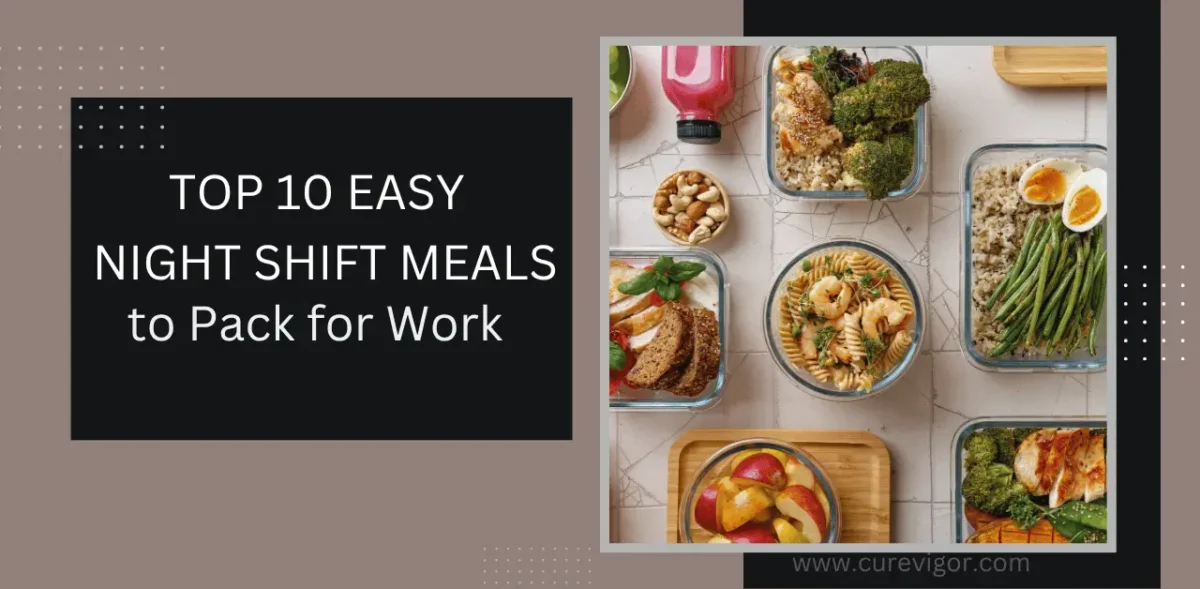
Pack these meals in a cooler bag to eat at your desk or in your car. They hold up well over a 12-hour shift. Portable meals prevent desperate vending machine runs.
- Whole wheat wrap with turkey and spinach
- Mason jar salad with chickpeas and feta
- Leftover grilled chicken and brown rice
- Tuna salad on whole-grain crackers
Bottom line: Prep your portable meals on your first day off.
Budget-Friendly Options
Rely on cheap, shelf-stable staples to fuel your shifts without breaking the bank. You do not need expensive superfoods to eat well at night. Budget foods can be just as nutritious as premium options.
- Canned beans and corn
- Peanut butter and bananas
- Oatmeal packets
- Canned tuna
Bottom line: Cheap pantry staples are your best friend on a night shift budget.
How to Eat at 3 AM Without Gaining Weight
Portion Size Rules
Keep your 3 AM snack under 300 calories. Night shift workers have a slower metabolism at night, making excess calories more likely to be stored as fat. Keep 3 AM snacks small to match your lowered nighttime metabolism.
Bottom line: Treat your 3 AM snack like a bridge, not a full meal.
Best Time to Eat During a Night Shift
Eat your largest meal before your shift starts or during your first break. Your 3 AM intake should be a light snack, not a heavy meal. Front-load your calories to match your higher early-shift metabolism.
Bottom line: Eat big before your shift, and eat light at 3 AM.
What to Eat Before Sleeping After Work
Eat a small, carb-and-protein snack 30 minutes before bed to promote sleep. Complex carbs help tryptophan enter the brain, while protein provides steady overnight amino acids. A small carb-protein snack before bed improves your daytime sleep quality.
- Half a turkey sandwich
- Tart cherry juice and a few crackers
- Warm milk with oatmeal
Bottom line: A tiny pre-sleep snack helps you wind down and sleep more deeply. Read our Daytime Sleep Hacks for more recovery tips.
The Role of Hydration and Caffeine During Night Shift
How Much Water Do You Need?
Drink at least 64 ounces of water spread evenly across your shift. Dehydration can mimic fatigue and make the 3 AM slump feel much worse. Water is the cheapest, most effective energy booster you have.
Bottom line: Sip water constantly to keep your energy stable.
When to Stop Drinking Caffeine
Stop consuming all caffeine at least four hours before your shift ends. Caffeine has a half-life of up to six hours and will ruin your daytime sleep. Late caffeine is the number-one enemy of night-shift recovery.
Bottom line: Put the coffee away by 3 AM or 4 AM at the latest. Review our Caffeine Cutoff Guide for exact timings.
Best 3 AM Foods by Job Type
Nurses
Choose foods you can eat in two-minute bursts between patient checks. You need quick energy without having to sit down. Nurses need grab-and-go foods that survive constant interruptions.
- Protein shakes
- Trail mix
- Protein bars
Bottom line: Keep high-protein, single-serve items in your scrub pockets.
Drivers
Pick foods that are not messy and won’t make you drowsy. Avoid heavy carbs that can make you feel sluggish behind the wheel. Drivers need clean, alertness-boosting foods that keep their hands on the wheel.
- Beef jerky
- Apple slices
- Sunflower seeds
Bottom line: Avoid messy or heavy foods that cause driving fatigue.
Security Guards
Focus on warming, comforting foods if you are patrolling outside in the cold. You need sustained energy for long periods of low-intensity activity. Security guards need warming foods that provide long-lasting heat and energy.
- Container of chili
- Hot oatmeal
- Warm broth with noodles
Bottom line: Warm foods keep your core temperature up during cold patrols.
Warehouse Workers
Prioritize foods with higher calories and electrolytes to replace sweat loss. Physical labor burns massive amounts of energy. Warehouse workers need high-calorie foods to fuel heavy physical labor.
- Peanut butter sandwiches
- Bananas and nuts
- Electrolyte drinks
Bottom line: Fuel your physical labor with dense, replenishing foods.
Sample Night Shift Nutrition Plans
8-Hour Shift Example
Follow this simple timeline to keep your energy perfectly level. This plan balances meals and snacks without overloading your stomach. An 8-hour shift requires one main meal and two small snacks.
| Time | Meal/Snack | Components |
| 6:00 PM | Pre-shift Meal | Grilled chicken, quinoa, roasted vegetables |
| 9:00 PM | Break 1 Snack | Greek yogurt, handful of almonds |
| 1:00 AM | 3 AM Snack | Apple slices, two tablespoons peanut butter |
Bottom line: Space your intake evenly to avoid massive energy drops.
12-Hour Shift Example
Extend the 8-hour plan by adding a mid-shift mini-meal. You need more fuel, but still must avoid heavy foods at 3 AM. A 12-hour shift calls for strategic mini-meals to stop burnout.
| Time | Meal/Snack | Components |
| 6:00 PM | Pre-shift Meal | Large turkey wrap, avocado, side of fruit |
| 9:00 PM | Break 1 Snack | Hard-boiled eggs, whole grain crackers |
| 12:00 AM | Mid-shift Meal | Leftover chicken, sweet potato |
| 3:00 AM | 3 AM Snack | Cottage cheese, pineapple chunks |
| 5:30 AM | Pre-sleep Snack | Half banana, tart cherry juice |
Bottom line: Break a 12-hour shift into three small meals and two snacks.
Common 3 AM Eating Mistakes
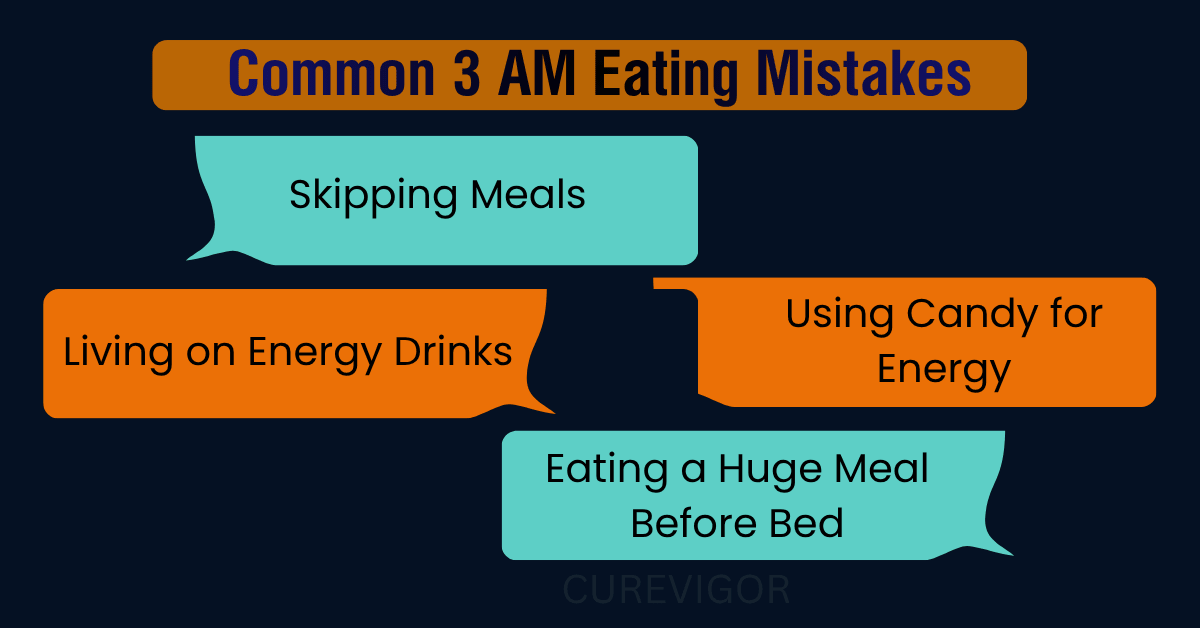
Skipping Meals
Do not skip your pre-shift meal to “save calories” for later. Arriving at 3 AM, starving, guarantees you will binge on junk food. Skipping meals guarantees a 3 AM junk food binge.
Bottom line: Eat a solid pre-shift meal to protect your 3 AM choices.
Living on Energy Drinks
Relying on energy drinks for your 3 AM push destroys your sleep architecture. The crash from the third energy drink makes the end of your shift miserable. Energy drinks create a debt you pay back with poor sleep.
Bottom line: Switch to water or decaf after your first break.
Using Candy for Energy
Eating candy gives you a three-minute high followed by a two-hour low. Your brain will beg for more sugar as the crash hits. Candy is a trap that guarantees a worse crash later.
Bottom line: Never use sugar as a main energy source.
Eating a Huge Meal Before Bed
Eating a massive meal right before your daytime sleep causes acid reflux and poor sleep quality. Your digestion slows at night, causing heavy food to sit in your stomach. A huge pre-sleep meal ruins your daytime rest.
Bottom line: Keep your post-shift intake very light.
Quick Night Shift Survival Checklist
Use this table to verify your 3 AM strategy before your next shift.
| Checklist Item | Status |
| Ate a protein-heavy meal before the shift? | [ ] Yes |
| Packed a complex carb + protein 3 AM snack? | [ ] Yes |
| Brought a reusable water bottle? | [ ] Yes |
| Stopped caffeine 4 hours before clock-out? | [ ] Yes |
| Avoided the vending machine? | [ ] Yes |
Bottom line: Check this list before you clock in to secure a smooth shift.
Best 3 AM Foods by Goal
Not every worker has the same goal.
Some want to stay awake. Others have a wish to lose weight or build muscle. The right food depends on what you are trying to achieve.
Best Foods to Stay Awake
If staying alert is your priority, choose foods that support steady energy.
Protein-rich foods combined with fiber-rich carbohydrates usually work best.
Examples include Greek yogurt with berries, a turkey sandwich on whole-grain bread, or oatmeal with nuts.
These meals provide fuel without causing the dramatic blood sugar swings associated with sugary foods.
Bottom line: Steady energy beats temporary stimulation.
Best Foods for Weight Loss
Many night shift workers worry that eating at 3 AM automatically causes weight gain. The reality is more complicated.
Weight gain is usually influenced by overall calorie intake, food quality, activity level, sleep, and meal timing. Smaller portions with plenty of protein can help manage hunger without adding unnecessary calories.
Foods such as cottage cheese, boiled eggs, vegetables, and plain Greek yogurt work particularly well.
Bottom line: Focus on portion control and protein rather than skipping meals entirely.
Best Foods for Muscle Growth
Workers who exercise before or after shifts often need additional protein.
- At 3 AM, protein-rich meals can aid muscle recovery and help meet daily nutrition goals.
- Chicken, tuna, Greek yogurt, cottage cheese, and protein shakes are all useful options.
- Adding slow-digesting carbohydrates can provide additional energy for physically demanding jobs.
Bottom line: Protein remains the priority for muscle growth.
Best Foods for Acid Reflux
- Heartburn can become worse during overnight work.
- Large meals, spicy foods, fried foods, and excessive caffeine may increase symptoms.
- Lighter options such as oatmeal, bananas, multigrain toast, and lean protein are often easier to tolerate.
- Many workers also find that eating smaller portions helps reduce discomfort.
Bottom line: Keep meals lighter if reflux is a problem.
Recap: Your 3 AM Game Plan
To survive the 3 AM slump, you need to balance your blood sugar and work with your circadian rhythm, not against it. Eat a light snack that pairs protein with complex carbs, avoid sugar and heavy meals, and cut caffeine early.
Prep your snacks before your shift so you don’t end up relying on the vending machine at 3 AM.
Bottom line: Pair protein with complex carbs, hydrate first, and keep portions small to beat the night shift crash.
Conclusion
Working through the night is hard enough without fighting a food coma or a sugar crash. Knowing what to eat at 3 AM gives you control over your energy levels instead of leaving you at the mercy of a breakroom vending machine. Fuel smart, hydrate often, and protect your daytime sleep.
Eating the right foods at 3 AM keeps you alert now and helps you sleep later.
Bottom line: Feed your body steady fuel at 3 AM to finish your shift strong and recover faster.
night shift nutrition, 3 AM snacks, shift work energy, steady energy foods
Take Control of Your Night Shift Health
Ready to stop surviving on energy drinks and start actually thriving on the night shift? Explore CureVigor’s Night Shift Health Hub for more actionable meal prep guides, supplement reviews, and fatigue-beating strategies built specifically for shift workers. Subscribe to our newsletter today and get one practical survival tip delivered to your inbox every week.
Frequently Asked Questions
Q. Is it bad to eat at 3 AM on a night shift?
No, it is not bad if you choose the right foods. Night shift workers had a lower post-meal metabolic rate and burned 5% fewer calories while at rest, according to a study published in the Proceedings of the National Academy of Sciences. Because of this, you must keep 3 AM portions small and focused on protein and fiber to avoid weight gain.
Q. What should I eat at 3 AM to stay awake during a night shift?
The best foods to eat at 3 AM combine protein, fiber, and slow-digesting carbohydrates. Good options include Greek yogurt with berries, a turkey wrap, boiled eggs, or oatmeal with nuts. These foods provide steady energy without causing a rapid blood sugar spike. Avoid sweet treats because they frequently cause an energy crash later in the shift.
Q. Is it unhealthy to eat at 3 AM while working nights?
Eating at 3 AM is not automatically unhealthy if you work overnight. Night shift workers often need fuel during hours when most people are asleep. The key is choosing balanced meals instead of processed snacks, sugary foods, or oversized meals. Smart food choices can support energy, focus, and general nutrition during the night shift.
Q. What foods help prevent a sugar crash on the night shift?
Foods rich in protein, fiber, and healthy fats are best for preventing a sugar crash. Examples include nuts, Greek yogurt, cottage cheese, apples, oatmeal, and whole-grain sandwiches. These foods release energy gradually and help maintain blood sugar stability. Limiting candy, pastries, and sugary drinks can also reduce sudden energy slumps.
Q. Can eating at 3 AM cause weight gain?
Eating at 3 AM does not automatically cause weight gain. Weight gain is usually linked to total calorie intake, food quality, physical activity, and sleep habits. Choosing moderate portions and nutrient-dense foods can help support a healthy weight even when working nights. Night-shift meal timing may play a role, but food choices matter equally.
Q. Should I eat before sleeping after a night shift?
A small meal or snack before bed may help prevent hunger from disrupting sleep. However, very large meals can cause digestive discomfort and make it harder to fall asleep. Many night shift workers do well with a light option such as yogurt, oatmeal, fruit, or multigrain toast with protein. The goal is to feel satisfied without feeling overly full.
Q. What should nurses eat during overnight shifts?
Nurses frequently benefit from portable foods that are easy to eat during short breaks. Greek yogurt, hard-boiled eggs, protein-rich wraps, fruit, nuts, and overnight oats are popular choices. These foods provide steady energy without demanding extensive preparation. They can also help reduce dependence on vending-machine snacks during busy shifts.
Q. What are the best 3 AM snacks for night shift workers?
The best 3 AM snacks are easy to digest and provide lasting energy. Typical selections include an apple with peanut butter, Greek yogurt, mixed nuts, cottage cheese, or a low-added-sugar protein bar. These snacks help keep hunger under control while supporting concentration and efficiency. A combination of protein and fiber is usually the most effective option.
Q. How much caffeine should I have on a night shift?
Moderate caffeine usage can improve alertness during overnight work, but timing matters. Many experts recommend avoiding caffeine during the last four to six hours of your shift. Consuming too much caffeine late in the shift may interfere with daytime sleep. Water and proper hydration should remain your primary focus throughout the night.
Q. Why do I feel hungry all the time on the night shift?
Night shift work can disrupt hormones that regulate hunger and fullness. Fatigue, stress, dehydration, and irregular meal timing can also increase cravings. Many workers mistake tiredness for hunger, especially around 3 AM. Eating balanced meals throughout the shift and keeping hydrated may help reduce constant hunger.
Q. What should I avoid eating at 3 AM?
It is best to avoid foods high in sugar, refined carbohydrates, and unhealthy fats. Candy, donuts, pastries, large fast-food meals, and sugary energy drinks frequently provide short-term energy followed by fatigue. These foods may also increase digestive discomfort during overnight work. Protein-rich and fiber-dense foods are generally better choices for steady energy.
Read more about night shift workers’ health.
You might like: