Stay alert by combining strategic caffeine timing, bright light exposure, regular movement breaks, and balanced meals. Protect your health by prioritizing daytime sleep, staying hydrated, managing stress, and avoiding sugar crashes. No single trick works—it’s a complete system.
Why Night Shift Is Hard on Your Body (The Biology)
Let’s be honest: night shift can feel like a slow-motion car crash for your health. The fatigue, the brain fog, the weird eating schedule, the isolation—it’s a lot. But here’s the good news: you don’t have to choose between your job and your health. You just need a smarter system.

How Circadian Rhythm Disruption Affects You
Your body runs on a 24-hour internal clock called the circadian rhythm. It regulates when you feel sleepy, when you feel alert, and even when your digestive system works best.
When you work nights, you’re asking your body to be awake at a time when it’s biologically programmed to sleep. This creates:
- Poor sleep quality: even if you sleep 8 hours during the day, it’s often lighter and less restorative
- Metabolic disruption: your body processes food differently at night
- Hormonal chaos: cortisol (stress hormone) and melatonin (sleep hormone) get out of sync
Common Issues Night Shift Workers Face
| Issue | Why It Happens |
| Fatigue | Sleep pressure builds as your circadian clock pushes you toward sleep. |
| Brain Fog | Your brain’s processing speed slows during circadian low points. |
| Inflammation | Disrupted sleep triggers inflammatory markers. |
| Cortisol Spikes | Your body stays in “alert” mode too long. |
| Digestive Problems | Your gut isn’t designed to process food at 3 AM. |
The Difference Between “Staying Awake” and “Being Healthy Long-Term”
This is the most important distinction in this entire guide.
Staying awake is about getting through tonight. It’s caffeine, willpower, and survival mode.
Being healthy in the long term is about protecting your body and mind so you can do this job for years without burning out.
This guide is about the second one.
Pillar 1: Protect Your Sleep First (The Foundation)
If you remember only one thing from this article, remember this:
Your alertness at 2 AM depends entirely on the sleep you got at 9 AM.
You cannot hack your way out of sleep deprivation. Sleep is the foundation. Everything else—caffeine, food, movement—is just a temporary patch.

How to Set Up Your Room for Daytime Sleep
Your bedroom needs to become a sleep fortress. Here’s how:
Make It Dark
- Use blackout curtains that completely block sunlight
- Wear a comfortable sleep mask if you can’t block all light
- Cover or turn away any electronic displays with LED lights
Make It Quiet
- Use earplugs or a white noise machine
- Consider a fan for both noise masking and cooling
- Silence your phone and put it face-down
Make It Cool
- Keep the room between 65 and 68°F (18-20°C)
- Your body temperature drops during sleep—a cooler room helps this process
Make It Consistent
- Go to bed at roughly the same time each day, even on days off
- Follow the same wind-down routine every time
Make It Protected
- Tell household members when you sleep
- Put a “Do Not Disturb” sign on your door if needed
- Treat your sleep period as non-negotiable
Your Wind-Down Routine for Better Recovery
The hour after your shift is critical. What you do here determines whether you fall asleep easily or lie awake staring at the ceiling.
Try this 30-minute wind-down routine:
- Dim the lights: reduce bright light exposure 30-60 minutes before bed
- Take a warm shower: the drop in body temperature afterwards signals sleep
- Avoid screens: blue light from phones keeps your brain alert
- Do something relaxing: read a book, listen to calm music, or meditate
- Don’t check work emails: your brain needs to disconnect

Napping Strategies That Work
Naps are among the most powerful tools for night-shift workers. But timing matters.
Pre-Shift Nap (Before Work)
- Duration: 20-90 minutes
- Best for: Boosting alertness before a long shift
- Pro tip: Set an alarm and give yourself 15 minutes to fully wake up
During Shift Nap (If Your Job Allows)
- Duration: 15-20 minutes
- Best for: A quick reset during a break
- Pro tip: Use caffeine before the nap—it takes 20 minutes to kick in, so you wake up refreshed
Post-Shift Nap (After Work)
- Duration: 20-30 minutes
- Best for: Taking the edge off before you drive home
- Pro tip: Don’t nap too long, or you’ll struggle to sleep later
Pillar 2: Energy Management—How to Stay Alert
Now let’s talk about staying awake during your shift. This is where most people reach for an energy drink and hope for the best. But there’s a smarter way.
Light Exposure Strategy: Bright During Shift, Darkness After
Light is the strongest signal to your circadian clock. Use it strategically.
During Your Shift
- Work in the brightest area available
- Use overhead lights or a desk lamp at your workstation
- If you can, spend time near windows (even at night, outdoor light is brighter than indoor)
- Consider a light therapy box (but check with your workplace safety rules first)
After Your Shift (Going Home)
- Reduce light exposure as much as possible
- Wear sunglasses on your commute home
- Dim your phone screen
- Avoid bright screens before bed
This signals your brain that it’s time to wind down, not time to stay alert.
Smart Caffeine Timing: Boost Without Crashing
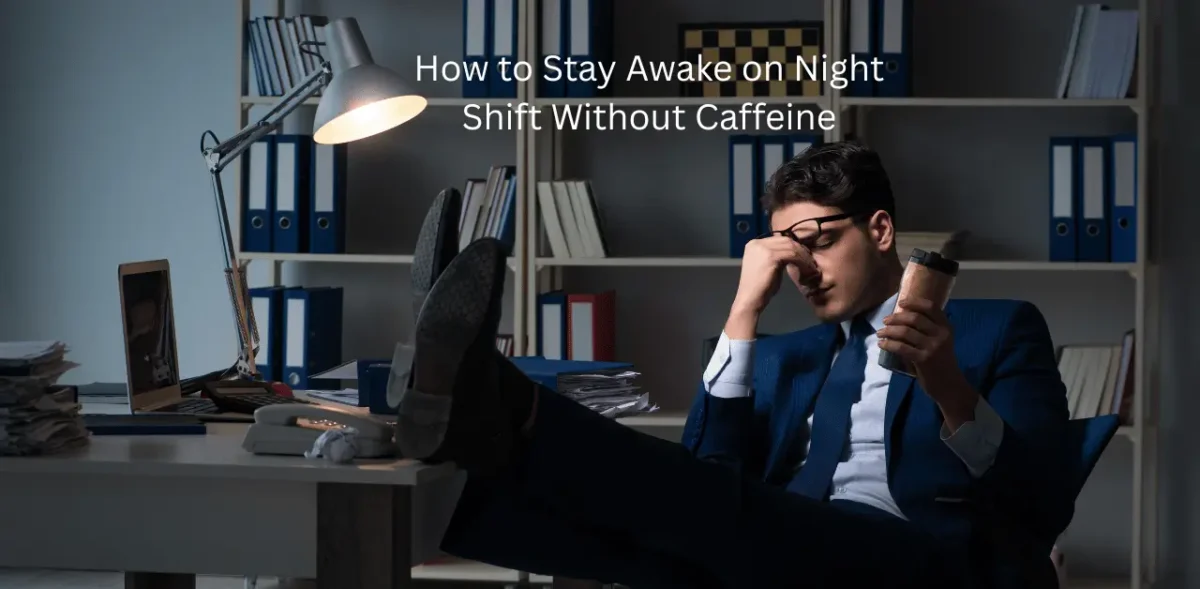
Caffeine is a tool, not a crutch. Used correctly, it helps you stay alert. Used incorrectly, it ruins your sleep and creates a vicious cycle.
The Caffeine Stoplight Strategy
| Time | Action | Why |
| Start of Shift | Drink coffee if you need it. | Your body can clear it before sleep. |
| Middle of Shift | Ask: “Do I really need this?” | Try water or movement first. |
| Last 3-4 Hours | Stop all caffeine. | Gives your body time to clear it before bed |
The Caffeine Trap
- Tired—Caffeine late in shift – Poor daytime sleep – More tired -More caffeine
Break this cycle by protecting your sleep first, then using caffeine strategically.
Hidden Sources of Caffeine
- Tea
- Energy drinks
- Cola
- Chocolate
- Pre-workout supplements
- Some medications
Read labels. You might be getting more caffeine than you think.
Micro-Movements and Breaks to Fight Fatigue
Prolonged sitting or standing worsens fatigue. Movement wakes up your brain and body.
The 2-Minute Alertness Reset
When you feel your eyelids getting heavy:
- Stand up
- Walk briskly for 60 seconds
- Do 10 calf raises or air squats
- Take 3 deep breaths
- Return to work
That’s it. You don’t need a full workout—just a quick reset.
Movement Ideas During Your Shift
- Walk to refill your water bottle
- Take the stairs instead of the elevator
- Do shoulder rolls and neck stretches at your desk
- Stand up during phone calls
- Take a short walk during breaks

Pillar 3: Nutrition—Fuel Your Body the Right Way
Food won’t override your circadian rhythm, but it can make a huge difference in how you feel during your shift.
Meal Timing for Blood Sugar Balance
Your body processes food differently at night. Eating a large, heavy meal at 2 AM can spike your blood sugar, make you sluggish, and disrupt your metabolism.
A Better Approach
| Time | What to Eat | Why |
| Before Shift | Balanced meal (protein + complex carbs + veggies) | Provides steady energy for the first half of your shift |
| During Shift | Light snacks every 3-4 hours | Prevents blood sugar crashes without making you sluggish |
| After Shift | Small, light snack (if hungry) | Avoids overloading your digestive system before sleep |
Best Foods for Night Shift Wellness
Build your meals and snacks around these foods:
Protein Sources
- Hard-boiled eggs
- Greek yogurt
- Cottage cheese
- Chicken or turkey slices
- Canned tuna or salmon
- Protein shakes or bars
Complex Carbohydrates
- Whole-grain bread or crackers
- Oatmeal
- Quinoa
- Brown rice
- Sweet potatoes
Healthy Fats
- Almonds, walnuts, and other nuts
- Avocado
- Olive oil
- Chia seeds
- Fatty fish
Fiber-Rich Foods
- Vegetables (carrots, bell peppers, cucumber)
- Fruit (apples, berries, bananas)
- Lentils and beans
- Hummus
Sample Night Shift Snack Ideas
- Greek yogurt with berries
- Hummus with vegetable sticks
- Oatmeal with nuts and fruit
- Whole-grain wrap with chicken and salad
- Hard-boiled eggs with an apple
- Lentil soup in a thermos
Hydration and Electrolytes to Prevent Headaches
Dehydration is a silent fatigue driver. Even mild dehydration can cause headaches, poor concentration, and irritability.
Hydration Strategy
- Keep water available at your workstation
- Drink regularly throughout your shift (don’t wait until you’re thirsty)
- Increase fluids if you’re in a hot environment or doing physical work
- Consider electrolyte drinks if you’re sweating heavily
What to Avoid
- Sugary drinks as your primary hydration source
- Excessive caffeine (it’s a diuretic)
- Energy drinks with high sugar content
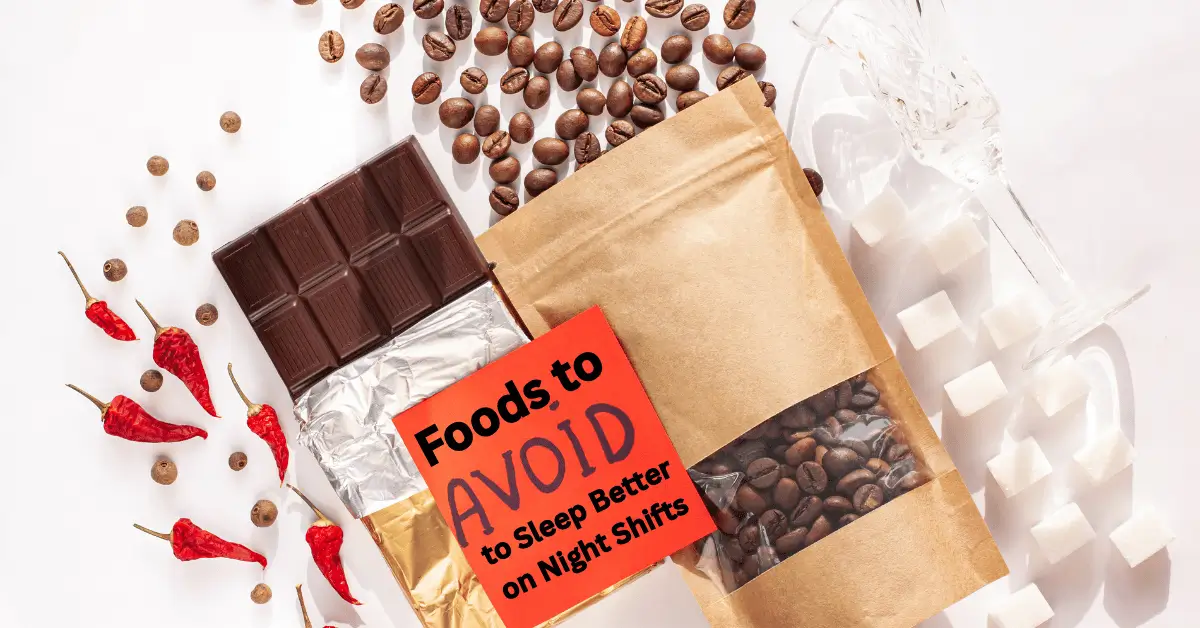
Foods and Drinks to Avoid
These will make your night shift harder, not easier:
| Avoid | Why |
| Sugary snacks and drinks | Blood sugar spike followed by crash |
| Heavy, greasy meals | Makes you sluggish and disrupts sleep |
| Excessive caffeine late in the shift | Ruins daytime sleep |
| Alcohol after shift | Disrupts sleep quality, even if it helps you fall asleep |
| Large meals right before sleep | Your body is still digesting when you should be resting. |
Pillar 4: Movement and Recovery
Your body needs movement to function well. But it also needs rest to recover.
Quick Workouts to Boost Metabolism
You don’t need a gym membership. You just need to move consistently.
During Your Shift (Micro-Workouts)
- 2-minute walks every hour
- Calf raises while standing
- Desk stretches (neck rolls, shoulder shrugs, spinal twists)
- Wall push-ups during a break
On Your Days Off (Full Workouts)
- 20-30 minutes of brisk walking
- Bodyweight exercises (squats, lunges, push-ups)
- Yoga or stretching routine
- Swimming or cycling (low-impact options)
Stretching and Mobility to Reduce Inflammation
Night shift work increases inflammatory markers in your body. Movement and stretching help counteract this.
Simple Stretches for Night Shift Workers
Neck Stretch
- Gently tilt your head to one side
- Hold for 15 seconds
- Repeat on the other side
Shoulder Rolls
- Roll your shoulders forward 10 times
- Roll them backward 10 times
Spinal Twist
- Sit up straight
- Gently twist your upper body to one side
- Hold for 10 seconds
- Repeat on the other side
Hamstring Stretch
- Sit on the edge of your chair
- Extend one leg straight
- Lean forward slightly
- Hold for 15 seconds
- Repeat on the other side
Rest Days and Burnout Prevention
More isn’t always better. Your body needs rest days to recover.
Signs You Need a Rest Day
- Persistent fatigue despite adequate sleep
- Muscle soreness that doesn’t improve
- Irritability or mood swings
- Reduced motivation
- Frequent illness or getting sick easily
Burnout Prevention Strategies
- Take at least one full rest day per week
- Don’t pick up extra shifts if you’re already exhausted
- Listen to your body—it knows when it needs rest
- Prioritize sleep over social activities when you’re depleted
Pillar 5: Mental Health and Stress Management
Night shift can be isolating. The unusual schedule, the lack of sunlight, the disrupted social life—it takes a toll on mental health.
Nervous System Reset Techniques to Manage Cortisol
Your body produces cortisol (the stress hormone) in response to night shift work. This can leave you feeling wired, anxious, and unable to relax.
Quick Nervous System Reset (2 Minutes)
- Breathe deeply: inhale for 4 seconds, hold for 4 seconds, exhale for 6 seconds
- Ground yourself: name 5 things you can see, 4 you can touch, 3 you can hear, 2 you can smell, and 1 you can taste
- Use a calming scent: lavender or peppermint essential oil can help
Longer Stress Management Practices
- Meditation: 5-10 minutes daily (use an app like Headspace or Calm)
- Journaling: write down what you’re grateful for or what’s on your mind
- Cold exposure: a cold splash of water on your face can reset your nervous system
- Nature exposure: spend time outdoors on your days off
Social Connection and Boundaries to Prevent Isolation
Loneliness is a real risk for night shift workers. Your schedule often means missing social events and family time.
What You Can Do
- Schedule intentional catch-ups with friends and family (even if it’s a quick phone call)
- Find night shift communities (online groups, forums, or workplace connections)
- Set social boundaries: it’s okay to say no to events that don’t work for your schedule
- Communicate with loved ones about your schedule so they understand
Mindset Habits to Stay Motivated
Your mindset determines how you experience the night shift. These habits can help.
Reframe the Night Shift
- Instead of: “This is terrible; I can’t do this forever.”
- Try: “This is a chapter, not the whole book. I’m building skills and resilience.”
Focus on What You Can Control
- Sleep environment
- Nutrition
- Movement
- Stress management
Celebrate Small Wins
- Ate a healthy meal? Win.
- Got 7 hours of sleep? Win.
- Took a movement break? Win.
Use Positive Self-Talk
- “I’m doing something difficult, and I’m handling it.”
- “This shift is one step closer to my goals.”
- “I’m taking care of myself, even when it’s hard.”
Sample 24-Hour Healthy Night Shift Routine
Here’s a complete routine you can adapt to your schedule.
Pre-Shift (Before Work)
| Time | Action | Why |
| 8:00 AM | Wind down, dim the lights, and prepare for sleep. | Signals your body to rest |
| 8:30 AM | Sleep in a dark, cool room. | Foundation for alertness |
| 4:00 PM | Wake up and expose yourself to bright light. | Helps reset your circadian rhythm |
| 4:30 PM | Eat a balanced meal (protein + complex carbs). | Steady energy for the shift ahead |
| 5:30 PM | Pack your bag: healthy snacks, a water bottle, and lunch. | Prepares you for success |
| 6:00 PM | Light exposure (bright light or lamp) | Wakes up your brain |
| 6:30 PM | Travel to work | Transition to work mode |
During Shift
| Time | Action | Why |
| 7:00 PM | Start the shift and use bright lighting if available. | Supports alertness |
| 8:00 PM | First caffeine (if needed) | Optimal timing early in the shift |
| 10:00 PM | Drink water and take a short movement break. | Prevents dehydration and fatigue |
| 11:00 PM | Eat a light snack (e.g., hummus and veggies). | Maintains energy without a crash |
| 1:00 AM | Mid-shift check-in: how are you feeling? | Assess if you need a break or snack. |
| 2:00 AM | Movement break (2-minute reset) | Fights the 3 AM slump |
| 3:00 AM | Eat a small snack (if hungry). | Avoids sugar crashes |
| 4:00 AM | Stop caffeine. | Gives the body time to clear it before sleep |
| 5:00 AM | Hydrate, move, and prepare for the end of the shift. | Finishes strong |
Post-Shift (After Work)
| Time | Action | Why |
| 7:00 AM | End shift and put on sunglasses for the commute. | Reduces morning light exposure |
| 7:30 AM | Light snack (if hungry) | Avoids heavy meals before sleep |
| 8:00 AM | Dim the lights; avoid screens. | Signals the brain to wind down |
| 8:30 AM | Warm shower, then cool down. | Dropping in temperature promotes sleep |
| 9:00 AM | Dark, quiet room for sleep | Protects sleep quality |
| 9:15 AM | Sleep (aim for 7-8 hours) | The foundation of your next shift |
Tools and Gear That Actually Help
These items can make a real difference in your night shift experience.
| Tool | Why It Helps |
| Blackout curtains | Block sunlight for daytime sleep. |
| Sleep mask | Blocks light even in imperfect rooms |
| Earplugs or a white noise machine | Reduces daytime noise |
| Blue light glasses | Reduces blue light exposure after shift |
| Light therapy box | Provides bright light during shift (check workplace rules) |
| Insulated water bottle | Keeps water accessible all shift |
| Meal prep containers | Prepares healthy food in advance |
| Wake-up light alarm | Wakes you up gradually with light |
| Sleep tracking app | Monitors sleep quality and patterns |
| Step tracker | Tracks movement and encourages activity |
7 Biggest Mistakes That Wreck Night Shift Health
Avoid these common pitfalls.
Mistake 1: Relying Only on Caffeine and Sugar
- Why it wrecks you: Caffeine late in the shift ruins sleep. Sugar causes energy crashes.
- Fix: Use caffeine strategically. Eat balanced meals.
Mistake 2: Eating Heavy Meals at the Wrong Time
- Why it wrecks you: Heavy meals cause sluggishness and digestive issues.
- Fix: Eat light during your shift. Save larger meals for before or after.
Mistake 3: No Light Exposure Plan
- Why it wrecks you: Bright light after work signals “wake up” when you need to sleep.
- Fix: Bright light during shift, darkness after.
Mistake 4: Skipping Recovery Days
- Why it wrecks you: Your body never fully recovers.
- Fix: Take at least one full rest day per week.
Mistake 5: Ignoring Mental Health
- Why it wrecks you: Isolation and stress accumulate.
- Fix: Stay connected, manage stress, and seek support.
Mistake 6: No Wind-Down Routine
- Why it wrecks you: You lie awake because your brain is still in work mode.
- Fix: Create a 30-minute wind-down routine after work.
Mistake 7: Pushing Through Dangerous Fatigue
- Why it wrecks you: It’s unsafe for you and others.
- Fix: Stop and follow safety procedures. Your life matters more than a shift.
FAQ: How to Stay Alert and Healthy on the Night Shift
Q. Is working the night shift bad for your health long-term?
Night shift work does come with health risks, disrupted sleep, metabolic issues, and increased stress—but these can be managed. The key is mitigation. Prioritize sleep, nutrition, movement, and stress management.
Many people work nights for years without serious health issues when they use a system like the one in this guide.
Q. What’s the best time to eat to avoid fatigue?
Eat a balanced meal before your shift to fuel the first half. During your shift, eat light snacks every 3-4 hours to maintain blood sugar. Avoid heavy meals during the night, especially within 2-3 hours of bedtime.
Q. How many hours of sleep do I need to recover from the night shift?
Most adults need 7-9 hours of sleep in a 24-hour period. For night shift workers, aim for at least 7 hours of daytime sleep. If you’re getting less, prioritize naps and protect your sleep environment.
Q. Can I ever fully adapt to the night shift?
Most people never fully adapt. Your circadian rhythm is hardwired to respond to light and darkness.
Even permanent night shift workers often have a slight misalignment. The goal isn’t complete adaptation; it’s management. Use the strategies in this guide to work safely and protect your health.
Q. What’s the best caffeine strategy for a night shift?
Use caffeine early in your shift, not continuously. Stop caffeine 3-4 hours before bedtime to protect your daytime sleep. If you drink coffee at 4 AM and try to sleep at 9 AM, you’re likely to have trouble.
Q. Is it okay to nap during a night shift?
It depends on your workplace policy. If your job allows it, a 15-20 minute nap during a break can significantly improve alertness. Use caffeine before the nap—it takes 20 minutes to kick in, so you wake up refreshed. Always follow workplace safety rules.
Q. How do I stay alert without caffeine?
If you want to avoid caffeine, use light exposure, movement breaks, hydration, and strategic snacks. Cold water on your face, a brisk walk, or a short nap can also help. For a complete guide, check out our article on [How to Stay Awake on Night Shift Without Caffeine] (internal link).
Final Word
Optimizing alertness requires a strategic understanding of how napping, caffeine, and your circadian rhythm interact at a biochemical level.
While both caffeine and sleep manipulate homeostatic sleep pressure (your internal drive to sleep), only light and timing can shift your underlying master biological clock.
The scientific consensus on balancing these three variables outlines clear mechanisms, behavioral protocols, and clinical limitations.
Staying alert and healthy on the night shift isn’t about heroic willpower. It’s about building a system.
Sleep – Light – Caffeine – Nutrition – Hydration – Movement – Recovery – Mental Health
Start with the foundation: protect your sleep. Then add the other pieces one at a time. You don’t need to change everything overnight. Just start with one change this week.
And if you ever reach the point where you can’t safely stay awake, stop. Your health and safety matter more than any shift.
You’ve got this.
Suggested Resources & Trusted Sources
- National Heart, Lung, and Blood Institute (NHLBI) – Healthy sleep habits and shift worker strategies
- National Institutes of Health (NIH) – Shift work, circadian rhythms, and metabolic effects
- NIOSH/CDC – Shift-work fatigue, light management, and occupational safety
- American Academy of Sleep Medicine (AASM) – Research on sleep disorders and shift work
- Peer-reviewed research on naps, caffeine, and circadian rhythm management
Read more about night shift workers’ health.