

Need backache relief after long night shifts? Discover 7 powerful techniques that help shift workers reduce pain, improve posture, sleep better, and protect spinal health naturally.
Backache Relief Techniques
You finish another shift feeling exhausted.
Your feet hurt. Your shoulders feel tight. But it is the dull ache in your lower back that keeps demanding attention.
Maybe it starts in the middle of your shift. Perhaps it appears when you sit down after hours of standing. Or maybe you wake up after daytime sleep feeling stiffer than when you went to bed.

If this sounds familiar, you are far from alone.
Back pain is one of the most common complaints among shift workers. Nurses, caregivers, warehouse staff, security personnel, drivers, factory workers, emergency responders, and call center employees often spend long hours sitting, standing, walking, lifting, or working in awkward positions.
The challenge becomes even greater when night shifts enter the equation.
Working against your body’s natural sleep-wake cycle affects recovery, increases fatigue, and may make pain feel more intense. Over time, small stresses can add up to a constant source of discomfort.
The good news is that back pain is not something you simply have to accept as part of the job. Targeted daily routines can often significantly lessen discomfort and enhance your quality of life.
This guide explores seven powerful techniques to help you relieve backache, protect your spine, and feel better both on and off the clock.
Quick Summary
If you are looking for effective backache relief for shift workers, the solution often starts with small daily habits. Long hours of sitting, standing, lifting, and disrupted sleep can place extra stress on your spine.
The good news is that improving posture, using proper back support, stretching regularly, strengthening your core, sleeping better, staying hydrated, and reducing inflammation can help ease discomfort and protect your back over the long term.
Even a few simple changes can make your shifts more comfortable and productive.
Quick Tip: Consistency matters more than perfection. Small improvements practiced every day often lead to the biggest results.
What Is the Best Way to Get Backache Relief as a Shift Worker?
Backache relief for shift workers usually comes from improving posture, strengthening the core, stretching regularly, optimizing sleep quality, staying hydrated, reducing inflammation, and using proper lower back support. Combining these strategies often provides better long-term results than relying on pain medication alone.
Quick Relief Checklist
- Improve workplace ergonomics.
- Support your lower back.
- Stretch throughout the shift.
- Build core strength.
- Improve recovery sleep.
- Stay hydrated.
- Reduce inflammation through nutrition and lifestyle habits.
Key Benefits
- Less muscle tension
- Better posture
- Improved mobility
- Reduced stiffness
- Better sleep quality
- Stronger spinal support
Why Shift Workers Experience More Back Pain Than Most People
Back pain is not always caused by one major injury.
More often, it develops from hundreds of small stresses repeated every day.
You may spend hours leaning forward at a workstation. You might lift patients during a busy hospital shift. You may stand on concrete floors throughout the night or remain seated behind the wheel for long periods.
Each activity places pressure on the muscles, joints, ligaments, and discs that support your spine.
Shift work adds another challenge.
Your body was designed to sleep during the night and remain active during daylight hours. When that schedule changes, recovery becomes more difficult.
Pain sensitivity is continuously increased by poor sleep quality, according to research. At the same time, fatigue often leads to poor posture and reduced movement efficiency.
The result is a cycle many shift workers know all too well:
- Less sleep.
- More fatigue.
- Poorer movement.
- More back pain.
Even minor improvements in daily habits can begin breaking this cycle.
What Exactly Is a Backache?
A backache is a general term used to describe pain, stiffness, soreness, tension, or discomfort affecting the muscles, joints, discs, nerves, or connective tissues of the back.
Some people experience a dull ache.
Others feel burning sensations, tightness, or sharp pain during specific movements.
The severity can vary significantly.
Determining the best course of action requires an understanding of the cause of your problem.
7 Powerful Techniques for Backache Relief
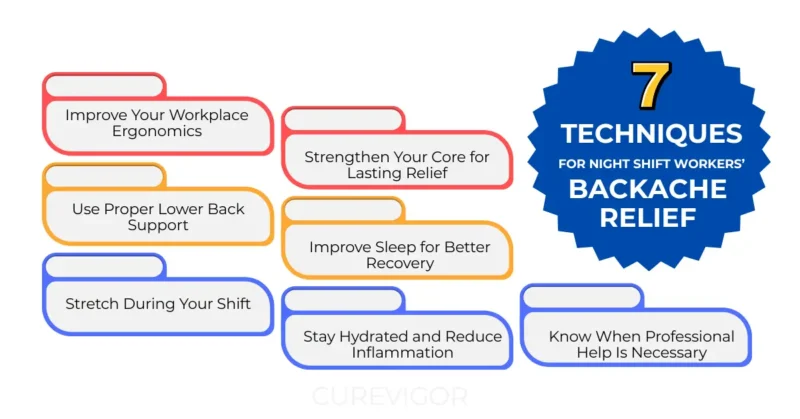
Technique #1: Improve Your Workplace Ergonomics
One of the fastest ways to reduce back pain is to improve your interaction with your work environment.
Many workers spend years treating symptoms without addressing the cause.
Your workstation may be contributing to your pain every single day.
Why Ergonomics Matters
When your body remains in an awkward position for hours, muscles work harder than necessary.
Over time, this creates tension, fatigue, and spinal stress.
Even small ergonomic adjustments can significantly reduce strain.
Ideal Workstation Setup
| Workplace Element | Recommended Position |
| Monitor | Eye level |
| Keyboard | Elbows at 90 degrees |
| Chair | Lumbar support |
| Feet | Flat on the floor |
| Shoulders | Relaxed and neutral |
Maintaining a neutral spine during your shift should be your aim if you work at a desk.
- Avoid leaning toward one side.
- Avoid reaching repeatedly for equipment.
- Avoid crossing your legs for extended periods.
Small adjustments often produce surprisingly large improvements.
Technique #2: Use Proper Lower Back Support
Your lower back naturally contains a gentle inward curve.
When that curve collapses during prolonged sitting, pressure increases on the spinal discs and surrounding muscles.
Proper support helps maintain healthy alignment.
Many shift workers notice improvement simply by adding a lumbar cushion.
If a specialized cushion is unavailable, a rolled towel can provide temporary support.
Comparing Support Options
| Support Method | Cost | Effectiveness |
| Rolled towel | Low | Moderate |
| Lumbar cushion | Moderate | High |
| Ergonomic chair | Higher | Very High |
The goal is not perfect posture.
The goal is to reduce unnecessary strain throughout long shifts.
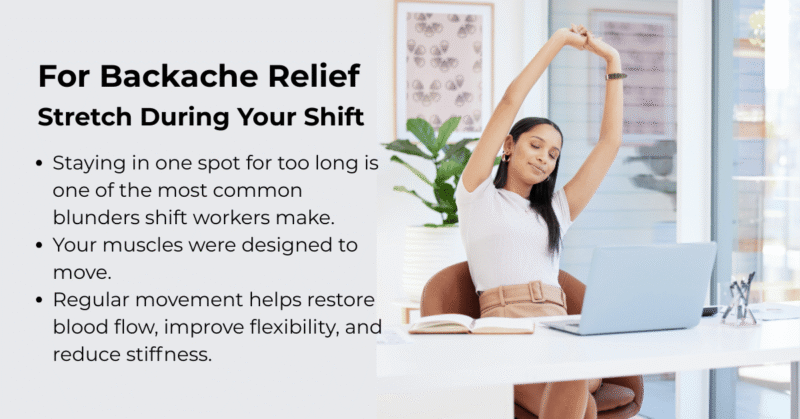
Technique #3: Stretch During Your Shift
Staying in one spot for too long is one of the most common blunders shift workers make.
Your muscles were designed to move.
Regular movement helps restore blood flow, improve flexibility, and reduce stiffness.
How Often Should You Stretch?
For most workers, a brief movement break every 60 to 90 minutes can make a noticeable difference.
Even two minutes of stretching may help reduce muscle tension.
A Simple Five-Minute Stretch Routine
- Start with a standing side stretch.
- Follow with a gentle hamstring stretch.
- Add a seated spinal twist.
- Roll your shoulders.
- Finish with a short walk.
These movements target common problem areas without requiring special equipment.
What Stretch Helps Back Pain the Most?
A standing side stretch is one of the most effective stretches for shift workers because it targets muscles that often become tight during prolonged sitting and standing. Regular stretching can improve flexibility, reduce stiffness, and relieve muscular tension around the lower back.
Technique #4: Strengthen Your Core for Lasting Relief
- Stretching provides temporary relief.
- Strengthening provides long-term protection.
- Your core includes much more than visible abdominal muscles.
- It also includes deep stabilizing muscles that support the spine throughout daily activities.
- When these muscles become weak, your lower back often compensates.
Over time, that compensation leads to pain.
The Best Exercises for Shift Workers
- Bird Dog remains one of the safest and most effective exercises for spinal stability.
- Side planks improve lateral support.
- Glute bridges strengthen muscles that help protect the lower back.
These workouts take less than fifteen minutes to perform at home and require very little equipment.
What Is the Best Exercise for Backache Relief?
Bird Dog is often considered one of the best exercises for backache relief because it improves core stability while placing very little stress on the spine. Consistent practice can help reduce recurring pain and improve posture.
Technique #5: Improve Sleep for Better Recovery
Many shift workers focus on what happens during work.
Recovery deserves equal attention.
Your body performs most repair processes while you sleep.
Poor sleep quality can increase inflammation, delay muscle recovery, and make pain feel more intense.
Best Sleeping Positions for Back Pain
| Position | Effectiveness |
| Side sleeping with a pillow between knees | Excellent |
| Back sleeping with a pillow under knees | Good |
| Stomach sleeping | Poor |
If you sleep during daylight hours, blackout curtains can make a significant difference.

A cool, dark room supports deeper sleep and better recovery.
Technique #6: Stay Hydrated and Reduce Inflammation
Workers often overlook the relationship between water and spinal health.
There is a lot of water in your spinal discs.
When hydration drops, discs lose some of their shock-absorbing ability.
You may notice increased stiffness and discomfort.
Nutrition matters as well.
Recovery and overall health are supported by a diet rich in anti-inflammatory foods.
Helpful Foods for Back Health

| Food | Potential Benefit |
| Salmon | Omega-3 support |
| Berries | Antioxidants |
| Nuts | Healthy fats |
| Leafy greens | Reduced inflammation |
Small dietary improvements can support the other techniques discussed throughout this guide.
Technique #7: Know When Professional Help Is Necessary
Most back pain improves with self-care.
However, some symptoms require immediate medical evaluation.
When Should You Seek Medical Help for Back Pain?
You should seek medical attention if back pain is accompanied by numbness, weakness, loss of bladder control, fever, unexplained weight loss, or severe pain that continues worsening despite self-care efforts.
These symptoms might indicate a more serious condition that requires treatment.
Key Takeaways
Back pain is extremely common among shift workers, but it should never be viewed as inevitable.
- Improving ergonomics can reduce daily strain.
- Lumbar support helps maintain spinal alignment.
- Stretching improves flexibility and mobility.
- Core strengthening provides long-term protection.
- Quality sleep supports recovery.
- Hydration and nutrition help reduce inflammation.
Most importantly, consistent small improvements often produce the greatest results over time.
Recap
Back pain is one of the most common challenges faced by shift workers, but it does not have to become a permanent part of your routine.
Throughout this guide, you learned seven powerful techniques for achieving lasting backache relief for shift workers, including improving workplace ergonomics, using lumbar support, stretching during shifts, building core strength, optimizing sleep quality, staying hydrated, and recognizing when professional help is needed.
By combining these strategies, you can reduce strain on your spine, recover more effectively, and improve your overall well-being both at work and at home.
FAQs on Backache Relief
Q. Can night shifts cause chronic back pain?
Yes, night shifts can contribute to chronic back pain over time. Long hours of sitting, standing, lifting, or walking place repeated stress on the spine. Poor sleep quality may also slow muscle recovery and increase pain sensitivity.
If these factors continue for months or years, occasional discomfort can develop into persistent back pain.
Q. Why does my back hurt more during overnight shifts?
Many shift workers notice that pain feels worse during the night. Fatigue often leads to poor posture and reduced movement, placing extra strain on the back muscles. Your body’s natural recovery processes are also disrupted during overnight work.
As a result, even minor muscle tension can feel more noticeable during a long shift.
Q. Is walking good for back pain relief?
Yes, gentle walking is one of the simplest ways to relieve back pain. Walking improves blood circulation, reduces stiffness, and helps keep supporting muscles active.
Short walks during breaks can prevent muscles from tightening after long periods of sitting or standing. Consistent movement is often more beneficial than staying completely still.
Q. How often should shift workers stretch?
Most experts recommend stretching every 60 to 90 minutes during long shifts. Frequent exercise increases flexibility and eases tense muscles.
Even a few minutes of stretching can make a difference. Focus on your lower back, hamstrings, hips, shoulders, and neck for the best results.
Q. What is the ideal sleeping position for people with lower back pain?
The ideal sleeping posture for lower back discomfort is often considered side sleeping with a pillow between your knees.
This maintains the normal alignment of your pelvis and spine. Putting a pillow beneath your knees can ease the strain on your lower back if you prefer to sleep on your back. In general, sleeping on one’s stomach is the least supportive position.
Q. Can dehydration contribute to back pain?
Yes, dehydration may contribute to back discomfort. The discs between your vertebrae contain a large amount of water and help absorb shock during movement. When hydration levels drop, these discs may not function as effectively.
Drinking enough water throughout your shift supports overall spinal health and recovery.
Q. Should I use a lumbar cushion at work?
A lumbar cushion can be very helpful if you sit for long periods. It helps with posture and supports your lower back’s natural curve. Many shift workers find that lumbar support reduces pressure on spinal discs and muscles. Even a rolled towel can provide temporary support when needed.
Q. Does poor sleep make pain worse?
Yes, poor sleep and pain often create a frustrating cycle. When you do not get enough restorative sleep, your body has less time to repair muscles and tissues. Sleep deprivation can also increase your pain sensitivity. Improving sleep quality may help reduce discomfort and support recovery.
Q. Can strengthening exercises prevent future back pain?
To avoid back pain in the future, strengthening exercises can be crucial. A robust core reduces unnecessary pressure on surrounding muscles and helps stabilize the spine.
Particularly beneficial are exercises such as Side Planks, Glute Bridges, and Bird Dogs. When developing long-term spinal support, consistency is more crucial than intensity.
Conclusion on Backache Relief
Backache relief is possible, even if long shifts have left you feeling frustrated and exhausted.
You do not need expensive equipment or complicated treatments to start seeing improvement. Simple habits practiced consistently often make the biggest difference.
By improving posture, supporting your spine, stretching regularly, strengthening key muscles, prioritizing recovery sleep, staying hydrated, and addressing problems early.
You can take meaningful steps toward a healthier and more comfortable working life. Your back supports you through every shift.
Giving it the care it deserves can help you stay stronger, healthier, and more productive for years to come.
Take Action Today
Your back supports you through every shift, every task, and every long night. Giving it proper care can help you feel stronger, move more comfortably, and reduce the risk of chronic pain in the future.
Choose one or two strategies from this guide and start implementing them today. Whether it is adjusting your workstation, taking stretching breaks, or improving your sleep environment, every positive step brings you closer to lasting backache relief for shift workers and a healthier, more comfortable work life.
Read more about night shift workers’ health.
You might like: