
Learn how to reduce stress hormones naturally with practical tips for better sleep, nutrition, movement, stress relief, and healthy cortisol regulation.
Stress is not always the enemy. Your body needs a stress response to wake you up, respond to challenges, and deal with demanding situations. The problem arises when stress becomes frequent, and your body doesn’t have enough time to recover.
If you’re looking to reduce stress hormones naturally, the answer isn’t a quick hormone reset or one special food. Your daily habits matter more. Sleep, regular movement, balanced meals, relaxation, healthy boundaries, and a steady routine can all support a healthier stress response.
How to Reduce Stress and Stabilize Hormones

Hormones also work together. Many factors, including sleep, nutrition, stress, age, health conditions, and medications, influence cortisol, insulin, estrogen, progesterone, and testosterone. So instead of trying to force your hormones into a particular range, focus on habits that support your body’s normal regulation.
Quick Summary
- Chronic stress can affect the body’s hormonal stress response.
- Cortisol is an important part of that response.
- Sleep and circadian rhythm play a major role in stress regulation.
- Balanced meals can support steady blood sugar and energy.
- Walking, strength training, and gentle movement can help manage stress.
- Relaxation and social connection can give the nervous system time to recover.
- Night shift workers need a routine that protects sleep and recovery.
- Persistent hormone-related symptoms deserve medical evaluation.
Read time: 12–15 minutes.
Why Stress Can Affect Your Hormones
When you experience stress, your body responds through several systems that help you cope.
One important pathway is the hypothalamic-pituitary-adrenal (HPA) axis. It coordinates the body’s stress response and plays a major role in cortisol regulation.
Cortisol is often called the “stress hormone,” but that description can be misleading. Cortisol is not harmful by itself. Your body needs it for important functions such as energy regulation, blood pressure, metabolism, and responding to challenges.
The concern is ongoing stress with inadequate recovery.
Long periods of stress can affect sleep, appetite, energy, mood, and other aspects of health. These effects can also interact with metabolic and reproductive hormones.
That is why stress management is not just about feeling calmer. It is also part of taking care of your overall health.
How the HPA Axis Connects Stress and Hormone Health
Think of the HPA axis as part of your body’s communication system during stress.
When your brain perceives a challenge, signals travel through this system and eventually contribute to the release of cortisol from the adrenal glands.
This response helps you react quickly.
Once the stressful situation passes, the body normally begins to recover.
Problems can arise when stressful situations are frequent, and recovery is consistently limited. Poor sleep, irregular schedules, ongoing emotional pressure, and other factors can make it harder to maintain a healthy rhythm.
The goal is not to eliminate cortisol.
The goal is to support a healthy stress response and give your body enough opportunity to recover.
Cortisol, Estrogen, Progesterone, Testosterone, and Insulin
Your hormones do not operate independently.
Stress can influence behaviors and body systems that also affect other hormones. For example, a stressful period may disrupt sleep or change eating patterns. Poor sleep can then affect appetite, energy, and blood sugar regulation.
Insulin plays a central role in blood sugar control. Estrogen and progesterone are key reproductive hormones, while testosterone supports reproductive and other functions in both men and women.
This doesn’t mean stress automatically causes a hormonal disorder.
Hormonal symptoms can have many causes, including medical conditions, medications, age-related changes, nutrition, sleep problems, and reproductive factors.
That is why you shouldn’t simply blame persistent symptoms on “high cortisol.”

Signs Stress May Be Affecting Your Well-Being
Stress can show up differently from one person to another.
You may notice:
- Trouble falling or staying asleep
- Feeling tired despite resting
- Irritability or mood changes
- Changes in appetite
- Difficulty concentrating
- Muscle tension
- Feeling constantly on edge
- Changes in energy
- Increased cravings
- Changes in menstrual patterns
These symptoms don’t prove a hormone imbalance.
If they persist, become severe, or interfere with your daily life, discuss them with a healthcare professional.
The 6 Pillars to Reduce Stress and Support Hormone Health
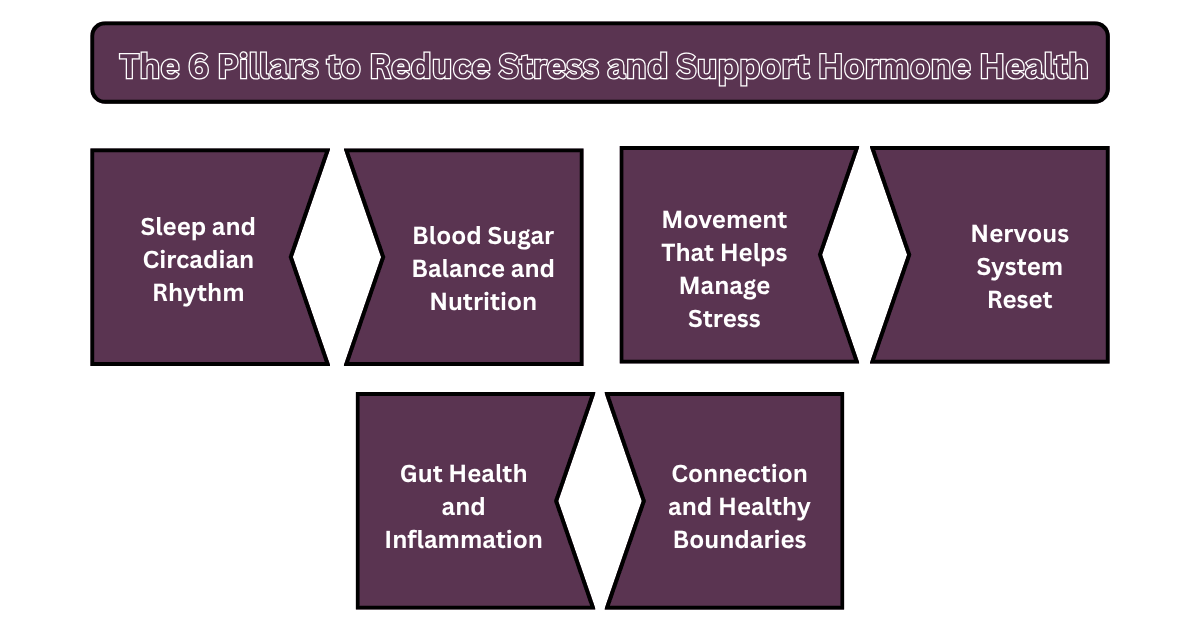
Pillar 1: Sleep and Circadian Rhythm
Sleep is one of the most important foundations for stress management.
Your body’s inherent circadian rhythm coordinates sleep, wakefulness, hormones, body temperature, and other functions.
When you can, try to maintain a regular sleep routine.
Getting daylight during your waking period and keeping your sleep environment dark can also support your body’s internal clock.
If your work schedule changes frequently, protect your main sleep period rather than trying to follow a traditional daytime routine.
Pillar 2: Blood Sugar Balance and Nutrition
What you eat can influence your energy, hunger, and blood sugar.
Instead of relying heavily on sugary snacks or skipping meals for long periods, build meals around protein, fiber-rich carbohydrates, healthy fats, and plenty of nutrient-dense foods.
Protein can help make meals more satisfying. Fiber can slow digestion and support healthy blood sugar patterns.
You do not need a perfect diet.
A consistent eating pattern that provides enough nutrition is a much more realistic goal.
Pillar 3: Movement That Helps Manage Stress
Exercise can help manage stress, but more exercise is not always better.
Walking is a simple starting point. Strength training can build physical fitness, while yoga and other gentle activities can provide movement without demanding maximum effort.
Choose an intensity that matches your fitness level and recovery needs.
If you are already exhausted, adding repeated high-intensity workouts may create another physical demand rather than giving you the recovery you need.
Pillar 4: Nervous System Reset
Your body needs periods when it is not responding to demands.
Slow breathing, meditation, mindfulness, prayer, stretching, and quiet time can all create moments of calm.
Try taking five minutes without your phone or other distractions.
You do not have to empty your mind. Simply slowing down and paying attention to your breathing can provide a useful pause between one stressful task and the next.
Pillar 5: Gut Health and Inflammation
Your digestive system is closely connected with many aspects of overall health.
A healthy gut environment can be supported by a mixed diet rich in fruits, vegetables, whole grains, legumes, nuts, seeds, and other high-fiber foods.
Fermented foods may also fit into a balanced diet if you tolerate them well.
Rather than searching for one “hormone-balancing” food, focus on an overall eating pattern that provides fiber, protein, healthy fats, vitamins, and minerals.
Pillar 6: Connection and Healthy Boundaries
Physical demands do not always cause stress.
Relationships, work pressure, family responsibilities, financial concerns, and constant availability can all drain your mental energy.
Supportive relationships can make difficult periods easier to handle.
At the same time, healthy boundaries matter. You do not have to answer every message immediately or agree to every request.
Sometimes protecting your well-being starts with a simple “not today.”
How to Reduce Stress Hormones Naturally
To support healthy cortisol regulation, start with the basics.
Get enough sleep. Eat regular, balanced meals. Move your body. Take breaks from constant stimulation. Spend time with people you trust. Find activities that help you relax.

Caffeine deserves attention too. It can temporarily increase alertness and may worsen sleep if you consume it too close to bedtime. If you’re sensitive to caffeine, you might want to cut back or move it earlier in the day.
You don’t need to eliminate every source of stress.
Some stress is unavoidable.
The aim is to give your body regular opportunities to return to a calmer state after stressful events.
How Night Shift Workers Can Reduce Stress and Support Hormone Health
Night shift workers face a unique challenge because their work schedule can conflict with the body’s natural light-dark cycle.
The most useful approach is to protect sleep as much as possible. Create a dark, quiet, comfortable sleeping environment and keep your main sleep period as consistent as your schedule allows.
You can also plan light exposure around your shift. Bright light during the appropriate part of your waking period can support alertness, while reducing unnecessary light before your intended sleep period can make winding down easier.
Keep caffeine away from the end of your waking period if it interferes with sleep.

Food choices matter too. Instead of relying on sugary snacks throughout a long shift, choose balanced meals and snacks containing protein and fiber.
A short walk, gentle stretching, or slow breathing during a break can provide a simple mental reset.
Most importantly, do not sacrifice sleep just to complete a workout. When you are severely tired after an overnight shift, recovery may be more valuable than another intense exercise session.
A Daily Routine to Support Stress and Hormone Health
A useful routine does not need to be complicated.
Morning or Start of Your Waking Period
Get appropriate daylight exposure.
Drink water and eat a balanced meal if you are hungry.
Give yourself a few minutes before immediately checking messages and social media.
Midday or Middle of Your Waking Period
Take a movement break.
Take a short walk or do a few simple stretches.
Choose a balanced meal rather than relying on highly processed snacks for quick energy.
Evening or End of Your Waking Period
Start reducing stimulation.
Dim bright lights when your schedule allows.
Put work aside when possible and give yourself time to unwind.
For night shift workers, simply shift this routine around your actual sleep and work schedule.
How to Reduce Stress Hormones With Food
What you eat can influence how steady your energy and blood sugar feel throughout the day. Instead of looking for one food that lowers cortisol, focus on meals built around protein, fiber, healthy fats, and minimally processed foods to keep energy steadier.
Choose Protein With Each Meal
Eggs, fish, chicken, yogurt, beans, lentils, tofu, and other protein-rich foods can make meals more satisfying. Pair protein with carbohydrates to help create steadier meals instead of relying on sugary foods for quick energy.
Add Fiber-Rich Foods
Vegetables, fruits, beans, lentils, oats, whole grains, nuts, and seeds are useful sources of fiber. A fiber-rich eating pattern supports digestive health and helps make meals more filling and steady.
Include Healthy Fats
Avocado, nuts, seeds, olive oil, and oily fish can add healthy fats to your meals. These foods can support a balanced eating pattern that provides lasting energy rather than a quick energy burst.
Don’t Skip Meals Just to “Control Cortisol”
Long gaps without food may leave some people feeling tired, irritable, or intensely hungry. A regular eating pattern that fits your schedule can help maintain steadier energy, especially during demanding workdays or night shifts.
Limit Excessive Sugar and Highly Processed Foods
You don’t need to eliminate sweets. However, relying heavily on sugary drinks, sweets, and highly processed snacks may make it harder to maintain balanced nutrition. Choose nourishing foods most of the time and enjoy treats without turning food into another source of stress. This keeps the overall pattern consistent.
Foods to Include More Often
- Eggs and Greek yogurt
- Fish and seafood
- Beans and lentils
- Oats and other whole grains
- Leafy greens and colorful vegetables
- Berries and other fruits
- Nuts and seeds
- Avocado and olive oil
For shift workers, the same principle applies: prepare simple, protein- and fiber-rich meals or snacks before your shift so you are less likely to reach for sugary convenience foods when you get tired. Keep steady energy by planning and choosing nourishing foods most of the time.
Planning helps carry the same balanced approach into a different schedule.
Habits That Can Increase Stress and Disrupt Healthy Routines
Some habits can make stress harder to manage.
Chronic Sleep Loss
Repeatedly cutting sleep short can affect mood, energy, appetite, and overall health.
Too Much Caffeine
Caffeine can help with alertness, especially for shift workers, but too much or poor timing can interfere with sleep.
Skipping Meals and Frequent Sugar Crashes
Long gaps between meals followed by highly sugary foods may leave some people feeling tired and hungry again quickly.
Constant Stimulation
Notifications, social media, work messages, and endless scrolling can make it difficult to create genuine downtime.
Exercising Through Severe Fatigue
Exercise is valuable, but recovery is part of fitness.
If you are sick, injured, or severely sleep-deprived, pushing harder may not be the healthiest choice.
When to Get Tested: Is It Stress or a Hormone Issue?
It is easy to assume that fatigue, weight changes, poor sleep, or mood changes mean your hormones are “out of balance.”
That is not always the case.
These symptoms can have many causes.
If your symptoms are ongoing, becoming worse, unusual for you, or interfering with your day-to-day activities, consult a healthcare provider.
Depending on your symptoms, medical history, and circumstances, a clinician may decide whether hormone or metabolic testing is appropriate.
Possible tests may include measurements of thyroid function, blood glucose, reproductive hormones, testosterone, or cortisol—but no universal hormone panel fits everyone.
Symptoms and clinical judgment should guide testing.
How Long Does It Take to Support Hormone Health?
Be cautious of claims promising to “balance your hormones in seven days.”
Your body is not a machine with a reset button.
Some lifestyle changes can affect How you feel relatively quickly. Better sleep may improve your energy, for example, while regular movement can improve fitness over time.
Other changes take longer.
Changing your lifestyle might not be enough to address an underlying medical condition that is impacting your hormones.
Think about supporting healthy habits consistently, rather than searching for a one-week hormone reset.
5 Natural Ways to Reduce Stress Hormones
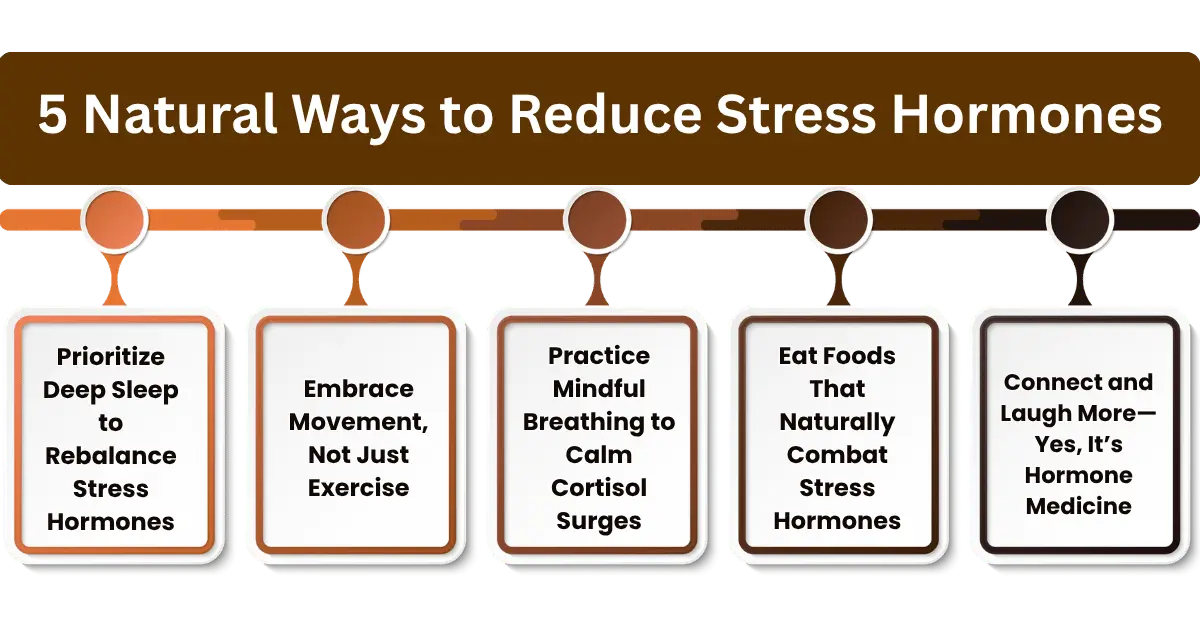
1. Prioritize Deep Sleep to Rebalance Stress Hormones
Good sleep gives your body time to recover from daily demands. Aim for a consistent sleep routine and make your bedroom dark, quiet, and comfortable. If you work shifts, protect your main sleep period instead of worrying about whether it happens at night.
2. Embrace Movement, Not Just Exercise
You don’t need an intense workout to manage stress. A brisk walk, gentle cycling, stretching, or a short strength session can help you move your body without adding unnecessary pressure. Choose an activity that leaves you feeling better, not completely exhausted.
3. Practice Mindful Breathing to Calm Cortisol Surges
When stress builds, slow breathing can give you a simple moment to pause. Try breathing slowly through your nose and making your exhale slightly longer than your inhale. Even a few quiet minutes can help you step away from the immediate stressor.
4. Eat Foods That Naturally Combat Stress Hormones
No food can switch off cortisol, but balanced nutrition can support your body’s normal stress response. Include protein, fiber-rich foods, healthy fats, fruits, and vegetables in your meals. Regular, nourishing meals can also help you avoid the energy swings that make stressful days harder.
5. Connect and Laugh More—Yes, It’s Hormone Medicine
You don’t need to handle every stressful period alone. Talking with someone you trust, sharing a laugh, enjoying a hobby, or spending meaningful time with others can provide emotional relief. Think of connection as part of your stress-management routine, not a luxury.
How I Reduce Stress Hormones Naturally on My Shifts
When working shifts, I don’t try to follow a perfect daytime routine. I focus on a few habits that fit the hours I actually work.
I protect my main sleep period, avoid caffeine late in my waking hours, and choose balanced meals instead of relying on sugary snacks during a long shift.
During demanding shifts, I also look for small opportunities to reset. A few minutes of slow breathing, a short walk, gentle stretching, or simply stepping away from a screen can make a difference.
After a particularly exhausting shift, I remind myself that rest is part of the routine too—I don’t need to force an intense workout when my body needs sleep.
This approach feels more sustainable than chasing a quick cortisol fix. For shift workers, the goal is not perfection; it is creating small habits that support recovery even when the work schedule keeps changing.
FAQs About How to Reduce Stress and Stabilize Hormones
Q. How long does it take to balance hormones naturally?
There is no single timeline. It depends on the hormone involved, the cause of the symptoms, your overall health, and the changes you make. Lifestyle habits can support healthy regulation, but diagnosed hormonal conditions may require medical treatment.
Q. Can stress cause irregular periods or low testosterone?
Chronic stress can affect reproductive and metabolic function, but irregular periods or low testosterone can have many possible causes. Evaluate persistent changes rather than automatically blaming stress.
Q. What’s the fastest way to do a nervous system reset?
There is no instant reset button. A few minutes of slow breathing, quiet time, gentle movement, or mindfulness may help you feel calmer in the moment. Longer-term stress management depends on regular recovery, adequate sleep, and addressing ongoing sources of stress.
Q. Can stress cause hormonal imbalance?
Stress can influence hormonal and metabolic processes, particularly through the HPA axis and cortisol response. However, the phrase “hormonal imbalance” is broad and can mean many different things. Persistent symptoms deserve proper evaluation.
Q. How can women support healthy hormone regulation?
Start with the fundamentals: get enough sleep, eat a balanced diet, exercise regularly, manage stress, and maintain a healthy routine. Consult a healthcare provider about any persistent symptoms, such as excessive exhaustion, menstrual changes, or fertility issues.
Q. How can I reduce stress hormones naturally?
Support your body’s normal stress response with quality sleep, appropriate exercise, balanced meals, relaxation practices, social connection, and healthy boundaries. Avoid relying on detoxes, extreme diets, or supplements marketed as quick cortisol cures.
Q. Can I balance my hormones in a week?
No reliable seven-day hormone reset exists. You can begin healthier habits in a week, but hormonal changes depend on the underlying cause and may take longer. If you have persistent symptoms, the right diagnosis matters more than a quick-fix program.
Final Thoughts
Learning how to reduce stress and stabilize hormones is less about finding one perfect remedy and more about giving your body the conditions it needs to function well.
Sleep when you can. Eat nourishing meals. Move regularly. Make time to breathe. Protect your boundaries. Stay connected with people who support you.
And if you work night shifts, do not compare your routine with someone who works nine to five. Your schedule is different, so your approach to sleep, food, exercise, and recovery needs to be different too.
Most importantly, don’t assume every symptom is caused by cortisol or a hormone imbalance.
Support your body’s natural rhythm, listen to persistent symptoms, and seek professional advice when something doesn’t feel right.
Read more about night shift workers’ health.
You might love: