
Learn the 10 best protein-packed beans for work shift individuals, including when to eat them, how to batch cook, and which legumes support steady energy and better post-shift sleep. Research-backed and optimized for shift schedules.
Working nights means your body is fighting its own biology every single shift. Your digestive system slows down, your blood sugar becomes harder to manage, and the wrong foods at the wrong time can leave you exhausted before your shift is even halfway done.
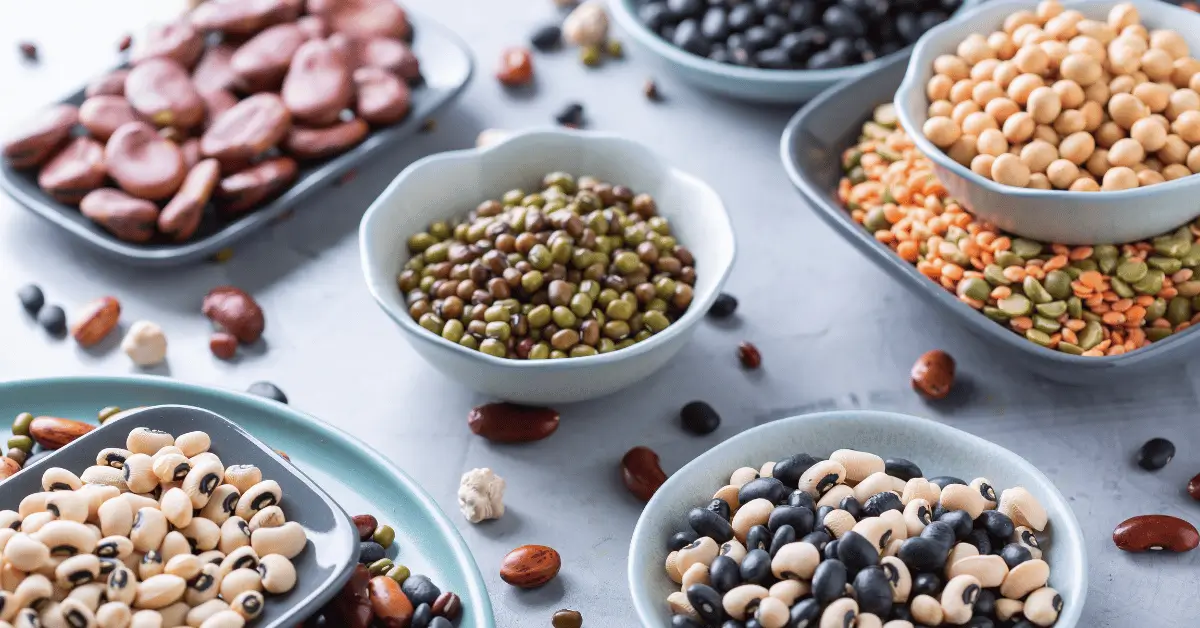
Beans and legumes are among the most underrated tools in a night-shift worker’s nutrition plan, high in slow-release protein, low on the glycemic index, and genuinely supportive of the sleep you need to recover.
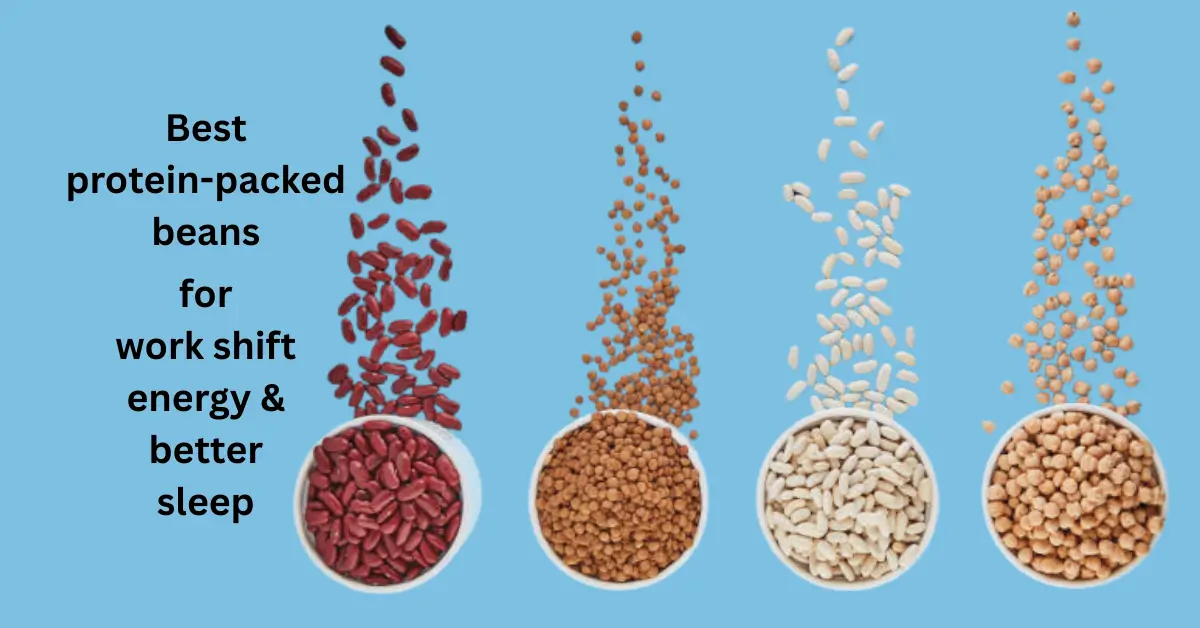
In this post, you will find the ten best varieties, exactly when to eat them around your shift, and a simple batch cook method that takes the effort out of eating well on work nights. No complicated recipes.
No expensive ingredients. Just practical, research-backed food advice built around your schedule.
QUICK SUMMARY BOX
At a Glance — What You Need to Know
| Best overall bean | Chickpeas: high tryptophan, GI 28, versatile |
| Highest protein | Edamame: 11g per 100g, complete protein |
| Easiest to cook | Red lentils, no soaking, ready in 15 minutes |
| When to eat | Before the shift or in the first 2 hours, not at 3 am |
| Best prep method | Batch cook on and off and portion into containers |
| Best for sleep | Chickpeas, edamame, adzuki beans (tryptophan) |
| Avoid | Large bean portions mid-shift: digestion is slowest |
Medical Disclaimer: This article is written for informational purposes only. All content is based on published research and should not replace personalized advice from your healthcare provider. Everybody has different nutritional requirements, so always get medical advice before making big dietary changes, especially if you already have health issues.
The foods you choose are more important if you work nights than most dietary guidance recognizes. Your body’s ability to absorb and assimilate food changes overnight, so you need protein sources that digest slowly, help maintain blood sugar during a lengthy shift, and help you avoid the classic 3 am energy drop.
Beans and legumes do all three, and most shift workers aren’t eating enough of them. Here are the ten best options, backed by circadian nutrition research, and how to use them on your schedule.
| 3–9g Protein per 100g cooked beans (varies by type) | 40% Lower GI than white rice — fewer blood sugar spikes |
| 2× Longer satiety window than fast-digesting carbs | 3 am When your digestive system is at its slowest, avoid heavy beans then. |
Why Beans Work for Work Shift Biology
Research on circadian rhythms shows that the digestive system follows a 24-hour biological clock. Enzyme production, gut motility, and insulin sensitivity all drop significantly during the biological night (roughly 11 pm–5 am for most people).
Foods with a low glycemic index, such as beans, release glucose slowly and help avoid the sharp insulin spikes that worsen nocturnal fatigue and interfere with post-shift sleep quality.
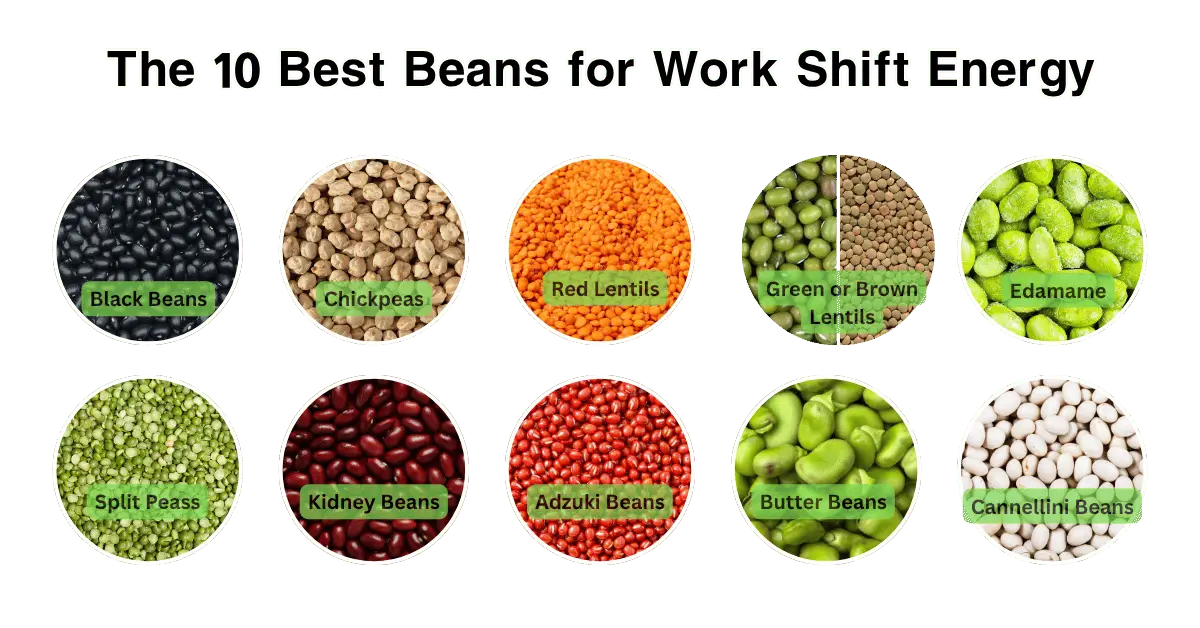
The 10 Best Beans for Work Shift Energy
Ranked by protein content, digestibility, blood sugar impact, and practical convenience for shift workers who want steady energy without spending hours in the kitchen.
1: Black Beans
The work shift MVP
One of the highest-protein beans has around 8–9 g of protein per 100 g cooked. Black beans have a particularly low glycemic index (GI ~30) and are rich in anthocyanins—antioxidants that help reduce systemic inflammation, which is commonly elevated in shift workers. They’re versatile, inexpensive, and available tinned.
| ~9g protein/100g | GI: ~30 | Anti-inflammatory | Tinned & dried |
2: Chickpeas (Garbanzo Beans)
Slow-release energy champion
Chickpeas are arguably the most shift-worker-friendly legume. With roughly 8–9g of protein per 100g and a GI of just 28, they digest slowly and keep blood sugar steady for hours.
They are also among the best sources of tryptophan, which helps you fall asleep after a work shift and is a precursor to serotonin and melatonin.
| ~9g protein/100g | GI: ~28 | Tryptophan source | Hummus-ready |
3: Red Lentils
Fastest to cook, easiest to digest
Red lentils are the exception to the ‘soak overnight’ rule; they cook in 15–20 minutes from dry. They split during cooking, making them extremely easy to digest, which is an advantage for night-shift stomachs. Around 9g protein per 100g cooked, plus good folate and iron to support energy metabolism.
| ~9g protein/100g | No soaking needed | Easy digestion | High folate |
4: Green or Brown Lentils
The meal-prep king
Unlike red lentils, green and brown lentils hold their shape after cooking — ideal for batch cooking and adding to salads, bowls, or stews.
They have a slightly higher resistant starch content, which feeds beneficial gut bacteria and contributes to better sleep-related gut-brain signaling over time.
| ~9g protein/100g | High resistant starch | Easy digestion | Meal prep staple |
5: Edamame (Young Soybeans)
The complete protein
Since edamame is one of the few plant meals that contains all nine essential amino acids, it is a complete protein on par with meat. At around 11g of protein per 100g, it outperforms most legumes. Available frozen, it can be steamed in minutes, making it useful for those pre-shift meals you’re making on the go.
| ~11g protein/100g | Complete protein | Frozen convenience | All 9 amino acids |
6: White Cannellini Beans
Creamy, gentle, and high in potassium
Cannellini beans are particularly high in potassium and magnesium, two minerals that are frequently depleted in work shift individuals due to disrupted eating patterns.
Magnesium specifically plays a role in muscle relaxation and sleep quality. With about 8–9g of protein per 100g and a very mild flavor, they blend invisibly into soups and stews.
| ~9g protein/100g | High magnesium | High potassium | Sleep-supportive minerals |
7: Kidney Beans
Blood sugar stabilizer
With a GI of about 29, kidney beans are especially high in resistant starch, a type of fiber that nourishes gut flora, slows digestion, and produces short-chain fatty acids that reduce inflammation. Research has linked lower systemic inflammation to better sleep quality, making kidney beans useful for shift workers over time.
| ~8g protein/100g | GI: ~29 | Anti-inflammatory | Gut health |
8: Split Peas
Underrated and deeply nourishing
Split peas—green or yellow—are among the most overlooked legumes. They cook down into a thick, filling soup without soaking, and they’re among the highest-fiber legumes available.
Around 8g of protein per 100g, with a gentle flavor that works at any time of day. Particularly good in a thermos for work.
| ~8g protein/100g | Highest fibre | No soaking | Thermos-friendly |
9: Adzuki Beans
The sleep hormone supporter
Adzuki beans are less common in Western cooking but are worth seeking out. They’re notably high in molybdenum (supports amino acid processing), manganese, and folate.
They also contain significantly more tryptophan than other legumes, which is relevant for shift workers seeking to support natural melatonin production after the work shift ends.
| ~8g protein/100g | High tryptophan | Melatonin support |
10: Butter Beans (Lima Beans)
Creamy, filling, low bloat
Butter beans are large, creamy, and surprisingly gentle on the digestive system compared to many legumes.
They’re a good option for those who find other beans cause bloating, a common complaint among work shift workers whose gut motility is already slower during biological night hours. Around 7–8g protein per 100g, with a satisfying, almost buttery texture.
| ~8g protein/100g | Low bloat risk | Gentle digestion | Great tinned |
Nutrition at a Glance
Per 100g cooked serving. Values are approximate and can vary by preparation method. Data compiled from USDA FoodData Central and published nutritional databases.
| Edamame | 11 | 5 | ~18 | High | High |
| Black Beans | 9 | 9 | ~30 | Moderate | Moderate |
| Chickpeas | 9 | 8 | ~28 | Moderate | High |
| Red Lentils | 9 | 8 | ~34 | Moderate | Moderate |
| Green Lentils | 9 | 8 | ~32 | Moderate | Moderate |
| Kidney Beans | 8 | 7 | ~29 | Moderate | Low |
| Cannellini Beans | 8 | 7 | ~31 | High | Low |
| Split Peas | 8 | 8 | ~32 | Low | Low |
| Adzuki Beans | 8 | 7 | ~35 | Moderate | High |
| Butter Beans | 7 | 5 | ~32 | Moderate | Low |
The glycemic index can vary based on cooking method, ripeness, and what else you eat with it. Combining beans with fat or protein lowers the overall glycemic response.
Bean vs. Bean: Which is Right for You?
Not all beans suit every situation. Here’s a quick comparison across the factors that matter most to work shift workers.
| Black Beans | ✓ | ~ | ✓ | ✓ | ~ |
| Chickpeas | ✓ | ✓ | ✓ | ✓ | ✓ |
| Red Lentils | ✓ | ✓ | ✓ | ✓ | ~ |
| Green Lentils | ✗ | ✓ | ✓ | ✓ | ~ |
| Edamame | ✓ | ✓ | ✗ | ✓ | ✓ |
| Cannellini | ✓ | ✓ | ✓ | ✓ | ✓ |
| Kidney Beans | ✓ | ~ | ✓ | ✓ | ~ |
| Split Peas | ✓ | ✓ | ✗ | ✓ | ~ |
| Adzuki Beans | ✗ | ✓ | ~ | ✓ | ✓ |
| Butter Beans | ✓ | ✓ | ✓ | ✓ | ~ |
✓ = Yes | ✗ = No | ~ = Partial / depends on individual tolerance
The Best Way to Eat Beans on the Work Shift
When to Eat Them
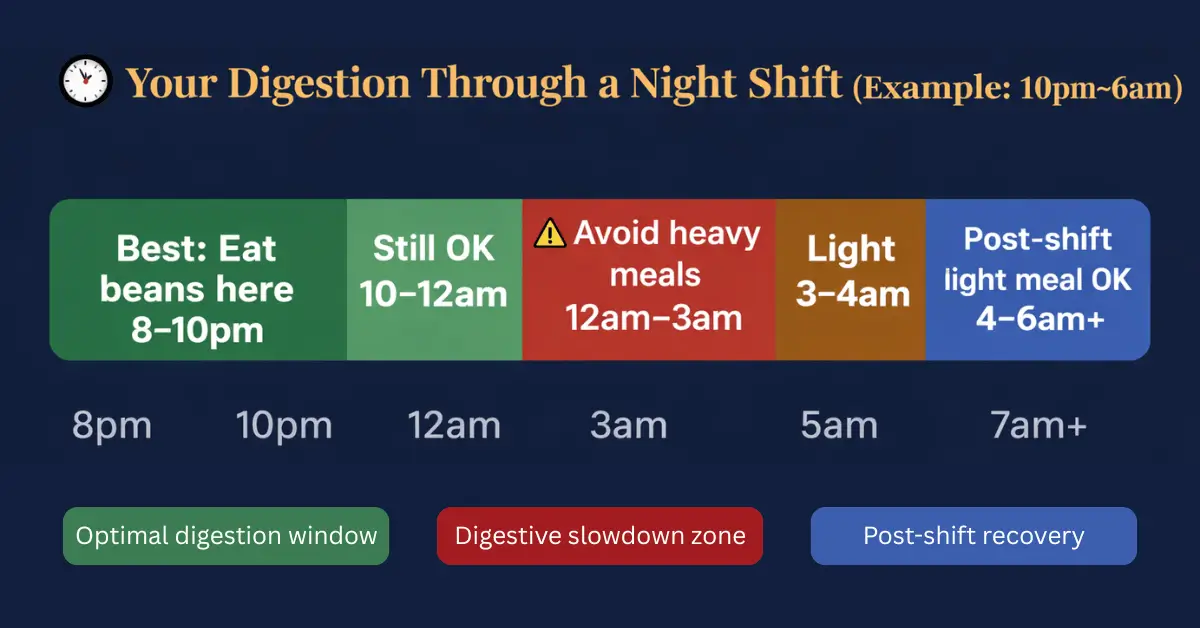
Eat beans before your shift or in the first two hours, not at 3 am. Your digestive system follows a circadian rhythm and processes food much more slowly during the biological night. A large portion of beans mid-shift can cause bloating and discomfort and actually worsen the fatigue you are trying to fight.
Your Digestion Through a Work Shift (Example: 10 pm–6 am)
| ✅ Do This | ❌ Avoid This |
| Eat a bean-rich pre-shift meal 1–2 hours before your shift starts. Combine with brown rice or sweet potato for slow, steady energy. | A large portion of beans at 2–3 am. Your gut motility is at its lowest, enzymes are suppressed, and bloating is almost guaranteed. |
Bottom Line on Timing
Beans before shift, light snacks during shift. If you need something mid-shift, hummus with vegetables or a small portion of edamame is your best option—small, light, and easier on a slow digestive system.
How to Prepare Them — Batch Cook on Your Day Off

Dried or tinned beans both work; tinned ones are faster and just as nutritious. Here is the batch cook method that works best for shift workers:
1: Choose your day-off anchor.
Pick a 90-minute block on your day off and commit to it. You don’t need to cook every bean variety; one or two that you enjoy is enough to carry you through five or six shift nights.
2: Tinned or dried — your choice
Tinned beans (drained and rinsed) are ready in minutes and nutritionally equivalent to home-cooked. Dried beans need soaking (8 hours) and then 45–90 minutes cooking time but cost a fraction of tinned beans. Red lentils and split peas need no soaking at all.
3: Cook in a large pot, season simply.
Cook 400–500g of dried beans or 3–4 tins (drained). Season with garlic, cumin, and a little olive oil. Keep the seasoning neutral so the beans can be used across different meals without clashing.
4: Portion and refrigerate
Divide into individual containers, roughly 150–200 g per portion. Refrigerate for up to 5 days. Label with the date. You now have ready-to-eat protein for every work shift, with no effort on workdays.
5: Build your pre-shift plate.
Combine beans with brown rice or sweet potato in your pre-shift meal. This creates a complete, slow-releasing energy source that carries you through the first half of your shift without a spike-and-crash.
Quick Serving Ideas That Work for Night Shift
Mixed Bean Bowl
Mixed beans tossed with olive oil and roasted vegetables: eat before your shift as a main meal. Takes 5 minutes from your batch-cooked prep.
Chickpea & Tuna Salad
Chickpeas added to a salad with tinned tuna: high protein, easy to prep in advance, and no cooking required on shift days.
Black Bean & Egg Scramble
Quick pre-shift breakfast at whatever time your morning is. Black beans add protein and fiber without heaviness.
Hummus + Veg Sticks
The ideal mid-shift snack. Light enough not to burden a slow digestive system, satisfying enough to carry you through the 3 am slump.
Split Pea Soup in a Thermos
Make a batch on your day off and pour it into a thermos for your break. Warm, high-protein, and surprisingly filling without the heavy feeling of meat.
Lentil & Rice Pre-Shift Plate
Green lentils over brown rice with a drizzle of olive oil and cumin. A complete protein + complex carb combination that releases energy slowly across your shift.
The 7-Night Bean Challenge for Shift Workers
Try incorporating one bean-based meal per shift to complete the rotation. Most shift workers who do this report noticeably more stable energy and fewer 3 am cravings by night four. Here’s a simple plan:
| N1 Black bean bowl before shift | N2 Chickpea & tuna salad |
| N3 Lentil soup (thermos) | N4 Edamame as a pre-shift snack |
| N5 Hummus + veg mid-shift | N6 Black bean & egg scramble |
| N7 Mixed bean & sweet potato bowl | No perfection needed. If you hit 4 out of 7, that’s already a meaningful shift in your nutritional baseline. |
Want a full week of meals built around these foods?
See our Night Shift Meal Plan—a complete four-week eating guide designed around shift biology, with batch cook instructions, a 3 am snack list, and a shopping guide you can use on your day off.
Frequently Asked Questions
Q. Do canned beans have the same nutritional value as dried beans?
Research suggests that tinned beans retain most of their protein, fiber, and mineral content. The main difference is that sodium-tinned beans often contain added salt.
Rinsing tinned beans reduces sodium by around 40%, making them a convenient, nutritionally sound option. For shift workers, the time saving is usually worth the small trade-off.
Q. Beans cause me bloating — what should I do?
This is common and usually manageable. Start with smaller portions (50–75g cooked) and increase gradually as your gut adjusts. Red lentils, butter beans, and split peas tend to cause less bloating than whole black beans or kidney beans.
Rinsing tinned beans well, cooking beans fully until very soft, and adding a strip of kombu seaweed during cooking can all reduce gas-producing oligosaccharides. Also, avoid eating beans mid-shift when digestion is slowest.
Q. Can beans really help me sleep better after a Work shift?
Directly, modestly. Chickpeas, edamame, and adzuki beans are among the better plant sources of tryptophan, an amino acid that the body uses to produce serotonin and, eventually, melatonin.
However, the most meaningful sleep benefit from beans is indirect: by stabilizing blood sugar and reducing post-shift hunger, they make it easier to fall asleep without waking from hunger.
Pair beans with a light complex carbohydrate in your post-shift meal to help tryptophan cross the blood-brain barrier more efficiently.
Q. How much protein do I actually need as a night-shift worker?
General guidance from sports nutrition and sleep research suggests 1.2–1.6 g of protein per kilogram of body weight per day for people with disrupted sleep schedules, as the body’s repair and muscle-maintenance processes are less efficient.
A 70kg person would aim for roughly 85–112g of protein daily. Beans alone won’t cover this — pair them with eggs, fish, meat, or dairy throughout the day. They are a valuable component, not the whole picture. Consult a registered dietitian for personalized guidance.
Q. Is it safe to eat beans every day?
For most people, yes — and evidence suggests daily legume consumption is associated with reduced cardiovascular risk, better blood sugar control, and healthier gut microbiome diversity over time.
The exception is people with specific conditions such as irritable bowel syndrome (IBS) or legume allergies, who should consult a healthcare provider. Variety is still beneficial; rotating between different beans gives you a broader range of minerals and phytonutrients.
Q. What’s the best bean for someone new to eating legumes?
Start with red lentils (easiest to cook, most digestible) or canned chickpeas (no prep required, versatile). Hummus made from chickpeas is often the gentlest introduction to legumes for people with sensitive digestive systems. The blending process makes the fiber even easier to tolerate.
Key Takeaways
“Beans are not a side dish. For work shift workers eating against their biology, they are one of the most strategic foods you can put on your plate—slow-releasing, anti-inflammatory, and genuinely supportive of the sleep you need to recover.”
— Based on circadian nutrition research by Pot et al. (2016) and Sutton et al. (2018)
- Eat beans before your shift or within the first two hours—never as a 3 am meal when digestion is at its slowest.
- Batch cook on your day off and portion into containers for the whole week—this one habit removes every barrier to eating well on work nights.
- Chickpeas and edamame are your highest-tryptophan options—relevant if post-shift sleep is your biggest struggle.
- Combine beans with brown rice or sweet potato pre-shift for a complete protein and a lower overall glycemic response.
- For mid-shift, keep it light: hummus with vegetables or a small portion of edamame is enough without burdening a slow gut.
- Red lentils and butter beans are your best starting points if you are new to legumes or experience bloating.
- Consistency matters more than perfection — 4 bean-rich pre-shift meals per week is already a meaningful improvement over most shift workers’ typical diets.
Important Reminder
All information in this article is for general educational purposes only. I am neither a registered dietitian nor a medical professional. If you have a health condition, a food intolerance, or are on medication that interacts with dietary changes, please consult your GP or a qualified nutrition professional before making significant changes to your diet.
RECAP — FOR SKIMMERS
- Beans are one of the best foods for work shift workers because they digest slowly, stabilize blood sugar, and help prevent the 3 am energy crash when eaten earlier in the shift.
- The top 10 are black beans, chickpeas, red lentils, green lentils, edamame, cannellini beans, kidney beans, split peas, adzuki beans, and butter beans.
- Edamame has the highest protein at around 11g per 100g and contains all nine essential amino acids.
- Chickpeas are the best all-rounder — high tryptophan for sleep support, low GI of 28, and available tinned with no prep needed.
- Red lentils require no soaking and cook in 15 minutes — the easiest option for busy shift workers.
- Eat beans before your shift or in the first two hours of it — your digestive system processes food much more slowly during the biological night.
- Never eat a large portion of beans at 2–3 am—bloating, discomfort, and worsened fatigue are almost guaranteed.
- Batch-cook in one large pot on your day off, portion into containers, and refrigerate for up to 5 shift nights.
- For a complete, slow-releasing energy source, combine beans with brown rice or sweet potato before your shift.
- For mid-shift snacking, hummus with vegetable sticks or a small portion of edamame are the lightest options.
If this post helped you, save it for your next meal prep day, so you have a bean-based option ready when you need it.
Try one bean-based pre-shift meal this week and notice how differently you feel at the halfway point of your shift.
When you are ready to build a full eating plan around your schedule, read the Night Shift Meal Plan, a complete four-week guide with batch-cook instructions, a 3 am snack list, and a shopping guide designed around shift biology.
Read more about work shift health.
You might like: