
Stop sabotaging your sleep! Learn which 8 foods to avoid on night shifts and wake up feeling truly refreshed, not exhausted.
Working the night shift is a reality for millions of people, healthcare workers, first responders, factory employees, and countless others who keep our world running 24/7.
But if you’ve ever dragged yourself home after a long shift, crawled into bed, and stared at the ceiling, you know the struggle is real. Your body is exhausted, but your mind refuses to shut off.

What you eat during and after your shift plays a massive role in this battle. Your diet can either be your greatest ally in getting restorative sleep or the primary saboteur of your much-needed rest.
This guide covers eight foods you should avoid to sleep better on night shifts, along with practical alternatives and timing strategies that work with your unique schedule.
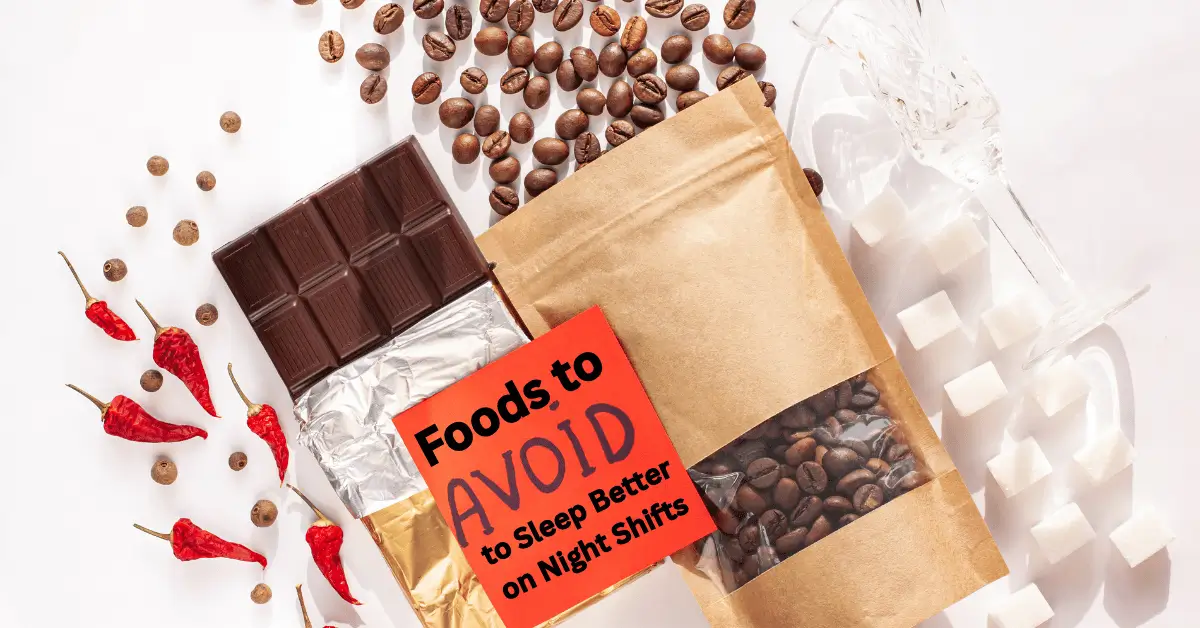
To sleep better after a night shift, avoid heavy, spicy, or sugary foods that can disrupt digestion and keep you awake. Foods to skip include fried meals, spicy curries, citrus fruits, raw onions, sugary pastries, heavy red meat, chocolate, and caffeinated drinks.
Foods to Avoid After a Night Shift
Heavy and Greasy Foods
- Fried meals slow digestion and can cause stomach pain.
- Heavy red meat: Takes a long time to break down and keeps your body working hard.
Spicy and Acidic Foods
- Spicy curries: Cause heartburn and raise body heat.
- Citrus fruits: Lead to acid reflux when you lie down.
- Raw onions: Trigger gas and indigestion.
Stimulants and Sugars
- Caffeinated drinks: Block sleep signals in your brain.
- Chocolate: Contains hidden caffeine and sugar.
- Sugary pastries: Cause blood sugar spikes and sudden crashes.
What Foods Should You Avoid to Sleep Better on Night Shifts?
To sleep better after a night shift, avoid these eight foods: caffeinated drinks and energy drinks, heavy high-fat meals, sugary snacks and processed carbs, spicy and acidic foods, alcohol, large meals right before bed, very salty and processed foods, and high-protein-only meals late in your shift.
These foods disrupt sleep by causing blood sugar spikes, acid reflux, digestive discomfort, and increased nighttime bathroom trips.
Key Takeaways
- Timing matters as much as food choice—stop eating 2–3 hours before your planned sleep time
- Caffeine has a 4–6 hour half-life—cut it off at least 4 hours before your shift ends
- Your digestion slows by up to 50% during sleep—heavy meals late in your shift are a recipe for disrupted rest
- Blood sugar stability is crucial—choose slow-digesting carbs and balanced meals over sugary quick fixes
- Hydration timing affects sleep quality—taper fluids 1–2 hours before bed to avoid bathroom trips
Why Food Choices Matter for Night Shift Sleep
Your body’s intrinsic biological clock, known as the circadian rhythm, controls hormone release, metabolism, and sleep-wake cycles.
Environmental signals such as light and food intake significantly affect this clock, which is set to an approximately 24-hour cycle. Under normal circumstances, your digestive system is most active during daylight hours and slows down at night when you’re supposed to be sleeping.
When you work the night shift, you’re fighting against this biological programming. Research shows that disrupted circadian rhythms make your body work harder to maintain blood sugar levels after meals eaten at unusual times.
This metabolic stress, combined with the challenge of falling asleep during daylight hours, means your food choices have an outsized impact on both your alertness during your shift and your ability to get quality sleep afterward.
Eating the wrong foods doesn’t just keep you awake—it can also increase your risk of serious health conditions.
Because of the combined consequences of poor eating habits and circadian disruption, night shift workers are more likely to develop obesity, type 2 diabetes, cardiovascular disorders, and even some types of cancer.
The good news is that making strategic food choices can significantly improve both your on-shift performance and your post-shift sleep quality. The right nutrition helps your body handle the stress of night work and makes it easier to transition to rest when you need it.
Food 1: Caffeinated Drinks and Energy Drinks
Why they disrupt your sleep: Caffeine is a stimulant that blocks adenosine receptors in your brain—the chemicals that make you feel sleepy. While this is exactly what you want during your shift, it becomes your enemy when you’re trying to wind down.
Caffeine’s half-life is about 4 to 6 hours, meaning half the caffeine you consume is still circulating in your bloodstream after that time. A substantial quantity of caffeine will still be active while you’re trying to go to sleep if you have coffee or an energy drink four hours before your shift ends.
Hidden sources to watch for: Caffeine appears in more than just coffee. Energy drinks, certain teas, dark chocolate, chocolate-flavored desserts, and even some decaffeinated coffees contain enough caffeine to disrupt sleep in sensitive individuals.
Some “decaf” brews have been found to contain more than 13 milligrams of caffeine per 16-ounce serving, comparable to some regular coffee options.
Your night shift sleep tip: Stop all caffeine consumption at least 4 hours before your shift ends. If you work 11 PM to 7 AM, that means no caffeine after 3 AM. For some people, a 6-hour window may be even more effective. Switch to caffeine-free herbal teas or plain water to stay hydrated through the rest of your shift.
Better alternatives: Peppermint tea, chamomile tea, or simply cold water with lemon can provide a sensory wake-up without disrupting your post-shift sleep.
Food 2: Heavy, High-Fat Meals
Why they disrupt your sleep: High-fat foods like cheeseburgers, fried chicken, heavy pasta dishes, and rich sauces take significantly longer to digest than other foods.
In one study, rats that ate a high-fat diet for eight weeks experienced more fragmented sleep at night and were excessively sleepy during the day, likely because high-fat foods reduced sensitivity to orexin, a brain chemical that helps regulate the sleep-wake cycle.
For humans, eating high-fat meals late in your shift means your digestive system must work overtime while your body is trying to rest. Your digestion already slows by about 50 percent during sleep, so a heavy meal right before bed creates a backlog of partially processed food that can cause bloating, discomfort, and acid reflux.
The acid reflux connection: When you lie down to sleep, gravity no longer helps keep stomach acid in place.
Because they loosen the lower esophageal sphincter and prolong stomach emptying, high-fat diets are especially risky because they raise the risk of acid reflux and heartburn.
For shift workers already dealing with disrupted sleep patterns, adding acid reflux to the mix creates an almost impossible sleep environment.
Better alternatives: Choose lean proteins like grilled chicken or fish, plant-based options, or meals that combine protein with complex carbohydrates. Avoid frying your food—baking, broiling, or grilling are better options. If you need a substantial meal during your shift, eat it early rather than near the end.
Food 3: Sugary Snacks and Processed Carbs
Why they disrupt your sleep: Sugar-rich products and low-fiber carbohydrate foods like pastries, white bread, candy, and soda cause rapid blood sugar spikes followed by equally rapid crashes.
This roller-coaster effect is particularly problematic during night shifts because it can cause sleepiness at inopportune moments and disrupt the quality of nighttime sleep.

Research on nurses working night shifts found that meals with a high glycemic index caused significant blood sugar fluctuations, not only during the night shift itself but also the following morning.
These fluctuations were associated with reduced sustained alertness, meaning sugary snacks actually made you more tired while working while simultaneously harming your ability to sleep when you got home.
The sleep disruption cycle: A blood sugar spike triggers an insulin response, which drives sugar out of your bloodstream and into cells. Even if you get enough sleep, this quick drop in blood sugar can make you feel restless or wake up in the middle of the night.
Your shift-work strategy: Health experts recommend avoiding sugar-rich foods and low-fiber carbohydrates, especially when you feel sleepy or need to stay alert. If you need a sweet snack, choose whole fruits, which contain fiber to slow sugar absorption, and always pair carbohydrates with protein to help stabilize blood sugar.
Food 4: Spicy and Acidic Foods
Why they disrupt your sleep: Spicy foods contain capsaicin, a chemical compound that activates nerve receptors and tricks your brain into thinking your body temperature has risen. This causes your body to sweat and, in many cases, leads to heartburn.
Additionally, studies suggest that eating red pepper may raise your core body temperature, making it more difficult for your body to undergo the natural temperature shift necessary for deep sleep.
Acidic foods like tomato sauce, citrus fruits, and vinegar-based dressings can similarly trigger acid reflux. When you lie down, stomach acid has an easier path into your esophagus, causing discomfort and disrupting your sleep.
The problematic combination: Many shift workers consume spicy or acidic foods thinking they’ll help them stay alert, or because convenient late-night options tend to be heavily seasoned. What actually happens is a double whammy of digestive distress and temperature disruption, making restorative sleep nearly impossible.
Timing is everything: If you love spicy foods, eat them early in your shift or on your days off—not within 3 to 4 hours of when you plan to sleep. This gives your body enough time to digest and allows any acid reflux symptoms to subside before you lie down.
Food 5: Alcohol
Why it disrupts your sleep: It’s a common myth that alcohol helps you sleep. While it’s true that alcohol can make you fall asleep more quickly and even produce deeper sleep initially, these effects are short-lived and ultimately harmful. As alcohol metabolizes out of your system, it triggers fragmented sleep and interferes with REM—the most restorative stage of sleep.
Frequent drinking close to bedtime can further exacerbate symptoms of sleep apnea and raise the risk of sleepwalking, sleep talking, and memory issues. For night shift workers, whose sleep is already disrupted, adding alcohol to the equation creates a compounding effect that makes long-term sleep debt almost unavoidable.
The timing trap: Even if you end your shift at 7 AM and have a “nightcap” as a wind-down ritual, the alcohol may keep you from achieving restorative sleep during your daytime sleeping hours. You might fall asleep quickly, but you’ll wake up feeling unrefreshed.
Smart alternatives: If you choose to drink alcohol, do so only on your days off and stop at least 3 hours before your planned sleep time. Consider a warm cup of chamomile tea or tart cherry juice, which actually contains natural melatonin to support sleep, instead of alcohol-based nightcaps.
Food 6: Large Meals Right Before Bed
Why they disrupt your sleep: Your body shouldn’t be doing heavy work when it’s trying to sleep. A large meal triggers the digestive process, diverting resources from restorative activities and keeping your system active.
For shift workers, this is especially problematic because you’re already asking your body to sleep during unconventional hours.
When you lie down soon after a large meal, you’re more likely to experience acid reflux, indigestion, and discomfort—all of which make it harder to fall asleep and stay asleep. The general recommendation is to finish your last major meal at least 2 to 3 hours before you plan to sleep.
Portion and timing strategy: If you work the night shift, schedule your largest meal early in your shift, similar to a “lunch” in the middle of your work period. Health experts recommend dividing your meals into three per 24-hour period and, when possible, avoiding or reducing food intake between midnight and 6 AM.
If you must eat before bed: A light snack is acceptable—something like a small bowl of oatmeal, whole-grain toast, or a banana. These foods digest quickly and trigger the release of serotonin.
Food 7: Very Salty and Processed Foods
Why they disrupt your sleep: High-sodium foods and heavily processed items cause fluid retention and increase thirst. This leads to more frequent nighttime toilet visits, which is one of the primary causes of shift workers’ difficulty falling asleep.
Even if you don’t wake up fully, the discomfort of a full bladder can pull you out of deep sleep phases, leaving you feeling unrefreshed.
Processed foods like chips, cured meats, canned soups, and fast food are typically high in both sodium and unhealthy fats. They also tend to be low in fiber and nutrients, meaning they provide empty calories without supporting your body’s metabolic needs during the stress of night shift work.
The inflammation connection: Research on social jet lag and diet shows that people with disrupted circadian rhythms tend to consume more processed foods and sugary drinks, creating a cycle where poor sleep leads to poor food choices, which further worsens sleep quality.
Smart swaps: Instead of reaching for salty snacks, choose unsalted nuts, fresh vegetables, or plain yogurt. If you want something savory, consider whole-grain crackers with hummus or a small portion of air-popped popcorn without added salt.
Staying hydrated with water (not salty or caffeinated beverages) also helps reduce inflammation and promotes better sleep.
Food 8: High-Protein-Only Meals Late in Your Shift
Why they disrupt your sleep: High-protein foods like steak, chicken, and certain dairy products are harder for your digestive system to break down than carbohydrates or healthy fats.

Your digestion slows down by up to 50% while you sleep, so if you eat a protein-rich meal right before bed, your body will prioritize digestion over restoration.
The neurotransmitter issue: Certain high-protein foods—particularly aged cheeses, salami, and pepperoni—contain tyramine, which triggers the release of norepinephrine. This chemical can stimulate your brain and keep you awake, the opposite of what you want when preparing for sleep.
The protein-carb balance: Sleep experts recommend balancing protein with complex carbohydrates before bed because carbs help trigger the release of serotonin, a sleepy hormone that prepares your body for rest. You want a light combination, small amounts of protein paired with slow-digesting carbs, not a protein-heavy feast.
Better late-shift options: Choose something light, like a banana, whole-wheat toast with a thin layer of peanut butter, or a small bowl of oatmeal with milk, if you are feeling peckish toward the conclusion of your shift.
These options provide the sleepy hormones your brain needs without overloading your digestive system.
How to Build a Sleep-Friendly Night Shift Meal Plan
Knowing what to avoid is half the battle. The other half is building a practical eating strategy that supports both your on-shift performance and your post-shift rest. Here’s what experts recommend:
Before Your Shift
One to two hours before your shift starts, eat a well-balanced lunch that includes complex carbohydrates and protein. This fuels your body and helps stabilize blood sugar during the early hours of your work period.
Good options include grilled chicken with quinoa, whole-grain pasta with vegetables, or a hearty salad with lean protein.
During Your Shift
Health experts recommend avoiding sugar-rich products and low-fiber carbohydrates, especially when you feel sleepy. Schedule your main meal early in your shift, around the time you’d normally eat dinner—typically within the first 2–4 hours of starting. Keep meals lighter as your shift progresses.
After Your Shift
Consider your post-shift meal as “dinner” and keep it light and easy to digest. If you must eat, choose something small—a bowl of oatmeal, whole-grain toast, or a banana—and finish it at least 1–2 hours before you plan to sleep. Remember that your digestion slows significantly at rest.
Sample 3-Day Night Shift Meal Plan
| Before shift | Oatmeal with berries and almonds | Whole-grain toast with eggs | Greek yogurt with granola and fruit |
| Early shift (meal 1) | Grilled chicken salad with quinoa | Turkey and avocado sandwich | Salmon with brown rice and vegetables |
| Mid-shift (snack) | Apple with peanut butter | Hummus and vegetable sticks | Hard-boiled egg with crackers |
| Late shift | Small yogurt or banana | Small bowl of oatmeal | Glass of milk with whole-grain toast |
| Post-shift | Small handful of nuts | None | None |
Hydration and Sleep Checklist
- Drink water throughout your shift to stay hydrated, but taper fluids 1–2 hours before your planned sleep time to avoid nighttime bathroom trips
- Avoid all caffeine 4–6 hours before your shift ends
- Skip alcohol entirely on workdays, or at least 3 hours before sleep
- When choosing a late-shift snack, remember the “golden ratio”: small protein portions + complex carbs, not protein alone
FAQ: Foods to Avoid to Sleep Better on Night Shifts
Q. Which foods help you sleep after a night shift?
Foods rich in tryptophan, magnesium, and complex carbohydrates are your bedtime buddies. Think warm oatmeal, bananas, almonds, tart cherry juice, or a small glass of milk—they naturally boost melatonin and serotonin to ease you into dreamland.
Pair a little protein with slow-digesting carbs, like peanut butter on whole-grain toast, and you’ve got a sleep-friendly snack that won’t weigh you down. Just keep portions light and finish eating at least an hour before you hit the pillow.
Q. What foods should you avoid on the night shift?
Steer clear of anything that spikes your blood sugar, fires up acid reflux, or keeps your digestive system working overtime. That means saying no to sugary pastries, fried and greasy meals, spicy dishes, and heavy red meat during your shift.
Additionally, keep an eye out for hidden caffeine in chocolate, energy drinks, and even some teas; it will interfere with your sleep long after your shift is over. Switching to lighter, more balanced meals will benefit your body.
Q. How to improve sleep on night shift?
Treat your sleep like a non-negotiable appointment and protect it fiercely. Blackout curtains, white noise machines, and a cool room temperature signal your brain that it’s nighttime, even when the sun’s blazing outside.
Create a wind-down ritual—dim the lights, skip screens, sip chamomile tea, and stick to the same sleep schedule even on your days off. Consistency tricks your body into adapting, making those daytime zzz’s feel more natural over time.
Q. How to avoid sleeping during the night shift?
Stay moving, stay hydrated, and snack smart to keep drowsiness at bay. Take short walks, stretch every hour, or splash cold water on your face when fatigue hits; physical activity wakes up your nervous system.
Save your main meal for early in your shift and nibble on small, protein-rich snacks like nuts or hard-boiled eggs to maintain steady energy without the crash. And of course, time your caffeine strategically; save that coffee for the first half of your shift, not the last few hours.
Q. Can I drink coffee and still sleep after a night shift?
Yes, you can drink coffee and still sleep after a night shift, but timing is critical. Stop all caffeine consumption at least four hours before your shift ends to give your body enough time to metabolize it.
For more sensitive individuals, a six-hour cutoff may be better. If you work 11 PM to 7 AM, your last coffee should be before 3 AM. Remember that caffeine appears in unexpected places like energy drinks, dark chocolate, certain teas, and even some decaf coffees.
Q. Are protein shakes bad before bed on the night shift?
Protein shakes can be problematic if consumed too close to bedtime, especially if they’re pure protein. While some protein before sleep is fine, high-protein-only shakes can disrupt sleep because protein takes longer to digest and may stimulate brain activity.
Your digestion slows by up to 50% during sleep, so a heavy protein load keeps your system working instead of resting. If you need a post-shift drink, choose a shake that combines protein with complex carbohydrates or have a small balanced snack instead.
Q. How soon before sleep should I stop eating?
You should stop eating major meals 2–3 hours before your planned sleep time. This gives your digestive system enough time to process food before you lie down, reducing the risk of acid reflux and discomfort.
Your digestion is significantly slower during sleep, so a heavy meal right before bed means your body is trying to digest while you rest. A light snack 1–2 hours before sleep is acceptable, especially if you’re genuinely hungry.
Conclusion
Working the night shift puts your body in a constant state of adjustment, and what you eat can either help you adapt or make the challenge significantly harder.
The eight foods we’ve covered—caffeinated drinks, heavy, high-fat meals, sugary snacks, spicy foods, alcohol, large meals, salty processed foods, and protein-heavy meals—each disrupt sleep through different mechanisms.
Some cause digestive distress, others mess with your blood sugar, and some directly interfere with the brain chemistry needed for restorative rest.
The key is not just eliminating these foods but understanding the timing. Your body processes food differently during your waking hours, and what you eat in the final hours of your shift has the most immediate impact on your post-shift sleep quality.
Start small; pick one or two of these foods to address this week. Maybe that’s cutting off caffeine four hours before your shift ends, or replacing your late-night sugary snack with a small bowl of oatmeal. Sleep quality can be substantially affected by even small adjustments.
Remember, better sleep isn’t just about quantity; it’s about quality. Your body needs restorative rest to recover from the demands of night work, manage stress, and maintain long-term health. By making smarter food choices, you’re not just improving your sleep; you’re investing in your overall well-being.
Read more about night shift workers’ health.
You might like: