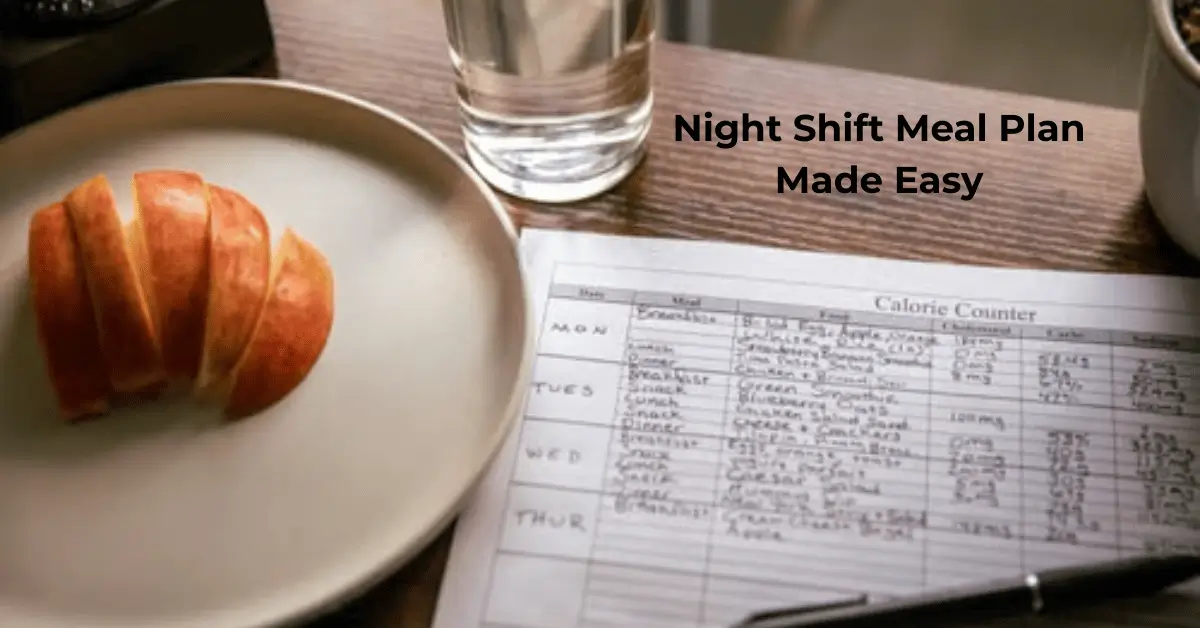
Need a simple night shift meal plan? Get an actionable, prep-friendly guide to fuel your energy, avoid the crash, and protect your daytime sleep.
Working overnight throws your body’s natural rhythm into chaos, and eating the wrong foods makes it worse. A solid night shift meal plan keeps your energy steady during your shift and helps you actually sleep when you get home.
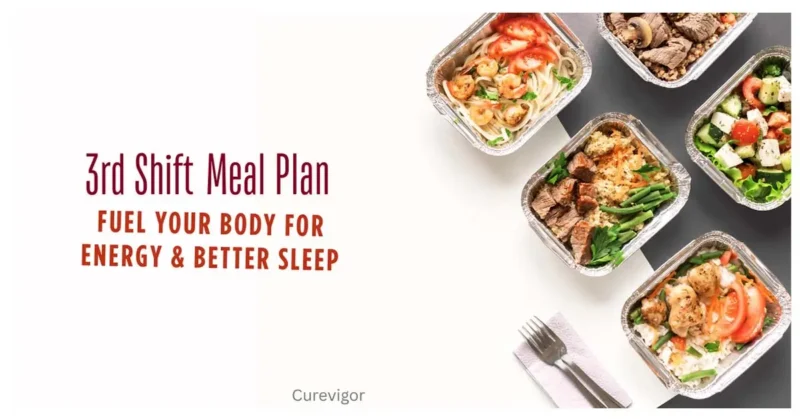
Without a plan, you end up surviving on vending machine junk and caffeine, which ruins your recovery. This guide delivers a practical, easy-to-follow meal plan designed specifically for night-shift workers.
The Essential Guidelines for a Night Shift Meal Plan
When to Eat Your Main Meals
Eat your largest meal before your shift and a light meal after. Your metabolism slows at night, so heavy meals at 3 AM can cause sluggishness and weight gain. Front-load your calories to match your daytime metabolism.
Bottom line: Eat big before you start, and eat light before you sleep.
How to Structure Your Shift Snacks
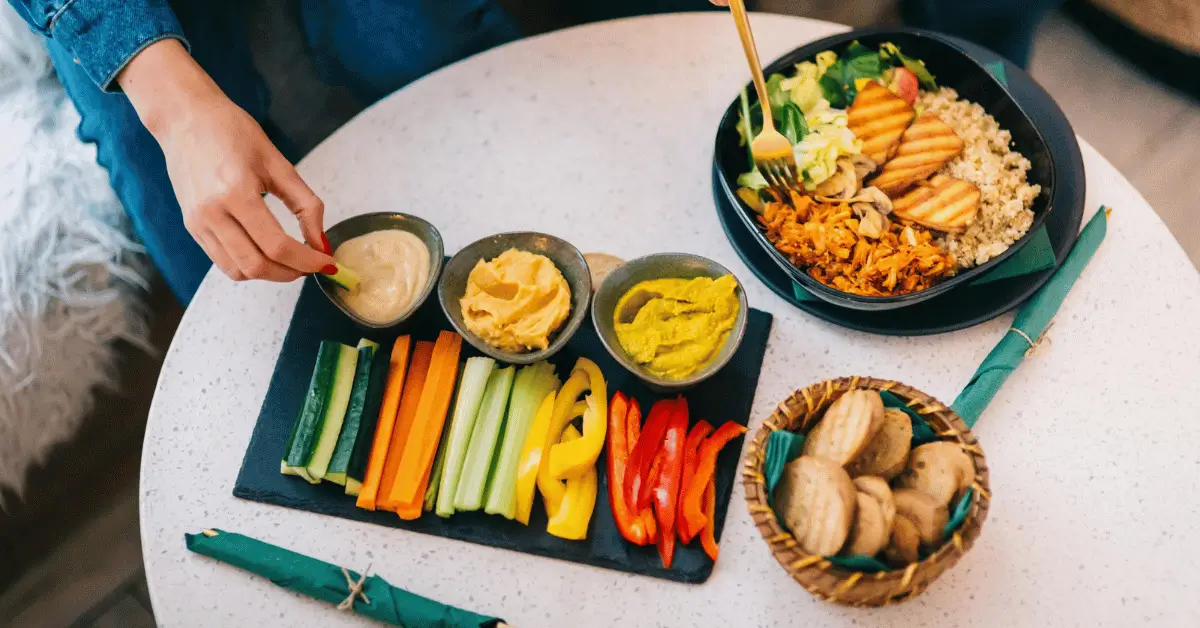
Break your shift food into two small meals and one bridge snack. Eating three huge meals at night will wreck your digestion and make you sleepy. Small, frequent meals prevent the 3 AM crash.
Bottom line: Graze strategically instead of feasting.
THE 80/20 NIGHT SHIFT RULE
Get 80% of your daily calories in before 2 AM. Save the remaining 20% for a tiny, sleep-promoting snack right before bed. This protects your digestion and your daytime sleep quality.
The Science of Night Shift Eating
A study published in Chronobiology International found that eating during the biological night alters glucose tolerance and drops 24-hour energy expenditure by 5%. It means your body processes food more slowly at 3 AM than at 3 PM. Your body processes nighttime calories less efficiently.
Bottom line: Food quality and timing matter twice as much at night.
Building Your Night Shift Meal Plan: The Core Rules
The “Eat Early, Snack Late” Rule
Eat your heaviest meal at the start of your shift, and transition to light snacks as the night goes on. Your digestive system is most active in the early evening hours. By 3 AM, your digestion slows down, and heavy food will just make you sleepy.
Front-load your calories early in the shift when your body can actually process them.
This rule means eating a full “dinner” at 6 PM or 7 PM before your shift starts. By 3 AM, you should eat only small, protein-focused snacks.
Bottom line: Eat your biggest meal before your shift, and snack lightly through the early morning hours.
Macro Balancing for Night Workers
Balance every meal with high protein, complex carbs, and healthy fats to avoid blood sugar crashes. Simple carbs and sugars give you a 30-minute high followed by a 2-hour crash. Complex carbs paired with protein give you a slow, steady burn.
Always pair a protein with a complex carb to keep your night-shift blood sugar stable.
Use this simple macro guide for your night shift meal plan:
| Time of Shift | Protein Focus | Carb Focus | Fat Focus |
| Pre-Shift Meal | 30-40 g (chicken, beef) | Complex (brown rice, sweet potato) | Moderate (olive oil, avocado) |
| Mid-Shift Snack | 15-20 g (Greek yogurt, jerky) | Fiber (Apple, Berries) | Low (Few nuts) |
| Late-Shift Snack | 15 g (eggs, cottage cheese) | Very Low (Veggies) | Moderate (Cheese, Nuts) |
| Pre-Bed Snack | 10-15g (Casein, Turkey) | None | Low |
Bottom line: Pairing protein with complex carbs is the golden rule of night-shift eating.
Hydration Timing for Better Sleep
Drink the majority of your water in the first half of your shift to avoid waking up to pee during daytime sleep. Dehydration mimics fatigue, so you must drink water, but timing matters.
If you chug water at 5 AM, you’ll wake up to use the bathroom at 10 AM.
Stop drinking large amounts of fluids 2 hours before your shift ends to protect your daytime sleep.
Sip water consistently from the start of your shift until about 3 AM. After that, take only small sips if your mouth is dry. Add electrolytes to your early shift water to improve absorption.

Bottom line: Hydrate heavily early in the shift, and taper off to protect your daytime sleep.
CureVigor Quick Callout
The Ultimate Night Shift Rule: Eat a full meal before your shift, snack lightly every 3 hours overnight, and eat a small protein snack right before bed. Never eat a heavy meal after 2 AM.
The 12-Hour Night Shift Meal Plan Template
Pre-Shift “Breakfast” (5:00 PM – 6:00 PM)
Eat a balanced meal of lean protein, complex carbs, and vegetables. This is your foundation and provides slow-burning fuel for the first half of your shift. A solid pre-shift meal prevents early-shift hunger.
- Grilled chicken, quinoa, and roasted broccoli.
- Turkey wrap with avocado and spinach.
- Salmon, sweet potato, and asparagus.
Bottom line: Treat 5 PM like it is 8 AM. Eat a real, full meal.
First Half Meal (9:00 PM – 10:00 PM)
Eat a protein-heavy mini-meal during your first official break. You need to sustain the energy from your pre-shift meal without making yourself sleepy. Protein at 10 PM keeps you sharp for the midnight rush.
- Greek yogurt with chia seeds and berries.
- Hard-boiled eggs and whole-grain crackers.
- Tuna salad on cucumber slices.
Bottom line: Make it light, protein-focused, and easy to digest.
The 3 AM Anchor Snack
Eat a small combo of complex carbs and healthy fats. This is the danger zone for sugar crashes, so you need steady glucose, not a spike. The 3 AM snack is a bridge, not a meal.
- Apple slices with almond butter.
- A handful of walnuts and a few dark chocolate chips.
- Hummus with baby carrots.
Bottom line: Keep this under 250 calories to avoid feeling stuffed.
Second Half Meal (1:00 AM – 2:00 AM)
Eat a warm, comforting, but light mini-meal if you are still hungry. Warm foods are great for night workers in cold environments like warehouses or hospitals. Warm, light foods keep you alert without weighing you down.
- Container of lentil soup.
- Leftover chicken and brown rice.
- Oatmeal with a scoop of protein powder.
Bottom line: Only eat this if you are genuinely hungry, not just bored.
Post-Shift “Dinner” (6:00 AM – 7:00 AM)
Eat a very small carb-and-protein snack right before bed. Going to bed hungry keeps your brain alert, but a small snack can help trigger sleep hormones. A small pre-sleep snack improves your daytime sleep quality.
- Half a turkey sandwich on whole wheat.
- Tart cherry juice with two crackers.
- Warm milk with a dash of cinnamon.
Bottom line: Keep it under 150 calories so you don’t wake up with heartburn.
The 7-Day Night Shift Meal Plan Made Easy
Use this 7-day night shift meal plan as your template. It requires minimal prep, uses affordable ingredients, and supports steady energy. Adjust portion sizes based on your job’s physical demands.
Days 1-2: High Protein Reset for Night Shift Meal Plan
Start your week with high protein to stabilize blood sugar after your days off. These meals are easy to prep on Sunday and pack in a cooler.
High-protein days reset your appetite and kill mid-shift sugar cravings.
Day 1:
- Pre-Shift (6 PM): Grilled chicken breast, quinoa, and roasted broccoli.
- Mid-Shift (10 PM): Greek yogurt with a handful of almonds.
- Late Shift (2 AM): 2 hard-boiled eggs and carrot sticks.
- Pre-Bed (7 AM): Half a cup of cottage cheese.
Day 2:
- Pre-Shift (6 PM): Turkey meatballs, zucchini noodles, and tomato sauce.
- Mid-Shift (10 PM): Protein shake and an apple.
- Late Shift (2 AM): Turkey roll-ups with a slice of cheese.
- Pre-Bed (7 AM): Small handful of walnuts.
Bottom line: High-protein days stabilize your energy and keep you full through the night.
Days 3-4: Complex Carb Focus
Introduce more complex carbs to fuel heavy physical work or long 12-hour shifts. These carbs digest slowly, preventing the 3 AM crash.
Complex carbs like sweet potatoes and oats provide the slow-burning energy needed for physical night shifts.
Day 3:
- Pre-Shift (6 PM): Baked salmon, sweet potato, and asparagus.
- Mid-Shift (10 PM): Overnight oats with chia seeds and whey protein.
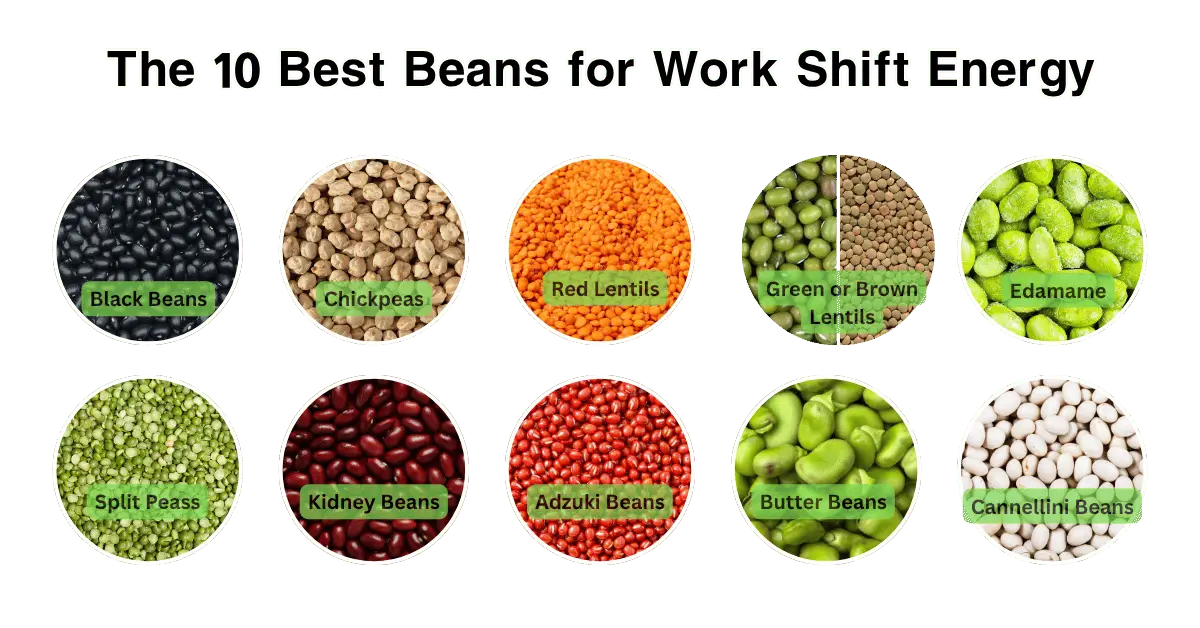
- Late Shift (2 AM): Edamame and a small pear.
- Pre-Bed (7 AM): Slice of turkey breast.
Day 4:
- Pre-Shift (6 PM): Beef stir-fry with brown rice and bell peppers.
- Mid-Shift (10 PM): Apple slices with peanut butter.
- Late Shift (2 AM): Handful of mixed nuts and celery sticks.
- Pre-Bed (7 AM): Half a cup of cottage cheese.
Bottom line: Complex carbs give you the sustained energy needed for active shifts without a crash.
Days 5-7: Quick Prep Survival
Use quick-prep meals for the end of the week when you are tired of cooking. These require almost zero prep and use affordable, shelf-stable ingredients.
Quick-prep meals ensure you don’t default to fast food at the end of a long work week.
Day 5:
- Pre-Shift (6 PM): Canned tuna mixed with avocado and whole-grain crackers.
- Mid-Shift (10 PM): Beef jerky and a banana.
- Late Shift (2 AM): String cheese and a handful of almonds.
- Pre-Bed (7 AM): Small protein shake.
Day 6:
- Pre-Shift (6 PM): Rotisserie chicken, microwave rice, and steamed veggies.
- Mid-Shift (10 PM): Greek yogurt and berries.
- Late Shift (2 AM): Hummus and cucumber slices.
- Pre-Bed (7 AM): Hard-boiled egg.
Day 7:
- Pre-Shift (6 PM): Egg scramble with spinach and whole wheat toast.
- Mid-Shift (10 PM): Protein bar (low sugar) and an apple.
- Late Shift (2 AM): Turkey, pepperoni, and cheese cubes.
- Pre-bed (7 AM): A handful of pumpkin seeds.
Bottom line: Keep quick-prep options ready for the end of the week to avoid fast-food traps.
Easy Meal Prep Strategies for Night Workers
The “Component” Prep Method
Prep individual ingredients instead of fully assembled meals. Assembling identical meals on Sunday gets boring by Wednesday. Component prep stops meal fatigue at day three.
- Roast two trays of chicken thighs.
- Boil a dozen eggs.
- Make a big pot of quinoa or brown rice.
- Wash and chop all your vegetables.
Bottom line: Prep ingredients, not recipes, for maximum flexibility. Check out our Night Shift Meal Prep Guide for batch-cooking shortcuts.
Freezer-Friendly Shift Meals
Make double batches and freeze half for emergencies. Some nights you will be too tired to cook anything, and having a healthy backup stops the drive-thru run. Freezer meals are your ultimate defence against fast food.
- Beef and bean chili.
- Chicken and vegetable stir-fry.
- Black bean and sweet potato enchiladas.
Bottom line: Spend one extra hour on Sunday to save your diet on Thursday.
Zero-Cook Emergency Foods
Keep shelf-stable, healthy snacks in your work bag at all times. The kitchenette will let you down, so you need backup fuel that requires zero refrigeration. Emergency snacks guarantee you never rely on the vending machine.
- Single-serve nut butter packets.
- Canned chicken or tuna pouches.
- Roasted chickpeas.
- Protein bars with less than 5g of sugar.
Bottom line: Always have a backup snack in your locker or car.
The Ultimate Night Shift Grocery List
Proteins to Keep on Hand
Buy versatile proteins that you can eat cold or heat quickly. Protein is the most important macronutrient for keeping you full and alert. Protein is the anchor of every night shift meal.
- Greek yogurt
- Canned tuna and salmon
- Eggs
- Deli turkey or chicken breast
- Edamame
Bottom line: Keep your fridge stocked with ready-to-eat proteins.
Complex Carbs for Steady Energy
Choose carbs that take hours to digest. These prevent the blood sugar spikes that cause the 3 AM slump. Complex carbs provide a slow drip of energy.
- Oats (rolled or steel-cut)
- Quinoa
- Brown rice
- Sweet potatoes
- Whole-grain bread and crackers
Bottom line: Swap all white carbs for brown or whole-grain versions.
Healthy Fats and Snacks for a Night Shift Meal Plan
Fats slow digestion and help your brain function. Keep these in your bag for rapid energy boosts. Healthy fats keep your brain sharp during long shifts.
- Almonds, walnuts, and cashews
- Peanut or almond butter
- Avocados
- Chia and flax seeds
- Dark chocolate (70% cocoa or higher)
Bottom line: Nuts and seeds are the ultimate night shift survival food.
Night Shift Meal Prep Hacks for Busy Workers
The Sunday Batch Cook Strategy
Cook all your proteins and carbs on Sunday so you can assemble meals in 5 minutes the rest of the week. You do not need to cook full meals every day. Cook a large batch of chicken and a pot of rice, and roast a pan of vegetables.
Batch-cooking proteins and carbs on Sunday cuts your weekly prep time down to 5 minutes a day.
Store them in sealed containers in the refrigerator. When it is time to pack your cooler, just scoop a portion of each into a container and add a quick sauce or dressing.
Bottom line: Batch cooking on your day off makes packing lunches for the week effortless.
No-Microwave-Needed Meals
Pack meals that taste good cold if your breakroom is crowded or you work on the road. Relying on a microwave can mean skipping your meal if the lounge is busy. Cold meals help ensure you eat what you planned.
Cold-prep meals guarantee you get your fuel even when a microwave isn’t available.
Best cold night shift meals:
- Chicken salad over greens
- Turkey and cheese roll-ups
- Quinoa salad with chickpeas and feta
- Greek yogurt parfait
- Tuna and whole-grain crackers
Bottom line: Never let a busy breakroom ruin your meal plan; always have a cold option.
Budget-Friendly Prep Ideas
Use inexpensive protein sources like eggs, canned tuna, and chicken thighs to keep your night-shift meal plan affordable. You do not need expensive pre-packaged protein bars or fresh salmon to eat well. Whole foods are cheaper and better for your energy.
Eggs, canned tuna, and chicken thighs provide nutritious fuel for a fraction of the cost of protein bars.
Budget prep staples:
- Buy eggs in bulk and boil a dozen at a time.
- Use canned tuna or chicken for quick salads.
- Choose chicken thighs over breasts for cheaper, juicier meat.
- Buy frozen vegetables instead of fresh.
- Use rolled oats instead of expensive cereals.
Bottom line: You can build a high-quality night shift meal plan on a tight grocery budget.
How to Adjust Your Meal Plan for Different Jobs
High-Physical Labor (Warehouse/Construction)
Prioritize higher-calorie foods and electrolytes to replace lost fluids and minerals. Physical labor burns massive amounts of energy, and you need dense fuel. Warehouse workers need high-calorie foods to fuel heavy physical labor.
- Peanut butter sandwiches
- Bananas and mixed nuts
- Electrolyte drinks (sugar-free)
Bottom line: Fuel your physical labor with dense, replenishing foods.
High-Mental Focus (Nurses/Dispatchers)
Choose foods rich in omega-3s and antioxidants to support brain function. You need quick energy without brain fog. Nurses need brain-boosting foods that hold up through constant interruptions.
- Blueberries and walnuts
- Salmon or tuna pouches
- Dark chocolate
- Green tea (early in the shift)
Bottom line: Feed your brain with healthy fats and antioxidants.
Sedentary/Driving (Security/Truckers)
Focus on low-calorie, high-volume foods to keep you full without adding weight. Sitting for 12 hours means your calorie burn is very low. Drivers need high-volume, low-calorie foods to stay full while seated.
- Celery and carrot sticks with hummus
- Air-popped popcorn
- Watermelon and berries
- Black coffee and water
Bottom line: Keep your calories low if your physical output is low.
Hydration and Caffeine Schedule
The Caffeine Curfew
Stop all caffeine at least four hours before your shift ends. Caffeine stays in your system for up to eight hours and will destroy your 8 AM sleep. Late caffeine is the number one killer of daytime sleep.
Bottom line: Switch to water or decaf by 3 AM. Review our Caffeine Cutoff Guide for exact timings.
Water Intake Targets
Drink at least 64 ounces of water spread evenly across your shift. Dehydration mimics fatigue and makes the 3 AM slump feel much worse. Water is the cheapest, most effective energy booster.
Bottom line: Sip constantly, but taper off an hour before sleep to avoid bathroom trips.
Common Night Shift Meal Plan Mistakes to Avoid
The “Family Dinner” Trap
Do not eat a heavy meal with your family right before your shift. Eating at 7 PM with your family means digesting a massive meal while trying to sleep at 8 AM. Align your main meal with your shift start, not the sun.
Bottom line: Eat your “family dinner” at 4 PM before you clock in.
The Vending Machine Spiral
Never walk past the vending machine when you are already hungry. Willpower is lowest at 3 AM, and if you are hungry, you will buy the cookies. Hunger destroys willpower; preparation protects it.
Bottom line: Eat your 3 AM snack before you feel the slump.
Skipping Meals to “Save Calories”
Do not skip your pre-shift meal to eat more later. Arriving at 3 AM, starving, guarantees you will binge on junk food. Skipping meals guarantees a 3 AM junk food binge.
Bottom line: Eat a solid pre-shift meal to protect your late-night choices.
Night Shift Meal Plan Quick Checklist
Use this checklist before your shift starts to guarantee you stick to your plan. Preparation is the only way to beat the 3 AM crash.
Prepare your cooler before your shift starts so you don’t rely on vending machines.
- Pack a pre-shift meal with protein and complex carbs.
- Pack 1-2 mid-shift snacks (protein and fiber).
- Fill a large water bottle with electrolytes.
- Set a caffeine cutoff alarm for 5 hours before the shift ends.
- Prep a light, casein-rich pre-bed snack.
- Take magnesium and melatonin out for post-shift.
Bottom line: Preparation is the only way to execute your night-shift meal plan successfully.
The Ultimate Night Shift Meal Plan Recap
When you are managing an irregular schedule, consistency is your superpower. Use this quick visual summary to keep your body clock, energy levels, and digestive health perfectly balanced through every single rotation.
[Pre-Shift Meal] ── ► Full & Balanced (Fuel up like it’s morning)
[Mid-Shift Snacks] ──► Light & Protein-Packed (Kill 3 AM cravings)
[Post-Shift Snack] ── ► Tiny Casein-Protein (triggers sleep, prevents hunger)
Your Shift Blueprint at a Glance
- The 80/20 Calorie Split: Eat 80% of your daily food intake before 2:00 AM, when your metabolism is more active, leaving 20% for a light, sleep-promoting snack before bed.
- The Golden Pairing: Never eat a complex carbohydrate on its own overnight. Always pair it with a clean protein to stabilize blood sugar and avoid the dreaded brain fog.
- The Hydration Curve: Drink most of your fluids during the first half of your shift, then taper off entirely 2 hours before bedtime to protect uninterrupted daytime sleep.
Ultimately, an effective night shift meal plan is not about restriction; it is about strategic timing. By shifting your heavy eating windows to match your biological capabilities and prioritizing food prep on your days off, you protect your gut health, eliminate fatigue, and finally get the deep, restorative daytime sleep you deserve.
FAQs of the Night Shift Meal Plan
Q. What is a night shift meal plan?
A night shift meal plan is a planned eating schedule intended to help digestion, maintain steady energy levels, and avoid interfering with sleep when working overnight.
It emphasizes light, easily digested food before daylight sleep, moves your big meal to before your shift, and relies on light, high-protein mid-shift snacks.
Q. Why Do You Need a Night Shift Meal Plan?
Overnight work throws off your circadian cycle. Eating substantial meals at three in the morning can cause acid reflux, lethargy, and significant blood sugar dips. You can avoid depending on fast food and vending machines if you plan beforehand.
Q. What is the best thing to eat on a night shift?
The best things to eat on a night shift are low-fat proteins and complex carbohydrates. Foods like grilled chicken, Greek yogurt, quinoa, and sweet potatoes provide steady energy. Pairing a complex carb with a protein prevents blood sugar crashes and keeps you full.
Q. In a night shift meal plan, what is the 3-part meal structure?
The “Anchor” Meal (1-2 Hours Before Shift): Consider this the largest meal of the day and your main energy source. Build a reservoir of prolonged energy by combining slow-burning complex carbohydrates (brown rice and sweet potatoes) and vegetables with lean proteins (fish and poultry).
Mid-Shift Fueling (Every 3–4 Hours): Grazing rather than feasting will keep your blood sugar steady and your digestion light. To avoid brain fog at 3 a.m., choose small, high-protein snacks like Greek yogurt, hard-boiled eggs, or an apple with nut butter.
The Sleep Runway (30–60 Minutes After Shift): Avoid going to bed hungry since hunger awakens the brain. Instead, eat something modest and easy to digest, such as scrambled eggs or a small bowl of oatmeal, to fill your stomach and maintain deep, restful sleep during the day.
Q: What to eat on night shifts for energy?
Throughout your shift, eat a mix of complex carbohydrates and protein every three to four hours. This prevents the 3 AM sugar- or large-meal-induced slump and supports maintaining stable blood sugar levels.
Always pair protein with a complex carb to keep steady energy on the night shift.
Hard-boiled eggs with an apple, Greek yogurt with berries, or turkey roll-ups with whole-grain crackers are all excellent choices. Steer clear of energy drinks and sugary foods, as they cause rapid spikes followed by deeper fatigue.
Bottom line: Protein plus complex carbs is the simplest way to stay alert all night.
Q: What is the 3-3-3 rule for food?
The 3-3-3 rule for night shift workers is simple: eat your biggest meal 3 hours before your shift, have a small snack every 3 hours during the shift, and finish eating at least 3 hours before bedtime.
Follow the 3-3-3 rule to align your eating with your slowed nighttime digestion.
This timing prevents heavy meals when your body wants to rest and protects your daytime sleep. It also stops the common mistake of eating too close to bed.
Bottom line: Use the 3-3-3 rule to time your meals for better energy and recovery.
Q: Which food helps with sleep after a night shift?
Eat a small serving of casein-rich protein, such as cottage cheese or turkey, 30–60 minutes before bed. These foods provide slow-digesting protein that reduces hunger without spiking blood sugar or raising your heart rate.
A small cottage cheese snack before daytime sleep improves rest without disturbing digestion.
Pair it with a few walnuts or a dash of tart cherry juice for extra melatonin support. Avoid large or fatty meals right before sleep.
Bottom line: Light casein protein is the best pre-sleep choice after a night shift.
Night shift meal plan: Closing the Loop on Your Shift Health
Rewriting the rules to fit your own schedule is the key to dominating the night shift rather than battling your body. You may regain control over your energy, mood, and life balance by viewing your diet as a strategic toolset that includes front-loading your fuel, timing your water, and honoring your digestive pauses.
People who work 9 to 5 aren’t the only ones with true vitality. You can safeguard your gut, get rid of the 3 AM mental fog, and finally get the deep, rejuvenating daytime sleep you’ve been lacking with a few easy food-prep habits. Instead of just making it through the night, reach your full potential and take charge of your day.
Working a longer shift? Check out our dedicated guide to building a 10-Hour Night Shift Meal Plan.
Ready to stop crashing at 3 AM? Download our free Night Shift Meal Prep Guide to build your healthy shift meals in just 20 minutes. Prep your meals today to dominate your next shift.
Read more about night shift workers’ health.
You might like: