Working nights and want to try intermittent fasting? Learn how to build an IF schedule around your shift with eating windows for 8-hour and 12-hour night workers.
An effective intermittent fasting schedule for night shift workers aligns your eating window with your waking hours and shift, typically using a 16:8 or 14:10 pattern where your fasting period covers your daytime sleep.
Recommended Night Shift Schedule (16:8 Example)
- 7:00 PM – Begin Eating Window: Eat your first balanced meal (high in protein and fibre) as your shift starts or just before.
- 11:00 PM – Mid-Shift Meal: Eat your second main meal or a healthy, protein-rich snack to sustain energy through the night.
- 3:00 AM – Last Meal/Snack: Finish your final small meal or snack. Avoid heavy eating between 3:00 AM and 6:00 AM, when your body’s insulin sensitivity and metabolic rate drop to their lowest points.
- 3:00 AM / 7:00 AM to 7:00 PM – Fasting Window: Fast for the remainder of your shift, your commute home, and your daytime sleep block (e.g., sleeping from 8:00 AM to 4:00 PM).
Energy and Recovery Tips
- Hydrate Wisely: Drink plenty of water, plain black coffee, or unsweetened tea during your fast, but stop caffeine at least 6 hours before bedtime.
- Optimize Light: Get 20 to 30 minutes of natural light when you wake up in the afternoon, and use blackout curtains and dim lights as your shift ends to protect your sleep quality.
- Focus on Quality: Prioritize high-protein and high-fiber foods when breaking your fast to prevent blood sugar spikes and mid-shift fatigue.

Intermittent Fasting Night Shift Schedule
You can do intermittent fasting on a night shift, but your eating window must align with your waking hours, not the standard daytime clock.
For an 8-hour night shift (e.g., 10 PM–6 AM), a 16:8 window of 6 PM–10 PM works well. For 12-hour shifts, a 14:10 window starting 1–2 hours before your shift is the most sustainable approach.
Working nights turns your entire routine upside down; your meals, your sleep, and even your metabolism operate on a completely different timeline from the rest of the world.
So when you hear advice about intermittent fasting that tells you to “stop eating by 7 PM,” you already know it doesn’t apply to you.
The good news is that intermittent fasting is one of the most adaptable diet strategies for night-shift workers.
Unlike rigid meal plans that depend on a 9-to-5 lifestyle, IF is built around when you eat, and that’s something you can control regardless of your schedule.
In this guide, you’ll learn exactly how to structure an intermittent fasting schedule around your shift, which methods work best for 8-hour and 12-hour nights, what research actually says about IF and night shift health, and the most common mistakes to avoid.
What Intermittent Fasting Actually Means (And Why It’s Not a Diet)
Before building your schedule, it helps to understand what intermittent fasting is and what it isn’t.
Intermittent fasting (IF) is an eating pattern that alternates between eating and fasting. It does not tell you what to eat. It advises you on when to eat.
Your eating window is the time block during which you eat all your meals and snacks. Outside that window, you fast, meaning only water, black coffee, or plain herbal tea.
| Intermittent Fasting Method | Fasting Period | Eating Period | Best For |
| 16:8 | Fast for 16 hours | Eat within an 8-hour window | People focused on weight management and metabolic health |
| 14:10 | Fast for 14 hours | Eat within a 10-hour window | Night shift workers and those seeking a more flexible approach |
| 12:12 | Fast for 12 hours | Eat within a 12-hour window | Beginners who are new to intermittent fasting |
| 5:2 | Eat normally for 5 days; limit intake to about 500 calories on 2 non-consecutive days | No specific daily eating window | Those who prefer weekly calorie restriction instead of daily fasting |
For night shift workers, the 16:8 and 14:10 methods are the most practical. The 5:2 approach also has strong clinical backing, specifically for shift workers, which you’ll see below.
What night shift workers need to know about IF advice
Here’s the challenge that most IF guides don’t talk about: your body’s internal clock doesn’t change just because your schedule does.
Your circadian rhythm, the biological clock that governs digestion, hormone production, and metabolism, stays locked to a daytime pattern even after years of working nights.
Your pancreas, liver, and gut still expect food during daylight hours. When you eat at 3 AM, your insulin sensitivity is lower, your digestion is slower, and your body stores more of what you eat as fat than it does with the same meal eaten at 3 PM.
A landmark 2021 study published in Science Advances directly confirmed this: night-shift workers who ate at night experienced significantly worse glucose control than those who ate during their biological daytime, even though both groups were awake during the same hours.
This means two things for your IF schedule:
- You want to minimize eating during the core night hours (roughly midnight to 5 AM) as much as your job allows.
- Anchor your eating window to your waking hours, ideally starting in the late afternoon or early evening before your shift begins.
You can’t fully counteract circadian disruption through diet alone. But aligning your eating window with your body’s most metabolically active period is one of the most effective things you can do.
The 3 Best IF Methods for Night Shift Workers

1. 16:8 — The Most Popular Choice
How it works: You eat within an 8-hour window and fast for 16 hours. For a night shift worker, your eating window typically opens 1–2 hours before your shift and closes sometime during the early part of your shift or before the overnight hours begin.
Best for: Workers who want meaningful metabolic benefits and don’t need to eat heavily during their shift.
Example schedule (10 PM–6 AM shift):
- Eating window: 6 PM – 10 PM
- Fast: 10 PM – 6 PM (next day)
- Break fast: in the evening, just before or at the start of the shift.
2. 14:10 — The Night Shift Sweet Spot
How it works: You fast for 14 hours and eat within a 10-hour window. This is slightly more forgiving than 16:8 and allows for a small snack during the first half of your shift without breaking your results.
Best for: 12-hour shift workers who need fuel during their shift and find 16:8 too restrictive.
Example schedule (7 PM–7 AM shift):
- Eating window: 5 PM – 3 AM (with the goal of eating most food before midnight)
- Fast: 3 AM – 5 PM
3. 12:12 — The Beginner’s Entry Point
How it works: Equal split, 12 hours eating, 12 hours fasting. This is the most approachable starting point and still delivers real benefits for people new to IF.
Best for: Anyone who has never tried IF before or who is working physically demanding overnight roles (nursing, warehouse, security) with high energy needs.
| Method | Fasting Hours | Eating Window | Best For | Difficulty |
| 16:8 | 16 hours | 8 hours | Weight loss focus | Moderate |
| 2:10 PM | 14 hours | 10 hours | 12-hour shifts | Easy–Moderate |
| 12:12 PM | 12 hours | 12 hours | Beginners | Easy |
| 5:2 | 2 days/week | Normal eating | Metabolic health | Moderate |
Intermittent Fasting Schedule for 8-Hour Night Shift Workers
If your shift runs 8 hours, say, 10 PM to 6 AM, you have the most flexibility with intermittent fasting. Here’s how to build your schedule step by step.
Step 1: Identify your wake-up time. Most 8-hour night workers wake between 5 PM and 7 PM. Open your eating window about 1–2 hours after waking, once your body has had time to transition into the active phase.
Step 2: Close your eating window before midnight. Your goal is to finish your main eating before the biological low point (midnight–5 AM). A 6 PM–10 PM eating window lets you eat a full pre-shift meal and a smaller meal at the start of your shift and closes before the hardest hours.
Step 3: Handle mid-shift hunger strategically. If hunger hits between midnight and 4 AM, a small, protein-focused snack (a handful of nuts, boiled eggs, or Greek yogurt) is better than breaking your fast with a heavy meal.
To control hunger during these hours, some employees prefer to maintain a strict fasting window and hydrate with water, herbal tea, or black coffee.
Step 4: Post-shift, eat light before sleep. After your shift ends around 6 AM, avoid a large meal right before sleeping. A small, easily digestible option, plain oatmeal, a banana, or cottage cheese, supports sleep quality without weighing you down.

Sample 8-hour night shift IF schedule:
| Time | Action |
| 5:30 PM | Wake up |
| 6:30 PM | Breakfast—main pre-shift meal (protein + complex carbs + vegetables) |
| 9:00 PM | Light pre-shift snack if needed |
| 10:00 PM | The shift begins, and the fasting window starts |
| 2:00–3:00 AM | Optional: small protein snack if needed |
| 6:00 AM | The shift ends |
| 6:30 AM | Light post-shift meal or skip; sleep by 8 AM |
Intermittent Fasting Schedule for 12-Hour Night Shift Workers
A 12-hour night shift, common among nurses, factory workers, and emergency responders, is harder to fit around strict 16:8 fasting.
You’re awake for at least 14–16 hours, and your body needs fuel to sustain performance across the entire shift.
The most effective approach for 12-hour night workers is 14:10, with the eating window heavily front-loaded before and in the early hours of the shift.
Step 1: Eat your biggest meal 1–2 hours before the shift. This is your anchor meal. Make it count: lean protein, whole grains, and plenty of vegetables. This meal powers the first half of your shift when your metabolism is still relatively active.
Step 2: Eat a smaller second meal in the first half of your shift. For a 7 PM–7 AM shift, this might be a meal around 10 PM–11 PM. Keep it moderate; this is support fuel, not a second main course.
Step 3: After midnight, switch to snacks only (or fast completely). The 1 AM–5 AM window is your metabolic danger zone. Eating heavily here drives the worst outcomes for blood sugar, weight, and sleep quality. If you must eat, keep it to a small protein-focused snack.
Step 4: After the shift, close the eating window. After a 7 AM finish, aim to close your eating window by 9 AM and then fast through your daytime sleep. This is where the 14-hour fast builds naturally; your sleep does the heavy lifting.
Sample 12-hour night shift IF schedule (14:10):
| Time | Action |
| 4:30 PM | Wake up |
| 5:30 PM | Main pre-shift meal |
| 7:00 PM | The shift begins |
| 10:00 PM | Second moderate meal |
| 1:00–5:00 AM | Water / herbal tea / small protein snack only |
| 7:00 AM | The shift ends |
| 7:30 AM | Light snack or skip entirely |
| 8:30 AM | Sleep begins; fasting window continues |
| 5:30 PM | The eating window opens again |
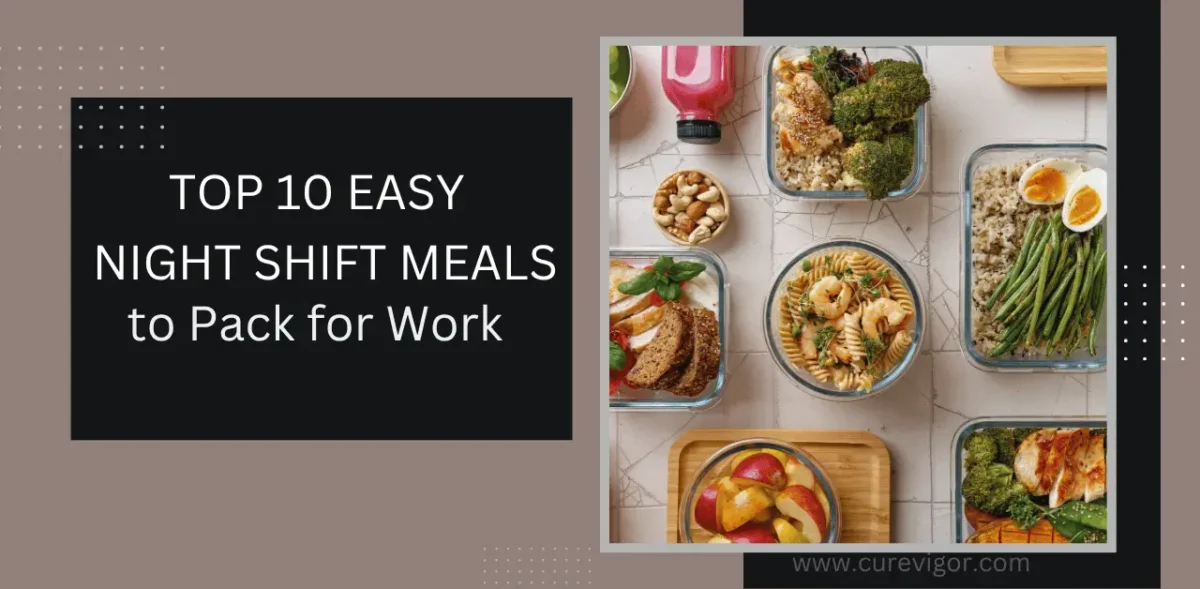
What to Eat During Your Eating Window
Getting your eating window right is half the battle. What you put inside that window determines whether IF works or just makes you tired and irritable at 3 AM.
Foods to prioritize

Your eating window meals should be built around the following:
- Lean protein — chicken, fish, eggs, Greek yogurt, legumes. Protein supports muscle repair, prolongs fullness, and slows digestion.
- Complex carbohydrates—oats, brown rice, sweet potatoes, whole-grain bread. These release energy slowly and prevent the blood sugar spikes and crashes that night workers are especially prone to.
- Non-starchy vegetables—spinach, broccoli, bell peppers, and cucumbers. High in fiber and micronutrients, low in calories.
- Healthy fats — avocado, nuts, olive oil. These support hormone production and sustained energy without spiking insulin.
Foods to limit or avoid

You should steer away from:
- High-sugar snacks, energy drinks, and sweetened coffee drinks spike blood sugar and accelerate the crash.
- Ultra-processed foods like chips, instant noodles, and fast food have poor satiety and disrupt sleep quality
- Large, heavy meals right before sleep slow digestion significantly when you lie down, leading to discomfort and reduced sleep quality.
- Alcohol: it disrupts both sleep architecture and fasting benefits
Hydration during the fasting window
Staying hydrated during your fast is non-negotiable, especially on physically active night shifts.
Water is always your best option. Herbal teas (chamomile and peppermint) are fine during fasting. Black coffee is permitted in moderation, but you should cut it off at the midpoint of your shift to protect sleep quality after work.
Does Intermittent Fasting Actually Help Night Shift Workers?
This is the question worth answering directly, and the research is genuinely encouraging.
A 2025 randomized clinical trial from Monash University, one of the largest studies of its kind, followed 250 night-shift workers for 24 weeks and compared three approaches: continuous energy restriction (CER), IF on night-shift days, and IF on day-off days.
Both IF groups lost significantly more weight (5.5–8.5 kg) than at baseline, with results comparable to those of the continuous restriction group.
Crucially, a 2026 follow-up study added an important caveat: IF without any calorie awareness delivered limited metabolic benefit on its own.
The timing advantage is real, but it doesn’t replace food quality or basic energy balance. IF is a powerful tool; it’s not a workaround for consistently overeating during your window.
The bottom line: IF helps night shift workers by
- Naturally limiting the hours you eat, reducing total calorie intake.
- Minimizing eating during the metabolically worst hours (midnight–5 AM)
- Reducing insulin spikes during nighttime hours, supporting long-term metabolic health
- Providing a simple, schedule-based structure that fits irregular work hours better than traditional diets
How to Adjust Your IF Schedule on Days Off
One of the trickiest parts of IF for shift workers is managing the transition between workdays and rest days. Your body doesn’t need an abrupt schedule flip, and trying to make one usually leads to giving up entirely.
Here’s a practical approach:
On your first day off after a run of night shifts, keep your eating window roughly in line with your recent schedule. Shift it forward by 1–2 hours. So if you were eating 6 PM–10 PM on work nights, aim for 5 PM–9 PM on your first day off.
By your second or third rest day: Shift the window earlier by another 1–2 hours, gradually pulling toward a more standard afternoon/evening schedule if desired.
Don’t stress about perfect consistency. Research shows that reducing overnight eating, even if only partially, yields better outcomes than abandoning IF entirely on days off. Aim for progress, not perfection.
Common Mistakes Night Shift Workers Make With IF
Even with the right schedule, a few patterns consistently undermine results.
Mistake 1: Breaking the fast out of habit at 3 AM, not hunger. The break room vending machine, the canteen leftovers, the colleague offering biscuits, and social eating are powerful at night. Learn to distinguish genuine hunger from boredom or habit.
Mistake 2: Using the eating window as a free pass. IF creates a shorter window; it doesn’t create permission to eat whatever fits inside it. Two hours of pizza, sweets, and crisps still work against you.

Mistake 3: Starting with 16:8 instead of easing in. If you’ve never fasted before, going straight to a 16-hour fast on a 12-hour shift is a recipe for fatigue and abandonment. Start with 12:12 for one to two weeks, then progress.
Mistake 4: Not adjusting for rotating shifts. If your roster rotates between day and night shifts, your eating window needs to rotate too. Trying to hold a fixed 6 PM–10 PM window while working a 7 AM–3 PM day shift is counterproductive. Align the window with your waking hours, regardless of which shift you’re on.
Mistake 5: Treating hunger as failure. Some hunger during the fasting window is normal, especially in the first two weeks. Your body is adapting. It passes. The most effective strategy is to stay hydrated, keep busy, and give your routine at least two full weeks before evaluating whether it’s working.
Key Takeaways
| Intermittent Fasting Method | Fasting Window | Eating Window | Nutrition Focus | Best For |
|---|---|---|---|---|
| 16:8 | 16 hours | 8 hours | Encourages nutrient-dense meals within a shorter eating period | Weight management and experienced fasters |
| 14:10 | 14 hours | 10 hours | Provides more flexibility for balanced nutrition and meal timing | Night-shift workers and active individuals |
| 12:12 | 12 hours | 12 hours | Easiest method for developing healthy eating habits | Beginners and those new to fasting |
| 5:2 | Two low-calorie days per week (about 500 calories) | Normal eating on the other five days | Focuses on weekly calorie reduction rather than daily time restriction | Individuals who prefer flexibility without daily fasting |
Before the conclusion, here’s a summary of everything you need to take action today:
- IF works for night shift workers—but your eating window must align with your waking hours, not the daytime clock.
- 16:8 suits 8-hour shifts best; 14:10 is the practical sweet spot for 12-hour shifts; 12:12 is ideal for beginners
- Your pre-shift meal is the anchor — make it your biggest, most balanced meal of the day.
- Minimize eating between midnight and 5 AM: this is when your metabolic processes are at their slowest
- What you eat still matters — prioritize lean protein, complex carbs, fiber, and vegetables inside your eating window.
- On days off, shift your window gradually rather than making abrupt changes.
- Start with 12:12 and build to 16:8 over 2–4 weeks if you’re new to fasting.
- Hydration is your best friend during the fasting window — water, herbal tea, and black coffee are all permitted.
Frequently Asked Questions
Q. Can intermittent fasting reduce night shift fatigue?
Intermittent fasting may help some night shift workers feel more alert by reducing heavy overnight eating, which can contribute to sluggishness and digestive discomfort.
Many workers report steadier energy levels when they focus on balanced meals before their shift and avoid large meals in the early morning. However, results vary depending on sleep quality, hydration, and overall nutrition.
Q. What foods should night shift workers avoid while doing intermittent fasting?
Night shift workers should limit highly processed snacks, sugary drinks, and large fast-food meals during their eating window. These foods can cause rapid blood sugar fluctuations, leading to energy crashes and increased hunger later in the shift.
Choosing protein-rich foods, fiber, and complex carbohydrates generally supports more stable energy and better satiety.
Q. Can I drink coffee while fasting on a night shift?
Yes, plain black coffee is typically allowed during a fasting period because it contains very few calories. Many night shift workers use coffee to stay alert during overnight hours.
However, consuming caffeine too close to your bedtime may interfere with sleep quality, so it is best to reduce intake during the latter part of your shift.
Q. How long does it take to adjust to intermittent fasting on night shifts?
Most people need one to three weeks to adapt to a new fasting schedule. During the adjustment period, mild hunger, changes in meal timing, and temporary energy fluctuations are common.
Starting with a shorter fasting window, such as 12:12, can make the transition easier and improve long-term adherence.
Q. Is intermittent fasting safe for rotating shift workers?
Intermittent fasting can work for rotating shift workers, but flexibility is essential. Instead of following a fixed eating window every day, adjust your fasting schedule to match your current wake-up and sleep times.
A consistent relationship between eating and waking hours is often more practical than forcing the same schedule across different shifts.
Q. Can intermittent fasting improve digestion for night shift workers?
Some night shift workers experience better digestion when they reduce late-night eating and allow longer gaps between meals. Regular rest periods may help reduce bloating and heaviness.
Combining intermittent fasting with fiber-rich foods and adequate hydration can further support digestive health.
Conclusion
Intermittent fasting doesn’t care what time your shift starts. What it does care about is the relationship between when you eat and how your body is prepared to process food, and that’s where night shift workers need to think differently.
Your body’s clocks don’t flip just because your schedule does. But by anchoring your eating window to your waking hours, minimizing nighttime eating, and choosing the right IF method for your shift length.
You give yourself a genuine metabolic advantage, one that most standard diet plans completely fail to address.
Start with 12:12. Give it two weeks. Build toward 14:10 or 16:8 when it feels sustainable. Eat real food inside your window, stay hydrated outside it, and adjust gradually on your days off.
The goal isn’t perfection. The goal is a schedule that consistently keeps your nutrition aligned with how your biology actually works, even at 3 AM.
Read more about night shift workers’ health.