
Working night shifts can make exercise harder to schedule, but you do not need a complicated fitness program. The best routine fits your sleep, shift hours, energy level, and recovery.
For many night shift workers, a practical approach is to do short, moderate sessions before work, add light movement during long shifts, and save longer or harder workouts for days when you have enough time to recover.
The key is simple:
Time your workouts around your sleep and recovery—not just the clock.
Night work can interfere with the body’s normal sleep-wake rhythm, and night-shift workers commonly experience shorter or poorer-quality sleep.
That means a workout plan designed for someone with a regular 9-to-5 schedule may not fit your life.
This guide shows how to build a realistic exercise routine without sacrificing the sleep your body needs.
The best workout routine for night shift workers is a combination of short, moderate-intensity strength and cardio sessions strategically timed around your shift, ideally a light session before your shift to boost alertness and a longer session on days off to maintain fitness without disrupting sleep.
Timing matters more than intensity for shift workers because exercise also serves as a light and temperature cue that can either help or harm your circadian rhythm.
Why Exercise Timing Matters More Than You Think
For a daytime worker, exercise timing may be fairly simple: work, exercise, eat, and sleep.

Night-shift workers face a different challenge.
Your circadian rhythm, the body’s internal timing system, normally promotes alertness during the day and sleep at night. Working overnight means you are asking your body to remain active when its biological signals may be encouraging rest.
Sleep loss can then affect:
- Energy
- Alertness
- Exercise motivation
- Recovery
- Concentration
- Workout performance
This does not mean exercise is bad for night workers.
Quite the opposite.
Everyday exercise is an essential part of a healthy lifestyle. Adults should aim for 150–300 minutes of moderate aerobic activity, or an equivalent amount of intense activity, per week, along with at least two days of muscle-strengthening activity, according to U.S. physical activity guidelines. They also stress that some exercise is better than none at all.

The challenge is fitting those recommendations around a schedule that may change from week to week.
So don’t begin with:
“How can I exercise every day?”
Start with:
Night shift work can make a normal exercise routine feel surprisingly difficult.
You may finish a long shift feeling physically and mentally drained. On another day, you may have enough energy but need to sleep soon.
Rotating schedules can make the problem even harder because your work and sleep times keep changing.
NIOSH notes that night workers can experience disrupted or insufficient sleep because their work schedule conflicts with the body’s usual day-active, night-sleep pattern.
This creates an important rule:
Don’t judge your fitness routine by how it looks on paper. Judge it by whether you can actually maintain it.
A 20-minute workout that you complete three times a week can be more useful than a one-hour program that you repeatedly skip.
The Three Workout Windows for Shift Workers
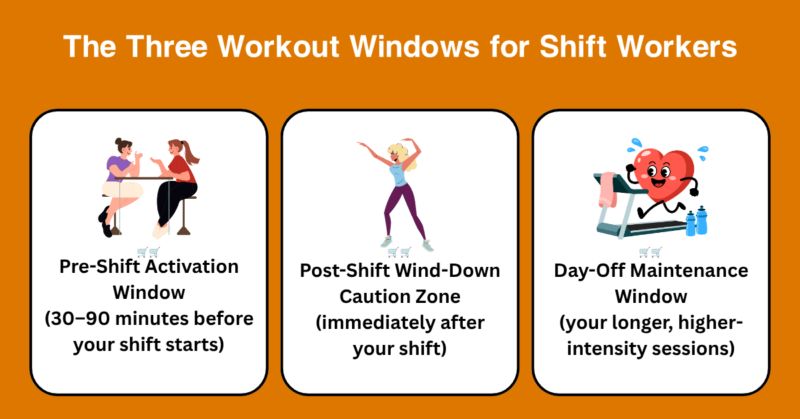
No single exercise time works for every night worker. Your best window depends on your sleep schedule, shift length, commute, fitness level, and how your body responds to exercise.
However, three practical windows are worth considering.
Pre-Shift Activation Window
For many workers, the time before a shift is a convenient time to exercise.
A 15–30 minute session can include:
- Brisk walking
- Easy cycling
- Bodyweight exercises
- Resistance-band training
- Moderate cardio
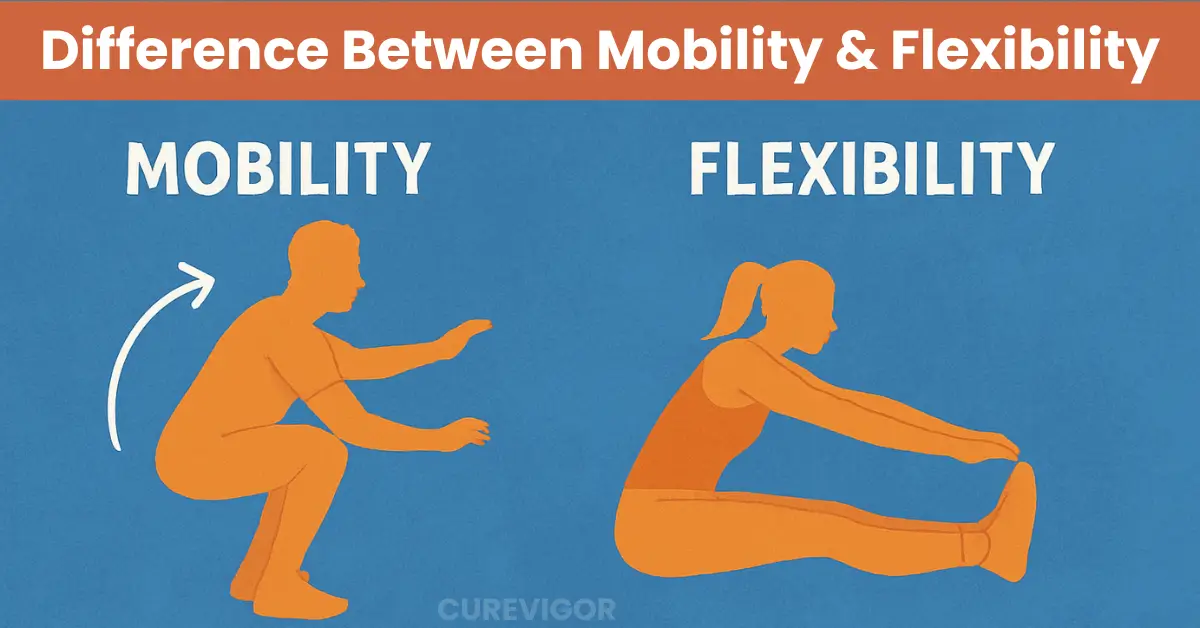
- Mobility work
Keep the session manageable.
You should finish feeling more awake, not exhausted, before your shift begins.

If your shift starts at 10 p.m., for example, you might exercise after waking in the afternoon or early evening rather than training immediately after work.
During-Shift Movement Window
You don’t need a full workout during your shift.
Use available breaks for small amounts of movement:
- Walk for 5–10 minutes.
- Stretch your hips and shoulders.
- Perform a few bodyweight squats.
- Walk stairs if appropriate.
- Change position regularly if you sit for long periods
Think of these as movement breaks, not your main workout.
They can be particularly useful during long shifts when sitting or standing in one position for hours leaves you stiff and tired.
Post-Shift Wind-Down Window
Immediately after a night shift, your priority may be getting home and preparing for sleep.
If exercise close to your planned sleep time makes it harder for you to fall asleep, avoid a hard workout during this period. NIOSH specifically advises people who have difficulty falling asleep to consider finishing exercise at least several hours before bedtime.
Gentle movement may still be useful if you feel stiff:
- Slow walking
- Gentle stretching
- Easy mobility exercises
But don’t force a hard session simply because your workout schedule says you should.
Sleep-deprived and exhausted? Sleep can be the better choice.

Start With a Realistic Fitness Goal
You do not have to exercise seven days a week.
Your first goal should be consistency.
A simple starting point could be
| Beginner | 2–3 workouts per week |
| Intermediate | 3–4 workouts per week |
| Advanced | 4–5 workouts per week |
| Everyone | Regular walking and movement breaks |
These are practical starting points, not medical prescriptions.
Adults should do muscle-strengthening exercise at least 2 days a week, plus at least 150 minutes of moderate aerobic activity each week.
Don’t go straight to the top if you don’t exercise much right now.
Start with a lower amount.
A useful progression
Week 1: 15–20 minutes, 2–3 times
Week 2: 20–30 minutes, 3 times
Week 3 onward: Gradually increase duration, resistance, or frequency if your sleep and recovery remain good.
Your routine should grow with your capacity.

A Sample Weekly Routine
You can adapt the following structure to your actual shift pattern.
Night Shift Days: 20–30 Minutes
Warm-up — 5 minutes
- Easy walking
- Arm circles
- Gentle leg movements
Strength circuit — 15–20 minutes
Complete 2–3 rounds at a comfortable pace:
- 10–15 squats
- 8–12 push-ups, modified if needed
- 10–15 glute bridges
- 8–12 resistance-band rows
- 20–30 seconds of plank
Cool-down — 5 minutes
Use gentle stretching and slow breathing.
You do not need to train to exhaustion.
Days Off: 40–60 Minutes
When you have adequate time for recovery, you can perform a longer session:
- Full-body strength training
- 15–20 minutes of moderate cardio
- Mobility work
You can choose walking, cycling, swimming, resistance training, or another activity you enjoy.
The best exercise is often the one you are willing to repeat.
Transition Days
The day before returning to a run of night shifts can be a good time to keep exercise lighter.
Try:
- 15–20 minutes of walking
- Gentle mobility
- Light stretching
Use the day to prepare for the upcoming schedule rather than trying to set a new fitness record.

Why Strength Training Matters for Shift Workers Specifically
Strength training helps you maintain and develop muscle while supporting overall physical function.
You don’t need a gym.
You can use:
- Body weight
- Resistance bands
- Dumbbells
- Machines
- Household equipment designed for exercise
A simple full-body session can include:
Squat → push → pull → hip movement → core
For example:
- Squats
- Push-ups
- Resistance-band rows
- Glute bridges
- Planks
Start with a resistance level that allows you to maintain good form.
If you’re new to strength training, don’t chase heavy weights immediately.
Good technique and gradual progression matter more than lifting as much as possible.
Cardio: Keep It Moderate, Not Maximal
Cardio improves aerobic fitness and increases daily physical activity.
Good options include:
- Brisk walking
- Cycling
- Swimming
- Elliptical training
- Low-impact cardio circuits
The talk test is a straightforward way to determine moderate intensity: you can speak in brief phrases but breathe more forcefully than usual.
Harder cardio can also fit into a fitness program, but it doesn’t need to happen after every night shift.
If vigorous exercise close to your planned sleep makes you feel more alert rather than relaxed, move that workout earlier in your waking period or to a day off.
Recovery and Safety Tips for Workout Routine
Your exercise plan should support your recovery, not compete with it.
Prioritize sleep
If you are severely sleep-deprived, consider reducing or skipping a hard workout.
NIOSH recommends getting as much sleep as possible after a night shift and going to bed promptly after arriving home rather than using that early morning period for chores and errands.
Eat appropriately around exercise.
If you are hungry before exercising, a balanced meal or snack containing protein and carbohydrate can provide useful fuel.
Don’t exercise hard while deliberately under-eating.
Stay hydrated.
Drink fluids regularly based on your thirst, activity, and environment.
If your job is physically demanding or you sweat heavily, you may need more fluids.
Be careful with caffeine.
Caffeine can improve alertness, but using it too close to your planned sleep can interfere with sleep.
The AASM’s current shift-work guidance notes that caffeine may help alertness but can disturb daytime sleep when used too close to sleep.
For night workers, think about caffeine in relation to your sleep time, not simply the time shown on the clock.
Don’t ignore pain.
Normal muscle fatigue is different from sharp or persistent pain.
Stop an exercise that causes significant pain and seek appropriate professional advice when necessary.
Common Mistakes Night Shift Workers Make With Exercise
1. Trying to copy a daytime worker’s routine
A 6 a.m. workout may be unrealistic if you finish work at 7 a.m. and need to sleep.
Build your routine around your actual life.
2. Exercising hard when severely sleep-deprived
Fatigue can affect concentration, coordination, and exercise quality.
Sometimes rest is the smarter training decision.
3. Thinking every workout must be long
A 20-minute session still counts.
Don’t reject a short workout because you cannot fit in an hour.
4. Doing intense exercise immediately before sleep
If you notice that hard exercise keeps you alert, move it earlier.
Your response matters.
5. Ignoring days off
Days off can provide a better opportunity for longer strength or cardio sessions when you have more time to recover.
6. Making the routine too complicated
You don’t need ten exercises, five supplements, and a six-day program.
Start with:
Strength + cardio + walking + recovery.

How to Work Out When You Are Too Tired
This is one of the most important questions for night shift workers.
Before exercising, ask:
How much did I sleep?
How alert do I feel?
Am I unusually dizzy, weak, or unwell?
Do I have enough energy to exercise safely?
If the answer is no, don’t feel guilty about changing the plan.
You could replace a hard workout with:
- A short walk
- Gentle stretching
- Mobility exercises
Or you can simply sleep.
A sustainable exercise routine includes recovery days.

Exercise and Your Night Shift Sleep Schedule
Exercise is only one part of managing night work.
Sleep remains essential.
AASM guidance for shift workers emphasizes protecting sleep and, when possible, maintaining a consistent schedule.
After your shift, consider making your routine predictable:
Finish work → commute home → light meal if needed → wind down → sleep
Avoid turning the period immediately after work into a long list of errands.
If hunger is likely to wake you, NIOSH suggests a small meal or snack before daytime sleep rather than going to bed extremely hungry.
The goal is to make your sleep period as protected as possible.
A Simple Night Shift Exercise Blueprint
If you want a simple plan rather than a complicated program, start here.
Before 2–3 night shifts
20–30 minutes
- 5-minute warm-up
- 15–20 minutes of strength or moderate cardio
- 5-minute cool-down
During your shift
5–10 minutes when practical
- Walk
- Stretch
- Change position
- Perform light mobility
After your shift
Skip hard workouts if they interfere with sleep.
Use gentle movement only if it helps you relax.
On days off
40–60 minutes
- Full-body strength
- Moderate cardio
- Mobility
This structure gives you flexibility without abandoning consistency.
Supplement and Recovery Note
Some people consider supplements such as magnesium or protein products when exercising.
However, supplements are not necessary for everyone, and their usefulness depends on diet, health status, medications, and individual needs.
Don’t add supplements just because they are marketed to night shift workers.
Before taking supplements, see a qualified healthcare provider if you have a medical condition or take prescription medications.
Your priorities should remain:
Sleep → food → hydration → movement → recovery.
FAQs on Workout Routine of Shift Workers
Q. How do you work out when working the night shift?
Time your workouts around your sleep and waking period, rather than automatically following daytime exercise schedules. A short pre-shift workout can work well for some people, while longer sessions may fit better on days off.
Q. What is the best exercise for night shift workers?
There is no single best exercise. A combination of strength training, moderate cardio, walking, and mobility work can provide a balanced routine. Choose activities you can perform consistently and safely.
Q. Should I exercise if I am very tired after a night shift?
Not necessarily. If you are severely sleep-deprived, prioritizing sleep may be more appropriate than forcing a hard workout. Once rested, you can return to your routine.
Q. Can exercise help night shift workers stay awake?
Physical activity may temporarily increase alertness, but it should not replace adequate sleep. Light movement during a shift may help you feel less sedentary, while sleep remains the foundation of recovery.
Q. How many days a week should a night shift worker exercise?
If you are new to exercise, start with 2–3 structured workouts per week. Gradually build toward general adult activity guidelines, which include aerobic activity and muscle-strengthening work on at least two days per week.
Q. When should night shift workers stop caffeine?
No single cutoff works for everyone. Time caffeine around your planned sleep. If caffeine is making daytime sleep difficult, stop using it earlier in your shift. NIOSH also advises night workers who use caffeine to stop several hours before sleep.
The Bottom Line
The best exercise routine for a night shift worker isn’t necessarily the longest or hardest.
It is the routine that fits your work schedule, protects sleep, and allows enough recovery.
Start with:
2–3 manageable workouts per week.
Add:
Regular walking and movement breaks.
Use:
Days off for longer sessions when you are well rested.
And remember:
A short workout you can repeat is more valuable than an ambitious workout plan you cannot maintain.
If night work is already leaving you exhausted, don’t respond by pushing your body harder. Build your fitness around your recovery.
Your next step
Choose your next three available workout windows.
Write them down according to your actual shift and sleep schedule, then decide what each session will be:
Strength → Cardio → Recovery/Movement
Start small, stay consistent, and adjust the plan when your body tells you that recovery needs more attention.
Important note
This article does not offer a specific exercise regimen; rather, it offers general health and fitness advice. Before proceeding, get the proper medical guidance if you have a medical condition, serious sleep issues, an accident, or symptoms like chest discomfort, fainting, extreme shortness of breath, or odd dizziness after activity.
Consult a trained healthcare provider or sleep specialist if severe tiredness or ongoing difficulty falling asleep interferes with your everyday life or job.
Ready to Build Your Night Shift Workout Routine?
Don’t wait for the perfect schedule. Start with one manageable workout this week and build from there. Choose a time that protects your sleep, keep your session simple, and focus on consistency rather than intensity.
Need help planning your meals around night shifts too? Explore our practical Night Shift Meal Prep Guide and make your workdays easier, healthier, and more organized.
Read more about night shift workers’ health.
You might like: