
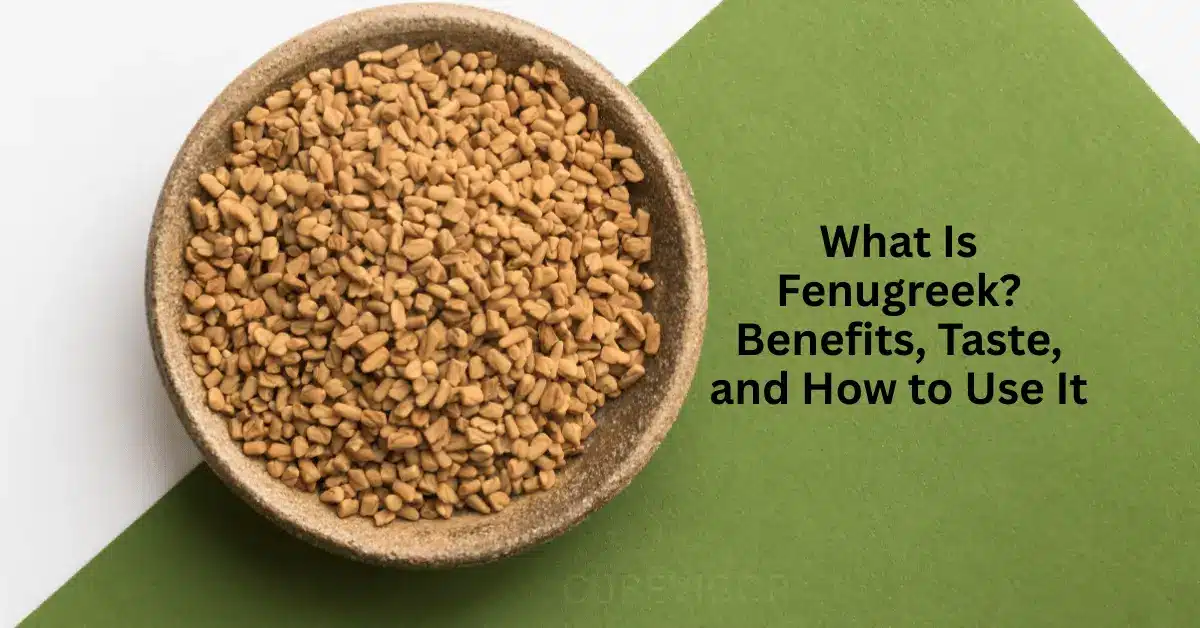
Fenugreek is an herb whose seeds and leaves are used in cooking and traditional herbal practices. Its scientific name is Trigonella foenum-graecum, and its seeds have a unique aroma and flavor that can remind people of maple syrup.
So, what is fenugreek good for? It is commonly used as a spice and has also been studied for possible effects on blood sugar, menstrual symptoms, digestion, appetite, and breast milk production. However, evidence varies by use, and fenugreek should not be treated as a cure or replacement for medical care.
You can use fenugreek seeds in several simple ways: soak or cook them, add small amounts to meals, or prepare them as tea. Before using concentrated amounts or supplements, understand the possible side effects and safety concerns.
What Is Fenugreek?
Fenugreek (Trigonella foenum-graecum) is a plant whose small, golden-brown seeds have been used in cooking and traditional food practices for centuries.
It is native to areas including the Mediterranean, southern Europe, and western Asia. People use both the leaves and seeds, but the seeds are especially common as a spice and herbal ingredient.
The seeds are small, hard, and yellowish-brown. They contain naturally occurring compounds that give them their characteristic smell and bittersweet flavor.
Fenugreek has a long history of traditional use. Different cultures have used it in food and traditional remedies for many purposes. (Cameron & Shaban, 2025)
Today, fenugreek is also sold as capsules, powders, extracts, and other dietary supplements.
The key distinction is that traditional use does not automatically mean clinical research has proven a health benefit. Some areas have promising research, while others remain uncertain.
What Does It Taste Like?

Fenugreek has a strong, distinctive taste.
The seeds are often described as
- Slightly bitter
- Nutty
- Earthy
- Warm
- Mildly sweet
- Maple-like in aroma
NCCIH notes that fenugreek seeds smell and taste like maple syrup, although the overall flavor is more complex and can be quite bitter.
If you are using whole seeds for the first time, start with a small amount. A little can add noticeable flavor to a dish.
Roasting the seeds can change their flavor, but be careful not to burn them. Over-roasted fenugreek can become unpleasantly bitter.

What Is Fenugreek Used For?
Fenugreek is used as both a culinary ingredient and an herbal product.
In cooking, the seeds can flavor curries, spice blends, vegetables, legumes, and other dishes. Some cuisines also use fenugreek leaves.
As a traditional herbal ingredient, fenugreek has been used for purposes including digestive complaints, menstrual symptoms, and breastfeeding. Modern research has investigated several of these uses, but the evidence is not equally strong for all of them.
This distinction matters because a food ingredient and a concentrated supplement are not necessarily equivalent.
What Is Fenugreek Good For?
Researchers have studied fenugreek for several possible health effects. Some research is encouraging, but it is not accurate to describe fenugreek as a proven treatment for multiple diseases.
Blood Sugar and Metabolic Health
Blood sugar is one of the better-studied areas of fenugreek research.
A systematic review and meta-analysis of randomized controlled trials linked fenugreek to improvements in several glycemic control metrics. However, the researchers also noted differences among studies and the need for higher-quality research.
An earlier systematic review similarly found possible improvements in blood glucose and HbA1c but cautioned that study quality and differences between trials limited firm conclusions. (Shabil et al., 2023)
That means fenugreek may have a role worth studying, but it should not replace diabetes medication, prescribed treatment, or professional dietary care.
Consult a healthcare provider before using concentrated fenugreek products if you take blood sugar-lowering medicine, because higher doses may lower it further. NCCIH specifically advises people taking medicines to discuss herbal products with their healthcare providers.
Fenugreek Benefits for Hair
Fenugreek seeds are traditionally used in some hair-care practices, particularly in homemade hair masks and scalp treatments. They contain plant compounds and nutrients that have led to interest in their potential role in supporting scalp and hair health.
Fenugreek is sometimes used to help with dry scalp, hair conditioning, and the appearance of stronger, healthier hair. However, evidence for fenugreek as a proven treatment for hair loss or hair growth is limited. It should not be presented as a guaranteed solution for thinning hair or baldness.
If you want to try fenugreek for hair care, a simple approach is to use soaked or ground seeds in a hair mask. Patch-test any homemade preparation first, especially if you have sensitive skin.
For persistent or sudden hair loss, it is better to look for the underlying cause with a qualified healthcare professional rather than relying only on herbal treatments.
Digestion and Appetite
Fenugreek has a long history of traditional use for digestive purposes. Its seeds also contain fiber and other plant compounds.
Some people use soaked seeds or fenugreek tea as part of their eating routine. However, evidence is not strong enough to claim that fenugreek reliably treats digestive disorders or acts as a proven appetite suppressant.
If your goal is better portion control, view fenugreek as one possible food ingredient rather than a shortcut for appetite management.
Your overall meal pattern still matters more: adequate protein, fiber-rich foods, regular meals, hydration, sleep, and appropriate portions can all contribute to better appetite management.
Menstrual Symptoms
Fenugreek has traditionally been used for menstrual complaints, including cramps.
Some clinical research exists in this area, but NCCIH describes the evidence as limited and uncertain. (Fenugreek: Usefulness and Safety, 2024)
Therefore, it is better to say that fenugreek has been studied for menstrual symptoms rather than claiming that it definitely relieves period pain.
Severe, new, or worsening menstrual pain deserves medical evaluation rather than self-treatment with an herb.
Breastfeeding and Milk Supply
Fenugreek is widely discussed as a traditional way to increase breast milk production.
Research has produced mixed results. NCCIH states that it remains uncertain whether fenugreek actually increases milk supply, and more high-quality research is needed. (Fenugreek: Usefulness and Safety, 2024)
This matters because breastfeeding parents may assume a natural product is automatically safe. That is not always the case.
If you are breastfeeding and considering fenugreek in amounts greater than those normally found in food, talk to a healthcare professional first.
How to Use Fenugreek Seeds
There is no single “best” way to use fenugreek seeds.
For everyday cooking, you can use a small amount as a spice. You can also soak the seeds or make tea with them.
Here are three practical options.
How to Eat Fenugreek Seeds
Whole fenugreek seeds are quite hard and bitter, so eating a large spoonful of dry seeds is not a particularly pleasant approach.
Instead, you can:
- Soak a small amount of seeds in water and use them in a meal.
- Cook the seeds with other ingredients to soften their texture and balance their bitterness.
- Lightly roast them before grinding them into a spice mixture.
- Use ground fenugreek in curries, vegetable dishes, lentils, or spice blends.
Start with a small culinary amount if you are unfamiliar with the flavor.
Also, keep this safety point in mind: more is not necessarily better. Concentrated supplements can provide much larger amounts than ordinary food use.

How to Make Fenugreek Tea
Fenugreek tea is one of the simplest ways to use the seeds.
A basic approach is
- Lightly crush a small amount of fenugreek seeds.
- Add them to hot water.
- Let the seeds steep for several minutes.
- Strain the tea.
- Adjust the flavor if needed.
The tea can taste bitter, so you may prefer a mild preparation rather than making it very strong.

How to Cook With Fenugreek
Fenugreek seeds work particularly well when used as a seasoning rather than the main ingredient.
You can add small amounts to:
- Curries
- Lentil dishes
- Vegetable recipes
- Spice blends
- Pickles
- Savory sauces
You can also use fenugreek leaves in cooking, which provide a different flavor than the seeds.
The easiest way to begin is to use a small quantity alongside familiar spices.
How Much Fenugreek Should You Have Per Day?
No single evidence-based daily amount applies to everyone for every purpose.
Research amounts vary by fenugreek form, reason for use, and study design. Food-level use is different from concentrated powders, extracts, and supplements.
For normal cooking, using fenugreek as a spice is generally a simpler approach than taking high-dose supplements.
NCCIH states that fenugreek is considered safe for adults in amounts commonly found in foods, while larger amounts can cause side effects and may lower blood sugar.
Possible side effects include:
- Diarrhea
- Nausea
- Other digestive symptoms
- Allergic reactions
- Excessively low blood sugar with large amounts
For that reason, don’t choose a high daily dose just because a larger amount seems more effective.
If you are considering fenugreek supplements, follow the product directions and ask a healthcare professional about an appropriate amount, especially if you take medication.
Fenugreek Benefits for Women
Researchers have studied fenugreek in several areas relevant to women, including menstrual symptoms and breastfeeding.
It has traditionally been used for menstrual cramps and to support milk production. However, the evidence is not strong enough to say that fenugreek definitely works for either purpose.
For breastfeeding, research has produced mixed findings. For menstrual symptoms, the available evidence is also limited.
Pregnancy is an especially important safety consideration.
Fenugreek should not be used in amounts greater than those normally found in food during pregnancy. NCCIH reports that higher amounts have been linked with an increased risk of birth defects.
Before using fenugreek as a supplement or in concentrated dosages, see your healthcare provider if you are pregnant, trying to conceive, or nursing.
Where to Buy Fenugreek Seeds
Fenugreek seeds are commonly sold as a culinary spice and may be available from:
- Supermarkets
- Spice shops
- South Asian grocery stores
- Herbal food stores
- Online food retailers
When buying fenugreek for cooking, choose a product clearly labeled as fenugreek seeds and check the packaging for freshness and storage instructions.
If you are buying a supplement rather than a food product, pay closer attention to the ingredient list, serving size, manufacturer information, and any additional ingredients.
Remember that culinary fenugreek and concentrated fenugreek supplements are not interchangeable.
Fenugreek Benefits for Night Shift Workers
Night shifts can make regular eating difficult. Long hours, fatigue, and easy access to sugary snacks may lead to unnecessary nighttime eating. Fenugreek can be part of a balanced meal because its fiber may help you feel more satisfied.
May Support Fullness During Long Shifts
Fenugreek seeds contain soluble fiber, which can contribute to fullness. Adding a small amount to a balanced meal may help you feel satisfied during a demanding shift.
Can Fit Into a Healthy Night-Shift Meal
You can add ground fenugreek to lentils, vegetables, eggs, soups, or other savory foods. Pairing it with protein and fiber-rich foods creates a more satisfying meal than relying on sweet snacks or refined carbohydrates.
A Better Alternative to Sugary Night Snacks
When energy drops during a long shift, reaching for sweets can become an easy habit. Fenugreek itself is not an appetite suppressant, but using it in nourishing meals may help you build a more balanced eating routine.
Keep the Timing Practical
Night shift workers do not need to follow a traditional breakfast-lunch-dinner schedule. What matters more is choosing nutritious meals around your working hours and avoiding excessive caffeine or heavy meals close to your intended sleep period.
Don’t Rely on Fenugreek Alone
Fenugreek cannot compensate for chronic sleep deprivation, an unbalanced diet, or constant snacking. For night workers, appetite management works best when fenugreek is combined with adequate sleep, balanced meals, hydration, and regular movement.
Fenugreek Safety: Who Should Be Careful?
Fenugreek may be a familiar kitchen spice, but concentrated amounts deserve more caution.
Pregnancy
During pregnancy, avoid fenugreek in quantities higher than those found in meals. An elevated risk of birth abnormalities has been linked to higher levels.
Medications
Fenugreek may interact with medicines. This is particularly important if you take medicines that affect blood sugar or other medicines regularly.
Ask your healthcare professional before using a fenugreek supplement.
Allergies
Some people may experience severe adverse reactions to fenugreek. Stop using it and get treatment if you exhibit signs of a severe allergic reaction.
Digestive Side Effects
Larger amounts can cause diarrhea, nausea, and other digestive symptoms. If fenugreek consistently upsets your stomach, there is little reason to keep increasing the amount.
Children
There is not enough information to establish the safety of larger-than-food amounts of fenugreek in children.
Frequently Asked Questions
Q. What is fenugreek in simple words?
Fenugreek is an herb whose seeds and leaves are used mainly as food ingredients and spices. Its seeds have a distinctive bitter, nutty, maple-like flavor and are also used in traditional herbal practices.
Q. What is fenugreek good for?
Fenugreek has been studied for blood sugar control, menstrual symptoms, and breastfeeding, among other uses. Some research is promising, but evidence varies and does not establish fenugreek as a treatment for these conditions.
Q. When Is the Best Time to Take Fenugreek for Appetite Control?
There is no well-established universal “best time.”
Some people prefer using fenugreek before or with a meal because they are interested in its potential effect on fullness and digestion.
If you are trying it for the first time, starting with a small culinary amount alongside food may be easier on your digestive system than taking a concentrated supplement on an empty stomach.
Q. Can I drink fenugreek water every day?
Some people drink soaked fenugreek water regularly, but limited evidence shows that fenugreek water specifically produces meaningful weight loss. If you choose to use it, avoid excessive amounts and watch for digestive symptoms.
Q. Can I drink fenugreek tea every day?
There is no universal daily amount that is appropriate for everyone. Regular use may not be suitable for people who take certain medicines, are pregnant, or have particular health conditions. If you use it frequently, especially in concentrated amounts, ask a healthcare professional first.
Q. Does fenugreek help with weight loss?
Fenugreek is sometimes promoted for appetite and weight management, but evidence for meaningful weight-loss effects is not strong enough to treat it as a reliable weight-loss solution. For a deeper discussion of its possible role in weight management and digestion, see How to Use Fenugreek for Weight Loss and Better Digestion.
What to Do Next
Fenugreek can be a useful culinary herb when you want to add a distinctive flavor to meals. Its seeds have also attracted scientific interest because of their possible effects on blood sugar and other health outcomes, but the evidence is still developing.
If you want to try fenugreek, start with food rather than high-dose supplements. Use a small amount in a familiar dish or a mild tea and pay attention to how your body responds.
Don’t rely on fenugreek alone if your main goal is better digestion or weight control. A balanced eating pattern, sensible portions, regular movement, adequate sleep, and other sustainable habits have a much larger role.
For readers specifically interested in fenugreek and weight management, continue with How to Use Fenugreek for Weight Loss and Better Digestion.
Stay in touch for more healthy tips.
You might like:

