
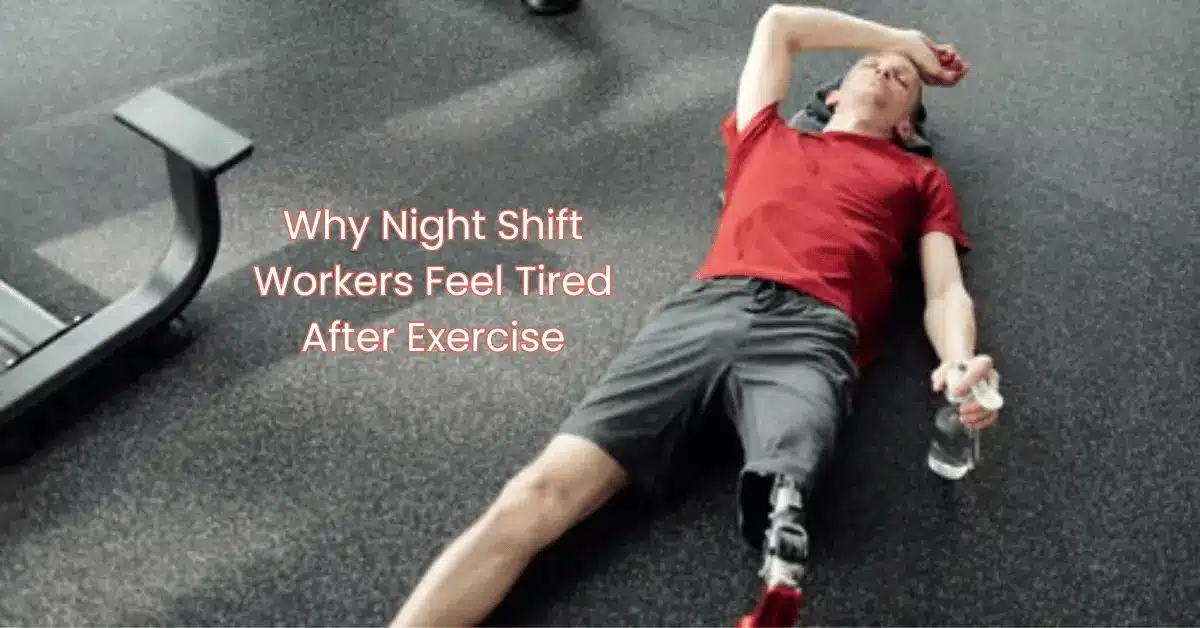
Why do night shift workers feel tired after working out? Explore 7 possible reasons, from poor sleep and timing to hydration and nutrition, plus practical tips.
If you work nights and you’ve started exercising to “feel better,” but instead you feel wrecked, you’re not imagining it. Night shift fatigue after exercise is real, measurable, and extremely common among nurses, factory workers, security staff, and anyone whose body clock fights their work schedule.
This post breaks down exactly why night shift workers feel tired after working out, what’s normal versus what’s a warning sign, and how to build a workout and recovery routine that gives you energy instead of draining it.
Disclaimer: This article is for educational purposes and reflects exercise science and shift-work research along with firsthand shift-worker experience. It is not a substitute for medical advice. If your fatigue is severe, persistent, or affecting your safety at work, talk to a doctor.
Why Night Shift Workers Feel Tired After Working Out
Night shift workers feel tired after working out because exercise adds a second layer of physical stress on top of a body that is already running on a disrupted circadian rhythm, chronic sleep debt, and backward cortisol timing.

On a normal schedule, your body clock supports both daytime performance and nighttime recovery. On the night shift, those two systems work against each other, so the same workout that leaves a day-shift worker refreshed leaves a night-shift worker depleted.
Circadian disruption is equal to double recovery debt
Your circadian rhythm controls far more than sleep; it regulates body temperature, hormone release, blood sugar, and the timing of muscle repair.
When you work nights, your internal clock is still partially wired for daytime activity and nighttime rest, even if your schedule says otherwise.
Exercise is a stressor, a healthy one, but a stressor nonetheless. It creates micro-damage in muscle tissue that your body repairs during rest, primarily during deep sleep.
When you add workout stress on top of a circadian system that’s already out of sync, you’re asking your body to recover from two disruptions at once: the metabolic disruption of shift work and the physical disruption of training.
This is often called “recovery debt,” and it compounds day after day if you don’t address it.
Normal Fatigue vs. Burnout
It’s important to separate two different things:
- Normal muscle fatigue feels like heaviness, soreness, or tiredness in the muscles you trained. It improves with good sleep and eating, and it doesn’t affect your mood or mental clarity.
- Shift work burnout feels like whole-body exhaustion, brain fog, irritability, and a sense that no amount of sleep fixes it. It often comes with disrupted sleep even when you have time to sleep, and it doesn’t resolve with a single rest day.
If your fatigue matches the second description, exercise isn’t the root problem; it’s exposing an existing recovery deficit.
7 Reasons You Feel Tired After Workouts
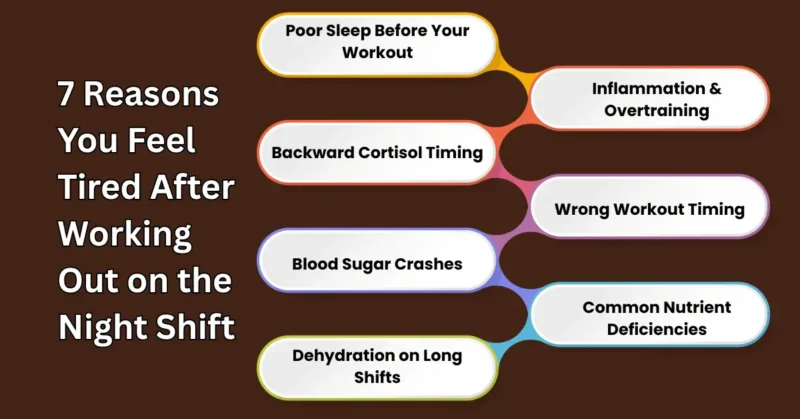
1. Poor Sleep Before Your Workout
Most night shift workers get fewer hours of sleep and lower-quality sleep than day workers. Daytime sleep is fragmented by light, noise, and a body clock that’s biologically primed to be awake.
Getting less than six hours of daytime sleep before a workout means you’re training on a body that hasn’t finished repairing from the last shift, let alone the last workout.
Under-slept muscles have less glycogen replenishment, slower protein synthesis, and blunted growth hormone release, all of which worsen post-workout fatigue and slow recovery.
2. Backward Cortisol Timing
Cortisol, your primary stress and alertness hormone, should peak in the morning and taper off at night. Night shift work flips or blunts this rhythm. Many night workers experience a cortisol spike in the middle of their “night,” which helps them stay alert for work, but this is the opposite of when cortisol should be rising to support a workout.
Exercising during a cortisol-mistimed window means an out-of-sync stress hormone already taxes your nervous system before you add training stress on top.
This is a major driver of what’s sometimes described as nervous system fatigue after exercise: a deep, heavy tiredness that feels different from normal muscle soreness.
3. Blood Sugar Crashes
Many night shift workers train fasted or fuel workouts with quick sugar and caffeine because that’s what’s available at 3 a.m.
Both patterns can cause a blood sugar crash after training. Fasted training depletes glycogen stores that aren’t replenished, and sugar-and-caffeine combos cause a sharp insulin response followed by a rebound low.
Either way, you finish the workout with an energy spike followed by a hard crash, which is often mistaken for the workout itself being “too much.”
4. Dehydration on Long Shifts
Long shifts, especially in hospitals, warehouses, or kitchens, often come with limited water breaks.
Add sweat loss from a workout to an already dehydrated body, and you get a double hit: dehydration increases inflammation and reduces nutrient delivery to recovering muscles. Low electrolytes (particularly sodium, potassium, and magnesium) also impair nerve and muscle function, which shows up as heavy, tired-feeling limbs and slower recovery.
5. Inflammation & Overtraining
Training hard, especially high-intensity interval training (HIIT) or heavy resistance training, without adequate recovery days creates a cumulative inflammatory load. Normally, sleep resolves inflammation.
On the night shift, compressed, lower-quality sleep doesn’t fully clear that inflammation before the next workout. Over weeks, this can tip into a mild overtraining state, where fatigue after exercise becomes the norm rather than the exception.
6. Wrong Workout Timing
Timing matters enormously. Exercising too close to your daytime sleep window, for example, going straight from a night shift to an intense gym session and then trying to sleep, raises core body temperature and cortisol right when your body needs to wind down.
This directly reduces sleep quality after a workout, creating a cycle: bad sleep leads to a harder, more depleting workout, which leads to worse sleep the next day.
7. Common Nutrient Deficiencies
Nutrient deficiencies are more common in shift workers for a few overlapping reasons: limited sun exposure (vitamin D), irregular eating patterns (iron, magnesium), and higher physiological stress that increases nutrient turnover.
Low vitamin D and iron are both strongly linked to fatigue and reduced exercise tolerance. Low magnesium impairs muscle relaxation and sleep quality, meaning a deficiency can simultaneously make workouts feel harder and recovery slower.
Is This Normal—or Burnout?
Some tiredness after a workout is normal; exercise is a physical stressor. The question is whether that tiredness resolves normally or compounds into something bigger.
Normal vs. Burnout: Key Signs
Normal post-workout tiredness:
- Muscle soreness or heaviness, localized to trained areas.
- Improves significantly after one good sleep and a meal
- Mental clarity and mood are unaffected.
- Motivation to train again returns within a day or two.
Shift work burnout/overreaching:
- Whole-body exhaustion regardless of which muscles you trained
- Doesn’t improve even after “enough” sleep
- Brain fog, irritability, or low motivation across the board
- Resting heart rate stays elevated.
- Getting sick more often, or slower wound/injury healing
When It’s a Sleep Disorder
If you experience excessive sleepiness during shifts, insomnia during your intended sleep period, and persistent fatigue that isn’t explained by workload or training alone, these are hallmark symptoms of shift work sleep disorder (SWSD), a recognized circadian rhythm sleep disorder.
This is a medical condition, not just “being tired,” and it’s worth discussing with a physician, especially a sleep medicine specialist.

How to Track Your Recovery
You don’t need expensive equipment to monitor this. Track three simple markers daily:
- Sleep quality: hours slept and how rested you feel on waking (a 1–10 scale is enough)
- Resting heart rate: an upward trend over several days often signals under-recovery
- Subjective energy level: rate your energy at the start of your shift each day
If two or more of these trend negatively for more than a week, it’s time to scale back training intensity.
Worst Habits Draining Your Energy
Heavy Leg Day, No Sleep
Lower-body training is metabolically demanding and places a heavy load on the nervous system.
Doing it immediately after a 12-hour shift, before you’ve slept, essentially asks your body to perform at its lowest point of the day. This is one of the most common causes of the complaint “workout makes me more tired on the night shift.”
Overusing Stimulants
Stimulants can mask fatigue but don’t resolve it; they borrow energy from later. Relying on pre-workout or energy drinks to force a session when your body is already signaling exhaustion can deepen the recovery deficit and further disrupt sleep timing.
Skipping Warm-Up/Cooldown
Under time pressure, warm-ups and cooldowns are often the first things cut. But a proper warm-up primes the nervous system and reduces injury risk, and a cooldown helps shift the body out of a stressed state.
Skipping both increases inflammatory load and makes exhaustion after the gym more likely during night shifts.
How to Fix It
Best Time to Workout
When possible, work out about 90 minutes after waking, not right before your daytime sleep window. This gives cortisol and body temperature time to settle before you need to sleep, protecting sleep quality after the workout rather than sabotaging it.
If your only window is right after your shift, keep intensity low (walking, mobility work) rather than high-intensity training.
Match Intensity to Recovery
Build a simple “low-energy day” protocol you switch to automatically when sleep is poor:
- Well-rested day: normal strength training or HIIT
- Moderately tired day: moderate-intensity strength training, shorter session
- Low-energy day: walking, mobility work, light stretching, or a rest day
This single habit, matching intensity to recovery status instead of a fixed schedule, is one of the most effective tools for exercise recovery for shift workers.
Pre-Workout Nutrition
60–90 minutes before training, eat a small meal combining protein, complex carbohydrates, and a little fat, for example, eggs with oats, or Greek yogurt with fruit and nuts. This supports steady blood sugar and helps prevent the crash associated with fasted or sugar-fueled workouts.
Hydration Strategy
Hydrate consistently throughout your shift rather than all at once, and add electrolytes (sodium, potassium, and magnesium) around your workout, especially if you’re training after a long shift with heavy sweating. This helps counter dehydration-driven inflammation and fatigue.

Sample Recovery Plan
Post-Workout Recovery Meal
Within 60 minutes of training, eat a meal with 25–35 g of protein plus carbohydrates to replenish glycogen, for example, chicken with rice and vegetables, or a protein smoothie with banana and oats. This supports muscle repair and helps stabilize blood sugar before your next sleep period.
Sleep Hygiene Tips
- Use blackout curtains or an eye mask to mimic nighttime darkness.
- Keep the room cool
- Allow a 20–30 minute wind-down (shower, stretching, dim light) between workouts and sleep.
- Avoid caffeine within 6–8 hours of your intended sleep window.
Active Recovery Tools
Light stretching, a magnesium supplement (check with a doctor first, especially if you have kidney issues), and a cool or cold shower after workouts can all support faster recovery and better sleep onset.
What the Research Says
Circadian Rhythm & Performance
Sports science research consistently shows that circadian misalignment reduces exercise performance, slows reaction time, and impairs recovery markers compared with training aligned with one’s natural rhythm.
Shift work research also links irregular sleep-wake schedules to elevated inflammatory markers and altered cortisol rhythms, both of which compound exercise-induced stress.

Expert Tips From Nurses and Night Shift Workers
Shift workers who’ve built sustainable routines often share a few habits: they train based on how they feel that day rather than a fixed plan, prioritize sleep over squeezing in an extra workout, and treat nutrition and hydration as part of training, not an afterthought.
When to See a Doctor
See a doctor if fatigue is severe, doesn’t improve with better sleep and nutrition, is accompanied by chest pain, fainting, or unexplained weight changes, or if you suspect shift work sleep disorder. This article does not replace individualized medical advice.
FAQ: Why Night Shift Workers Feel Tired After Working Out
Q. Why does working out make me more tired on the night shift?
Because exercise adds physical stress on top of an already disrupted circadian rhythm and sleep debt, your body has to recover from two things at once instead of one, leading to more pronounced fatigue than a day-shift worker would feel from the same workout.
Q. Should I work out before or after my night shift if I feel exhausted?
If you’re already exhausted, work out after waking from your main sleep period rather than immediately before or after a shift. This aligns exercise with your body’s most alert window and protects your next sleep period.
Q. How do I recover faster from workouts while working nights?
Prioritize sleep quality with a dark, cool room; match workout intensity to your recovery status each day; eat protein and carbs within an hour after a workout; and stay consistently hydrated with electrolytes.
Q. Can the night shift cause exercise intolerance and chronic fatigue?
Yes, prolonged circadian disruption can reduce exercise tolerance and contribute to chronic fatigue, particularly if sleep debt and nutrient deficiencies go unaddressed. If this persists despite good habits, it’s worth medical evaluation for shift work sleep disorder or other underlying causes.
Q. Is it better to work out after a night shift?
It depends on what you mean by “after.” Going straight from a 12-hour shift into an intense workout, then trying to sleep, is usually the worst option; it raises cortisol and body temperature right when you need them to drop for sleep.
A better approach is to sleep first, then train about 60–90 minutes after waking. If a workout right after your shift is your only option, keep it light (walking, mobility, easy cardio) rather than high-intensity.
Q. Why do people get tired after working out?
Exercise creates controlled physical stress; it uses up glycogen (stored energy), causes small amounts of muscle micro-damage, raises core temperature, and shifts fluid and electrolyte balance through sweat.
Your body then redirects energy toward repair and recovery, which is what you feel as tiredness.
This is normal and usually resolves with food, hydration, and sleep. It becomes a problem when it’s disproportionate to the workout or doesn’t resolve; that’s often a sign of poor sleep, low fuel, or under-recovery rather than the exercise itself.
Q. How long does it take to recover from night shifts?
There’s no fixed number; it depends on how many shifts in a row, sleep quality, age, and individual circadian sensitivity, but many shift workers report needing roughly 2–3 full sleep cycles (often 2–4 days) off nights to feel their rhythm normalizing.
Full circadian realignment can take longer for people who rotate shifts rather than work fixed nights. Consistent sleep timing, even on days off, tends to speed this up.
Q. Does working the night shift affect your body?
Yes. Research links long-term night shift work to circadian rhythm disruption, altered cortisol patterns, higher inflammation markers, impaired blood sugar regulation, increased risk of metabolic issues, and higher rates of sleep disorders.
It can also affect mood, immune function, and cardiovascular health over time.
These effects aren’t inevitable, though; consistent sleep scheduling, managing light exposure, good nutrition, and appropriate exercise intensity can meaningfully reduce their impact.
Final Thought on Night Shift Workers Feeling Tired After Working Out
Feeling tired after a workout isn’t a sign you should stop exercising on the night shift; it’s a sign your body needs better timing, fuel, and recovery to match the unusual demands you’re placing on it.
Circadian disruption, backward cortisol, poor sleep, and nutrient gaps stack up, making normal exercise fatigue hit harder than it would on a regular schedule.
The fix isn’t working out less; it’s working out smarter: train when your body is most alert, match intensity to how recovered you actually are, fuel and hydrate with intention, and protect your sleep like it’s part of the workout itself.
Get those pieces right, and exercise can become something that gives you energy on the night shift instead of taking it away.
Struggling to balance training with your night shift schedule? Start small: pick one change from this guide (like eating a protein-carb snack before your workout or training right after you wake up) and try it for a week.
Your body will thank you. And if fatigue keeps hanging on no matter what you adjust, don’t push through it alone; check in with your doctor to rule out shift work sleep disorder or a nutrient deficiency.
Read more about night shift workers’ health.