

Learn how night shift workers can protect their days off with safer sleep habits, recovery strategies, meal timing, fatigue management, and practical tips.
Working through the night can make your days off feel strangely unfair. You finally finish your last shift and think, “Now I can finally have my life back.” But instead of feeling refreshed, you may feel exhausted, hungry at unusual times, wide awake when everyone else is sleeping, or too tired to enjoy your plans.
That does not necessarily mean you are doing something wrong. Night work asks your body to stay active during a period when its natural sleep-wake system is often promoting rest. Switching back and forth between night work and a daytime routine can make the transition even harder.

NIOSH notes that repeatedly switching from a night-work schedule to nighttime sleep on days off can create a pattern similar to ongoing jet lag. For some permanent night workers, keeping part of their sleep schedule consistent between workdays and days off may make the transition easier.
The goal is not to create a perfect routine. Your work pattern, family responsibilities, commute, health, and social life all matter.
Instead, think of your days off as recovery time. Protect your sleep, reduce unnecessary fatigue, and create enough space to enjoy your personal life.
Note: This article provides general educational information, not personal medical advice or a diagnosis. If you have persistent sleep problems, severe daytime sleepiness, or concerns about your ability to work or drive safely, speak with a qualified healthcare professional.
How Should Night Shift Workers Spend Their Days Off?
Night shift workers can protect their days off by prioritizing sleep and avoiding unnecessary, drastic changes to their sleep schedule.
Permanent night workers may find it helpful to keep some sleep hours consistent on workdays and days off. Workers with rotating or frequently changing shifts may need a different approach because maintaining a stable night schedule may not be realistic.
Helpful habits include:
- Protecting a regular block of sleep
- Sleeping soon after the final night shift when possible
- Avoiding deliberate all-day wakefulness to “reset” your schedule
- Keeping your bedroom dark, quiet, and comfortable
- Using light thoughtfully
- Limiting caffeine before planned sleep
- Eating regular, balanced meals
- Using naps strategically when appropriate
- Avoiding driving when dangerously sleepy
- Making room for family, hobbies, and relaxation
Why Days Off Feel Difficult After Night Shifts
Your body has an internal timing system called the circadian rhythm. It helps coordinate sleep and wakefulness along with other daily processes.
Light and darkness are important signals for this system. (Effects of Light on Circadian Rhythms, 2023) During a conventional daytime schedule, you are awake during daylight and sleep during the darker nighttime hours. Night work changes that pattern. You may be working when your body is naturally becoming sleepy, yet daylight encourages wakefulness.
This is one reason daytime sleep can be shorter or easier to interrupt. NIOSH recommends going to bed soon after arriving home because the early part of the day can be an important opportunity for daytime sleep.
Your Body Clock Does Not Simply Switch Off
Being tired is not the only factor controlling sleep.
Sleep pressure builds as you stay awake, while your circadian system influences when your body naturally promotes alertness or sleepiness. (Pressure for Sleep, 2020) After a night shift, you may be exhausted yet still find it difficult to fall back asleep once morning arrives.
That is why protecting your sleep environment and avoiding unnecessary morning activities can be helpful.

Avoid Completely Flipping Your Sleep Schedule
After several nights at work, it is understandable to want to return to a daytime lifestyle immediately.
You may want to have breakfast with your family, run errands, enjoy the sunshine, attend appointments, and sleep normally at night.
The challenge is that repeatedly switching between daytime and nighttime sleep can make adaptation difficult for some permanent night workers.
NIOSH describes this frequent reversal as potentially creating a perpetual jet-lag-like state. It suggests a compromise schedule in which some sleep hours remain consistent between workdays and days off.
That does not mean every night worker should follow the same schedule.
Permanent vs. Rotating Night Workers
Someone who works permanent nights has a different challenge from someone who works nights only occasionally or rotates between day and night shifts.
For permanent night workers, keeping a later sleep pattern on days off may sometimes reduce repeated changes to the sleep-wake cycle.
For rotating or frequently changing workers, however, maintaining a stable night schedule may not be realistic. The current American Academy of Sleep Medicine guideline notes that circadian adaptation is generally not considered a realistic treatment goal for people whose shifts rotate or change frequently.
So don’t copy another worker’s schedule simply because it works for them.
Your goal is adequate sleep, manageable fatigue, and a routine that fits your real life.
Protect an Anchor Sleep Period
An anchor sleep period is a block of sleep that you try to keep relatively consistent from day to day. (Minors & Waterhouse, 1983, pp. 451-467)
For example, if you normally sleep during the morning, you might preserve part of that sleep window on days off rather than completely reversing your schedule.
This does not mean deliberately cutting your sleep short. NIOSH notes that night workers often get less sleep overall and recommends getting as much sleep as possible when the opportunity arises. Naps may also help some workers obtain additional sleep.
Think of an anchor as a tool for consistency, not a reason to sacrifice needed sleep.
How to Protect Your First Day Off
Your first day off may be your most important recovery period.
After your final night shift, you may already be carrying several days of fatigue. Filling the morning with chores, shopping, errands, or appointments can take away valuable sleep time.
NIOSH recommends going to bed soon after arriving home and avoiding unnecessary morning activities that interfere with sleep.
Try thinking of the first part of your day off as:
Recovery first. Life second.
Do Not Feel Guilty About Sleeping
It can be frustrating to sleep through part of a day off while everyone else is awake.
But sleep is not wasted time.
If your body needs recovery sleep after several night shifts, getting that sleep may be more useful than forcing yourself to stay awake simply because it is daytime.
Once you are rested, use the remaining time intentionally. Have a meal, take a walk, spend time with family, enjoy a hobby, or relax.
The goal is not to spend the entire day in bed. It is to give recovery the space it deserves.
Handle Your Final Night Shift Safely
One tempting strategy is to stay awake all day after your final night shift so you can sleep that night.
It sounds like a quick reset, but it can result in an unusually long period without sleep.
NIOSH warns that staying awake all day after the final night shift can increase short-term risks such as accidents and injuries and contribute to sleep deprivation.
Avoid the All-Day Wakefulness Trap
If you are extremely tired after your final shift, deliberately forcing yourself to remain awake until nighttime may not be sensible.
Instead, prioritize sleep and safety. You might sleep when you get home, then gradually adjust your bedtime based on your schedule and how much sleep you need.
There is no prize for being exhausted.
If you become dangerously sleepy, particularly while driving, do not try to push through it just to maintain a schedule.
NIOSH warns that severely sleep-deprived drivers cannot reliably force themselves to remain awake and recommends stopping, resting, or arranging another way home when necessary.
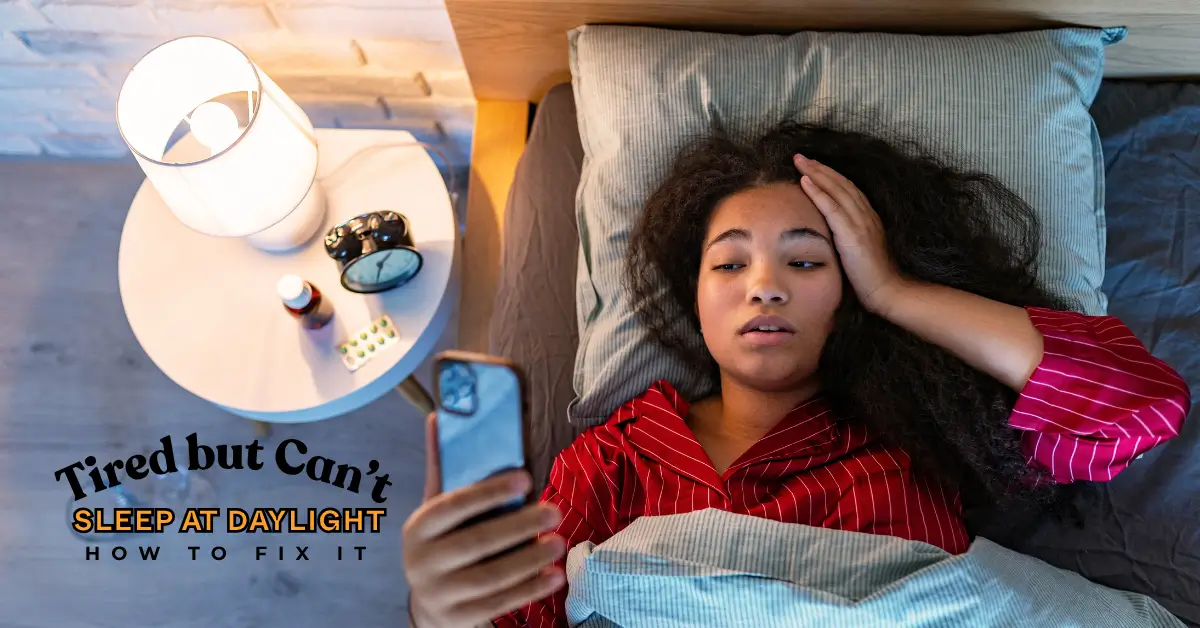
Create a Better Daytime Sleep Environment
Daytime sleep has an obvious problem:
The world is awake.
Sunlight enters the room. Neighbors make noise. Phones buzz. Family members begin their day.
Your bedroom should send your brain a strong signal that it is time to rest.
Keep Your Bedroom Dark, Quiet, and Comfortable
Helpful options include:
- Blackout curtains or blinds
- An eye mask
- Earplugs or white noise
- A comfortable room temperature
- Phone notifications turned off.
- A predictable pre-sleep routine
NIOSH recommends a comfortable, dark, and quiet sleep environment and suggests communicating your sleep needs to family and others in the household.
If you live with other people, a simple agreement can help:
“When my bedroom door is closed, please treat that as my sleep time unless something is urgent.”
Protecting your sleep is a reasonable part of working nights.
Use Light Carefully
Light is one of the strongest environmental signals affecting your circadian rhythm. That makes it useful for night workers, but timing matters.
NIOSH explains that strategically managing light can influence alertness and sleep but also warns that reducing alerting light before driving home may be dangerous if you are already very sleepy.
So avoid rigid online advice telling every night worker to get bright light or avoid all morning light at the same time.
Your ideal approach can depend on your shift pattern and sleep schedule.
If you are considering structured bright-light therapy, particularly if you have an eye condition or another medical concern, discuss it with a healthcare professional. The current AASM guideline includes timed light exposure among approaches that may be considered for certain shift-work situations, but recommendations are conditional, and individual circumstances matter.
Most importantly, never make yourself sleepier while driving home.

Eat and Drink With Your Sleep Schedule in Mind
Night work can make meal timing unpredictable. You may wake in the afternoon, eat a large meal late at night, and snack again before bed.
You do not need a special “night shift diet.” Instead, aim for regular, balanced meals that fit your schedule.
Include foods such as:
- Vegetables
- Fruits
- Whole grains or other high-fiber carbohydrates
- Protein-rich foods
- Nuts and seeds
- Other nutrient-dense foods you enjoy
If you are hungry before daytime sleep, a small meal or snack may be more comfortable than going to bed very hungry. NIOSH suggests a small meal containing protein and carbohydrate when hunger may interfere with sleep and advises avoiding heavy meals close to bedtime.
Pay Attention to Caffeine
Caffeine can help some people stay alert during a night shift, but it can also interfere with later sleep.
NIOSH recommends avoiding caffeine for several hours before planned sleep, with individual sensitivity varying.
A practical approach is to think about your next sleep period before reaching for another cup of coffee.
Caffeine should not be used to hide severe sleep deprivation when you are too tired to drive or work safely. (Risks from Not Getting Enough Sleep: Impaired Performance, 2020)
Exercise Without Destroying Your Recovery
Exercise can support fitness, mood, and overall health, but it should not come at the expense of needed sleep.
After a demanding night shift, recovery may be more important than completing a hard workout.
On days off, choose activities you can maintain, such as:
- Walking
- Cycling
- Strength training
- Stretching
- Mobility exercises
- Another activity you enjoy
The goal is consistency, not compensating for an entire week with one exhausting workout.
Think of exercise as support for your health, not punishment for your schedule.
Make Family and Social Time Work
Night work affects more than sleep. Family responsibilities, friendships, appointments, hobbies, and social events still matter.
Instead of trying to attend everything, protect your main sleep period and decide which activities matter most.
You might miss an early breakfast but join your family for lunch. You might skip a morning appointment and choose an afternoon activity instead.
Tell family members when you need uninterrupted sleep and when you are available.
A simple boundary can help:
“I know it’s daytime for you, but this is my sleep time. Please don’t wake me unless it’s urgent.”
The goal is not a perfect schedule. It is a workable compromise between recovery and real life.
A Simple Two-Day Days-Off Plan
Imagine you have two days off after several consecutive night shifts.
| Phase | Main Goal |
| After the final night shift | Get home safely and prioritize sleep |
| Recovery sleep | Dark, quiet, comfortable bedroom |
| After waking | Hydrate and eat a balanced meal |
| Afternoon/evening | Gentle movement, family time, or relaxation |
| Later evening | Keep stimulation controlled if preparing for sleep |
| Before returning to nights | Consider a nap if it fits your routine |
| Next shift | Use planned meals, hydration, breaks, and fatigue awareness |
These are general examples, not medical instructions.
Your actual schedule should depend on your shift times, commute, sleep needs, family responsibilities, and whether you work permanent or rotating nights.
The priorities are:
Safety → sleep → nutrition → movement → personal life
Night Shift Days-Off Checklist
Before your next days off, ask yourself:
- ☐ Did I protect enough time for sleep?
- ☐ Did I avoid staying awake excessively long after my final shift?
- ☐ Is my bedroom dark and quiet enough?
- ☐ Have I told my household when I need uninterrupted sleep?
- ☐ Am I using caffeine early enough in my shift?
- ☐ Am I eating regular, balanced meals?
- ☐ Am I moving without exhausting myself?
- ☐ Have I made time for something enjoyable?
- ☐ Do I have a safe plan if I become too sleepy to drive?
- ☐ Do I need professional advice about ongoing sleep problems?
You do not need to check every box perfectly.
The checklist is simply a reminder that recovery involves more than just sleeping whenever you collapse into bed.
When Your Days Off Are Not Restoring You
Sometimes the problem is bigger than an imperfect weekend routine.
Consider speaking with a healthcare professional if you regularly:
- Have difficulty falling asleep
- Wake repeatedly or too early.
- Feel excessively sleepy during the day.
- Remain exhausted despite allowing enough time for sleep.
- Struggle to concentrate because of sleepiness.
- Have difficulty staying awake while driving
- Notice that sleep problems are seriously affecting work or daily life.
Not every night worker with poor sleep has shift work disorder.
The American Academy of Sleep Medicine’s current guideline describes shift work disorder as a condition associated with work schedules that overlap with a person’s usual sleep period and involve symptoms such as excessive sleepiness or insomnia. (Shift Work Disorder Symptoms: Signs to Watch For, 2026)
It also emphasizes that not every shift worker develops the disorder.
A healthcare professional can help determine whether your symptoms are related to your work schedule or to another sleep or health issue.
Take Drowsy Driving Seriously
Driving home after a night shift deserves special attention.
Warning signs of dangerous sleepiness include difficulty focusing, heavy eyelids, repeated yawning, wandering thoughts, or difficulty keeping your head up. NIOSH advises stopping driving when these symptoms occur rather than trying to force yourself to stay awake.
If you are too sleepy to drive safely, arrange another way home, ask someone else to drive, or stop somewhere safe to rest.
Your schedule can wait. Safety cannot.
Conclusion on How to Protect Your Days Off
Protecting your days off starts with changing how you think about recovery.
Your days off are not simply the days when you stop working. They are part of the routine that helps determine how well you sleep, how much energy you have, and how safely you return to your next shift.
For permanent night workers, avoiding dramatic reversals between daytime and nighttime schedules may make the transition easier. NIOSH suggests a compromise approach in which some sleep hours remain consistent between workdays and days off.
For rotating workers, the situation can be different. A completely stable night schedule may not be realistic, so the focus may need to be on adequate sleep, fatigue management, and safe transitions.
There is no perfect routine.
Instead, focus on a few basics:
Protect your sleep.
Create a better sleep environment.
Use light and caffeine thoughtfully.
Eat reasonably well.
Move your body without exhausting yourself.
Make time for people and activities that matter.
And never ignore dangerous fatigue.
You do not need a complicated recovery routine.
You need one that is safe, realistic, and repeatable.
FAQs on How to Protect Your Days Off
Q. Should night-shift workers stay on their night schedule on their days off?
There is no single answer for everyone. Permanent night workers may benefit from keeping some sleep hours consistent between workdays and days off instead of completely reversing their schedule. NIOSH describes a compromise approach for this situation. Rotating or frequently changing workers may need a different strategy.
Q. How much sleep should a night shift worker get?
The goal is to allow enough time for adequate sleep and recovery, rather than deliberately restricting sleep to adhere to a particular schedule. Night workers often have difficulty getting sufficient sleep, so protecting sleep opportunities is important. NIOSH notes that most adults need about 7–8 hours of sleep for optimal alertness, although individual needs vary.
Q. Is it bad to switch back to a daytime schedule every weekend?
Repeatedly switching between daytime and nighttime sleep can be difficult for some permanent night workers. NIOSH describes frequent switching as potentially producing a jet-lag-like state. A compromise schedule may be easier for some permanent night workers, although individual circumstances differ.
Q. Should I sleep after my last night shift?
In many cases, prioritizing sleep soon after your final night shift can help you recover. NIOSH advises night workers to go to bed soon after arriving home rather than using the early morning for chores or errands that reduce sleep time.
Q. What should I do if I am extremely sleepy while driving home?
Take it seriously. Drowsy driving can impair attention, reaction time, and judgment. If you are struggling to stay awake, stop driving as soon as it is safe and arrange another way home or rest before continuing. NIOSH emphasizes that severely sleep-deprived people cannot reliably force themselves to remain awake.
A Final Reminder
Night work is challenging enough without feeling guilty about needing recovery.
You do not have to follow a perfect schedule or copy another night worker’s routine. Start with the basics:
Sleep enough.
Protect your recovery time.
Reduce unnecessary fatigue.
Make your environment sleep-friendly.
Put safety before your schedule.
If persistent sleep problems are affecting your daily life, getting professional advice is a sensible next step.
That is not failure.
It is part of taking care of yourself while working a schedule that challenges your natural sleep rhythm.
Read more about night shift workers’ health.