
Learn essential financial planning steps to manage your budget, debt, savings, investments, and long-term goals with confidence.
Money can feel stressful when you do not know where it is going.
You may earn a reasonable income and still wonder why there is never enough left at the end of the month. Or you may have savings but no clear plan for what they are meant to achieve.

This is where financial planning can help.
Financial planning is not only for wealthy people, investors, or business owners. It is a practical way to understand your money, set meaningful goals, prepare for unexpected expenses, manage debt, and make informed decisions about your future.
You do not need a perfect income or a complicated spreadsheet to begin. You need a clear picture of where you are and a realistic plan for where you want to go.
Read time: 9–10 minutes
Quick Summary
- Start by understanding your income, expenses, assets, and debts.
- Set specific, realistic financial goals.
- Create a budget that reflects your actual lifestyle.
- Build savings for unexpected expenses.
- Prioritize high-interest debt.
- Look for ways to increase income and control spending.
- Save and invest according to your goals and time horizon.
- Protect your finances with appropriate insurance and secure accounts.
- Review your financial plan regularly and adjust it as your life changes.
What Is Financial Planning?
Financial planning is the process of organizing your money around your current needs and future goals.
It involves looking at what you earn, what you spend, what you owe, what you own, and what you want to accomplish financially.
Investor.gov recommends starting with an honest assessment of your financial situation, including your assets and liabilities, followed by tracking income and expenses.
Your plan might include goals such as
- Paying off debt
- Building emergency savings
- Buying a home
- Paying for education
- Starting a business
- Preparing for retirement
- Supporting your family
- Having more financial flexibility
The right plan will look different for every person.
Why Financial Planning Matters
Without a plan, financial decisions can easily become reactive.
An unexpected bill may go on a credit card. A raise may disappear into lifestyle spending. A long-term goal may keep getting pushed back.
Financial planning gives your money a purpose.

It can help you see whether your current spending supports your priorities and where you may need to adjust.
More importantly, a financial plan does not have to be perfect. It should be flexible enough to change when your income, family, expenses, or goals change.
9 Essential Steps to Take Control of Your Money
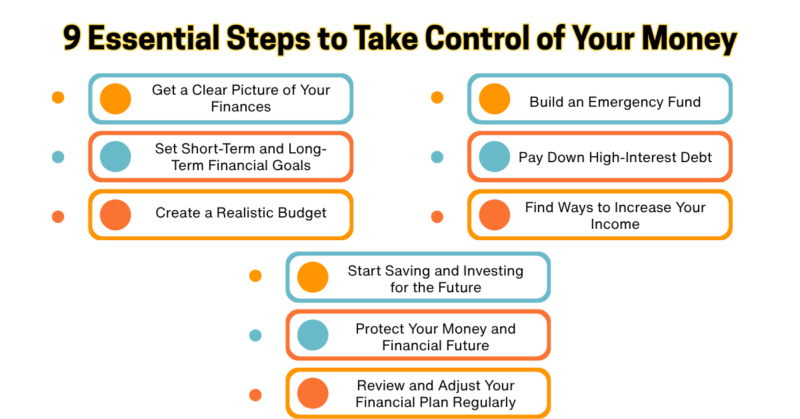
Take control of your money by following a clear, step-by-step financial plan that prioritizes your foundational security before growing wealth.
1. Get a Clear Picture of Your Finances
Before changing your financial habits, find out where you currently stand.
Write down your main sources of income and your regular expenses. Then list your savings, investments, property, loans, credit card balances, and other debts.
You can also calculate your net worth by subtracting what you owe from what you own.
Do not worry if the result is negative. It is simply a starting point.
Investor.gov recommends reviewing your financial position and updating your net worth statement over time.
2. Set Short-Term and Long-Term Financial Goals
A budget becomes much easier to follow when you know what you are working toward.
Start by separating your goals into time frames.
Short-term goals might include building savings or paying off a particular debt.

Medium-term goals could include buying a car, starting a business, or saving for education.
Long-term goals might include buying a home or preparing for retirement.
Give each goal a clear purpose and, when possible, a target amount and time frame. Investor.gov recommends defining financial goals and considering how long you have to achieve each one.
3. Create a Realistic Budget
A budget is not meant to make life miserable.
It is simply a plan for how you will use your income.
Start by tracking what comes in and what goes out. Include fixed expenses, variable spending, debt payments, savings, and irregular costs.
Do not forget expenses that appear only occasionally, such as annual fees, repairs, gifts, school costs, or insurance payments.
The CFPB recommends tracking income, spending, and bill timing before creating a working budget.
If your budget leaves no room for savings, look for realistic changes rather than trying to cut everything at once.
A budget you can actually maintain is more useful than an extreme plan you abandon after two weeks.
4. Build an Emergency Fund
Unexpected expenses are part of life.
A medical bill, job loss, car repair, home problem, or urgent family expense can quickly disrupt a household budget.
An emergency fund creates a financial cushion for these situations.
The amount you need depends on your income, expenses, job stability, family responsibilities, and other circumstances.
The CFPB recommends setting aside money for unplanned expenses and notes that even small amounts can protect you from financial shocks.

Keep emergency savings somewhere accessible and separate enough from everyday spending that you are less tempted to use it for non-emergencies.
5. Pay Down High-Interest Debt
Debt can make it difficult to move forward financially, especially when high interest causes balances to grow quickly.
Start by listing your debts, including:
- Current balance
- Interest rate
- Minimum payment
- Payment due date
Paying down expensive debt can free up money for future goals.
Investor.gov specifically recommends addressing high-interest credit-card debt and warns that investment returns are not guaranteed to outweigh high interest charges.
You do not necessarily need to eliminate every type of debt before saving or investing. Your situation matters. The important thing is to understand the cost of your debt and make a deliberate repayment plan.
6. Find Ways to Increase Your Income
Financial planning is not only about spending less.
Increasing your income can also create more room for saving, debt repayment, and long-term goals.
Depending on your situation, possibilities might include:
- Asking for a pay review
- Developing valuable professional skills
- Pursuing additional qualifications
- Applying for better-paying roles
- Taking on suitable freelance work
- Starting a small business
- Turning an existing skill into an additional income stream
Avoid treating every side hustle as a guaranteed path to wealth. The goal is to find sustainable ways to improve your earning potential without creating unnecessary stress.
7. Start Saving and Investing for the Future
Saving and investing serve different purposes.
Savings are generally better suited to money you may need soon, particularly emergency funds and short-term goals.
Investing is generally intended for longer-term goals and involves risk. The value of investments can rise and fall, and you can lose money.
Investor.gov emphasizes considering your goals, time horizon, and risk tolerance before investing. It also highlights diversification as one way to manage investment risk.
You don’t need to understand every investment product before you start learning. Start with the basics and avoid making decisions based on promises of quick or guaranteed returns.
8. Protect Your Money and Financial Future
Building wealth is only part of financial planning. Protecting what you have matters too.
Review whether you have appropriate protection for major risks in your life, such as health problems, property damage, disability, or loss of income.
Also protect your financial accounts.
Use strong, unique passwords, enable available security features, and be cautious about investment offers that promise unusually high returns with little risk.
Investor.gov warns that guaranteed high returns and pressure to invest quickly are common warning signs of investment fraud.

9. Review and Adjust Your Financial Plan Regularly
Your financial plan should change as your life changes.
A new job, marriage, child, move, business, major purchase, or income change can affect your priorities.
Set aside time periodically to review:
- Income
- Spending
- Savings
- Debt
- Emergency fund
- Investments
- Financial goals
- Insurance and other protections
You do not have to rebuild your entire plan every month. A simple review can help you catch problems before they get bigger.
How to Create a Financial Plan When Money Is Tight
You do not need a high income to start planning.
When money is tight, focus on the basics first.
Start with essentials. Identify housing, food, utilities, transportation, healthcare, and other necessary expenses.
Track spending. Small purchases may not seem important on their own, but tracking them can reveal patterns.

Create a small savings habit. Even a modest amount can begin building a financial cushion.
Address expensive debt. Make a realistic repayment plan while keeping essential bills paid on time.
Look at income opportunities. Consider whether improving skills, changing jobs, or adding suitable work could strengthen your financial position.
Most importantly, avoid comparing your financial progress with someone else’s. Your plan should reflect your income, responsibilities, goals, and circumstances.
Common Financial Planning Mistakes to Avoid
Trying to Change Everything at Once
A complete financial makeover may sound motivating, but it can quickly become overwhelming.
Choose a few important actions and build from there.
Ignoring Small Expenses
Small recurring purchases can add up. Tracking them gives you information rather than forcing you to eliminate every enjoyable expense.
Focusing Only on Saving
Saving is important, but financial planning also includes debt, income, protection, investing, and long-term goals.
Taking Investment Risks You Do Not Understand
Never invest simply because someone says an opportunity is guaranteed or “cannot lose.”
Learn how the investment works, what could go wrong, what fees apply, and whether it matches your goals and risk tolerance.

Never Reviewing Your Plan
A financial plan that worked five years ago may not fit your life today.
Review it and update it as your circumstances change.
A Simple Monthly Financial Planning Checklist
At the end of each month, take a few minutes to ask:
- Did my income change?
- Where did most of my money go?
- Did I save anything?
- Did my debt increase or decrease?
- Is my emergency fund growing?
- Did I make progress toward an important goal?
- Are there expenses I should plan for next month?
- Does my current budget still fit my life?
This simple check-in can keep your finances from becoming something you only think about when there is a problem.

FAQs About Financial Planning
Q. What is the first step in financial planning?
Start by understanding your current financial position. List your income, regular expenses, savings, assets, and debts. This gives you a starting point to set realistic goals and create a workable plan.
Q. How can I start financial planning with a low income?
Begin with the basics: track spending, cover essential expenses, build even a small emergency reserve, manage expensive debt, and look for realistic ways to improve income. A financial plan can be useful at any income level.
Q. How much should I keep in an emergency fund?
No single amount works for everyone. Consider your essential expenses, income stability, dependents, health needs, and likely unexpected costs. The CFPB recommends thinking about your personal circumstances when deciding how much to save.
Q. Should I save or pay off debt first?
It depends on the type of debt and your overall situation. High-interest debt can be particularly costly, while having some emergency savings can help prevent new debt when unexpected expenses arise.
Consider both needs rather than treating the decision as one-size-fits-all.
Q. When should I start investing?
Investing generally makes more sense when you have identified your goals, understand your time horizon and risk tolerance, and have a plan for managing more immediate financial needs. All investments carry risk.
Q. How often should I review my financial plan?
A simple monthly check can help you monitor spending and progress. A more detailed review can be useful when your income, expenses, debt, family situation, or financial goals change.
Final Thoughts
Financial planning is not about having a perfect budget or knowing everything about investing.
It is about knowing where your money stands, deciding what matters most, and giving your income a clear purpose.
Start with the basics. Understand your finances, set realistic goals, create a budget, build emergency savings, manage high-interest debt, and learn how to save and invest for the future.
Then keep adjusting your plan as your life changes.
Small, consistent financial decisions can create more control and confidence over time.
Educational note: This article provides general financial education, not personalized financial, investment, tax, or legal advice. Financial products, laws, taxes, and protections vary by country. Consider qualified local professional advice before making major financial decisions.
Read more articles on health and wellness.