
Learn how to close the gender pay gap, improve pay equity, support women’s careers, and build greater financial independence.
Imagine working hard, gaining experience, taking on more responsibility, and still earning less than someone doing comparable work simply because of gender.
For many women, the gender pay gap is not just a number on a report. It can affect everyday choices, career growth, savings, retirement security, and the ability to build financial independence.
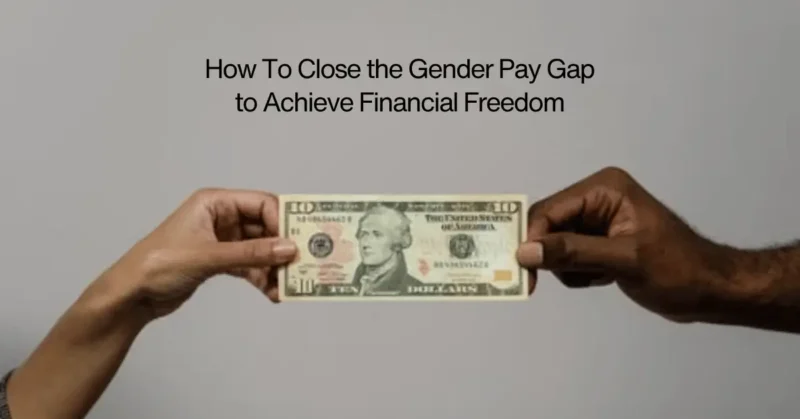
The good news is that the gap is not impossible to change. Employers, governments, families, and individuals all have a role to play. Better pay transparency, fair hiring and promotion practices, stronger care policies, and access to career opportunities can help create a more equal workplace.
At the same time, women can take practical steps to strengthen their earning power, understand their compensation, negotiate when appropriate, and build greater financial security.
Read time: 10–12 minutes
Quick Summary
- The gender pay gap is the difference between the average earnings of women and men.
- It is influenced by occupation, working hours, career progression, unpaid care, workplace practices, and discrimination.
- Globally, women in wage employment earn about 20% less than men on average, according to the ILO.
- Pay transparency can help employers and workers identify unfair differences.
- Equal pay policies need to be supported by fair hiring, promotion, childcare, parental leave, and objective job evaluation.
- Women can also work toward financial independence through career development, informed salary discussions, saving, and long-term financial planning.
Understanding the Gender Pay Gap
The gender pay gap is a broad measure of the difference between the earnings of women and men.
It is important to understand that the gap does not automatically mean that every woman is paid less than every man doing exactly the same job. Pay differences can reflect occupation, seniority, hours worked, industry, experience, and other factors.
However, research shows that unequal opportunities and workplace practices can also contribute to persistent differences in earnings.
The ILO reported in 2026 that women in wage employment globally earn about 20% less than men on average. The organization also notes that gaps can be wider for women with children and women working in informal employment.
The OECD reports that its member countries continue to experience a significant gender wage gap. Its latest work also highlights pay transparency and equal-pay audits as tools that can help employers identify and address disparities.
Why Equal Pay Matters
Equal pay is about more than receiving the same amount on a monthly paycheck.
Earnings influence how much a person can save, invest, spend on education, handle emergencies, and prepare for retirement.
A small difference in salary can also become much larger over time.
For example, someone who consistently earns less may have:
- Less money available for savings
- Smaller retirement contributions
- Fewer opportunities to invest
- Less financial flexibility when changing jobs
- Greater difficulty building an emergency fund
- Lower long-term earning potential if promotions are missed
The effects can become especially important when women take time away from paid work for childcare or other unpaid responsibilities.
Financial independence does not mean having a particular income level. It means having enough financial control and resources to make important life decisions without being completely dependent on another person’s income.
What Causes the Gender Pay Gap?
There is no single cause. Several factors can overlap.
Occupational Segregation
Women and men are often concentrated in different industries and occupations.
Some traditionally female-dominated jobs, such as care and service work, tend to be lower paid than many male-dominated occupations.
At the same time, women can be underrepresented in higher-paying technical, executive, and senior leadership positions.
The World Economic Forum’s 2025 Global Gender Gap Report found that economic participation and opportunity remained one of the major areas of gender disparity globally.
Improving access to education, training, technology, leadership opportunities, and higher-paying fields can therefore be part of a broader solution.
Unpaid Care Work
Cooking, cleaning, childcare, and caring for older family members are essential forms of work, but they are often unpaid.
Women continue to perform a disproportionate share of unpaid care work in many societies.
This can affect the amount of time available for paid employment, overtime, professional development, and career advancement.
The OECD identifies unequal unpaid work as one of the factors contributing to gender differences in employment and earnings.
Lack of Pay Transparency
When employees do not know how salaries are determined, it can be difficult to identify unfair differences.
A worker may not know whether colleagues in similar roles earn more, what qualifications are associated with higher salaries, or what salary range applies to a position.
The OECD’s 2026 report says pay transparency is becoming more common and notes that 21 of 38 OECD countries currently mandate gender pay-gap reporting by private-sector employers, with that number expected to rise by the end of 2026.
Discrimination and Bias
Gender bias can influence recruitment, salary decisions, performance reviews, promotions, and access to leadership opportunities.
Not every pay difference is evidence of discrimination. But unexplained differences can deserve closer examination.
Fair systems should focus on qualifications, responsibilities, performance, experience, and the value of the work rather than assumptions about gender.

Practical Ways to Close the Gender Pay Gap
Closing the gap requires action at several levels.
Strengthen Equal Pay Laws and Protections
Laws can establish the principle that women and men should receive equal remuneration for work of equal value.
But laws are only effective when workers can understand their rights and employers are held accountable for following them.
The ILO’s 2026 guidance emphasizes legislation, labor inspection, social protection, wage policies, social dialogue, and objective job evaluation as part of a broader approach to pay equity.
Increase Pay Transparency
Employers can make compensation systems easier to understand by:
- Publishing salary ranges where appropriate
- Using clear criteria for raises
- Reviewing pay by gender
- Conducting regular pay audits
- Explaining promotion requirements
- Documenting compensation decisions
Transparency does not solve every pay problem, but it makes unexplained differences easier to identify.
Support Women in Leadership
Leadership roles often come with higher salaries, greater decision-making power, and stronger career opportunities.
Organizations can improve access to leadership by creating fair promotion processes, providing professional development, and ensuring qualified women have access to important projects and advancement opportunities.
The ILO reported that women held 30.5% of managerial positions globally in 2025, despite representing 40.1% of employment.

Challenge Traditional Gender Roles
Career opportunities can be affected by assumptions about who should provide care, earn money, or take career breaks.
Sharing household responsibilities more fairly can give both partners greater freedom to pursue education, employment, and career development.
This is not simply a workplace issue. Families and communities also influence how work and care are divided.
Improve Family-Friendly Policies
Childcare, paid parental leave, flexible work arrangements, and return-to-work support can help reduce career interruptions.
These policies can benefit fathers as well as mothers by making caregiving a shared responsibility rather than treating it as primarily a woman’s responsibility.
The OECD identifies affordable childcare and parental-leave policies as important elements in supporting women’s continued participation in the workforce.
How the Gender Pay Gap Affects Financial Freedom
Financial independence is closely connected to earning power.
If someone earns less throughout their working life, the consequences can extend beyond monthly income.
Lower earnings may mean less money available for:
Emergency savings: Building a financial cushion can become harder when disposable income is limited.
Retirement: Smaller contributions over many years can reduce the resources available later in life.
Investments: Lower income can reduce the amount available for long-term investing.
Education: Paying for courses, certifications, or further education may become more difficult.
Career choices: A stronger financial position can make it easier to leave an unhealthy workplace or take time to pursue a better opportunity.
For this reason, closing the gender pay gap and improving women’s financial independence are connected goals, even though they are not exactly the same issue.
What Can Employers Do?
Employers can examine their own systems rather than assuming that a pay gap will disappear naturally.
Useful steps include:
- Review compensation data regularly.
- Compare employees doing work of equal or comparable value.
- Create clear salary bands.
- Use consistent promotion criteria.
- Review starting salaries for unexplained differences.
- Track access to leadership and professional development.
- Offer meaningful family-friendly policies.
- Investigate unexplained pay differences.
Objective job evaluation can also help organizations compare the value of different roles based on factors such as skills, responsibility, effort, and working conditions.
The ILO and OECD both identify objective job evaluation and pay transparency as useful components of broader pay-equity strategies.
What Can Women Do to Strengthen Their Financial Independence?
Individual action cannot eliminate a systemic pay gap by itself, but there are practical steps that can strengthen personal financial security.
Know Your Market Value
Research typical compensation for your occupation, experience level, location, and industry.
Look beyond one job advertisement. Compare several reliable sources where possible.
Keep a Record of Your Contributions
Track measurable achievements, new responsibilities, successful projects, qualifications, and positive results.
This information can help when discussing promotions or compensation.
Build Skills With Long-Term Value
Professional development can strengthen earning potential.
Depending on your field, this could include technical skills, management, communication, digital skills, certifications, or specialized training.
Learn Basic Financial Management
Financial independence is not only about earning more.
It also involves understanding:
- Budgeting
- Emergency savings
- Debt management
- Retirement planning
- Investing
- Insurance
- Long-term financial goals
Even small improvements in financial habits can help build greater control over money.
Negotiate When Appropriate
Salary discussions can feel uncomfortable, especially when workplace norms discourage employees from talking about money.
When negotiating, focus on your responsibilities, qualifications, achievements, market information, and the value you bring to the role.
A respectful, evidence-based conversation is generally more useful than comparing yourself emotionally with another employee.

Global Efforts to Promote Equal Pay
The gender pay gap is a global issue, so international organizations have developed frameworks and initiatives to support equal pay and women’s economic participation.
The ILO’s principle of equal remuneration for work of equal value provides an important foundation for pay equity. Its 2026 guidance calls for coordinated action involving governments, employers, workers, labor institutions, and social policies.
The World Economic Forum’s 2025 Global Gender Gap Report also shows that progress differs substantially between countries and across areas such as economic participation, education, health, and political empowerment.
UN Women and UN DESA have also highlighted the economic value of investing in women’s empowerment. Their 2025 Gender Snapshot reported that closing the gender digital divide could generate substantial economic gains while improving outcomes for women and girls.

The Gender Pay Gap in Pakistan
The issue is particularly relevant in Pakistan.
In July 2025, the ILO reported on Pakistan’s first national Gender Pay Gap Report and National Action Plan for Equal Pay.
The report found that women in wage employment earned approximately 25–30% less than men, depending on the wage measure used. The gap was reported as wider in the informal economy, where it reached around 40%. The report identified occupational segregation, informal employment, and discriminatory practices among important factors.
The report also noted that a substantial portion of the gap remained unexplained by observable characteristics such as education, skills, or occupation.
These findings highlight why closing the gap requires more than encouraging women to negotiate higher salaries. Broader labor-market conditions, legal protections, formal employment, workplace practices, and access to opportunities also matter.

Building a More Financially Secure Future
Closing the gender pay gap is a shared responsibility.
Governments can strengthen laws and enforcement. Employers can improve pay transparency and promotion systems. Families can share unpaid care more fairly. Educational institutions can expand access to skills and career opportunities.
Women can also strengthen their own financial position by understanding their compensation, developing valuable skills, planning their finances, and making informed career decisions.
No single action will eliminate the gender pay gap.
Progress is more likely when fair workplace systems and individual financial knowledge work together.
FAQs on How to Close the Gender Pay Gap
Q. What is the gender pay gap?
The gender pay gap is the difference between the average earnings of women and men. It can reflect differences in occupations, working hours, seniority, career interruptions, industry, and other factors, as well as discrimination or unequal opportunities.
Q. Why does the gender pay gap still exist?
Several factors contribute, including occupational segregation, unequal unpaid care responsibilities, differences in career progression, pay opacity, workplace discrimination, and unequal access to leadership and higher-paying roles.
Q. How can employers reduce the gender pay gap?
Employers can conduct pay audits, improve salary transparency, use objective job evaluations, create consistent promotion criteria, review hiring and starting salaries, and provide family-friendly workplace policies.
Q. Does pay transparency help close the gender pay gap?
It can. Transparent salary information can make unexplained differences easier to identify and can give employers and employees better information for addressing pay disparities.
The OECD identifies pay reporting and transparency as important tools, while also stressing that their effectiveness depends on how they are designed and implemented.
Q. How can women work toward financial independence?
Women can strengthen financial independence by increasing earning potential through skills and career development, understanding compensation, negotiating when appropriate, building emergency savings, managing debt, and making long-term financial plans.
Q. Can the gender pay gap be completely eliminated?
Closing the gap requires sustained action across workplaces, laws, education, care systems, and broader labor markets. Progress is possible, but current global data show that substantial economic gender disparities remain. The ILO reported in 2026 that women globally still earn about 20% less than men in wage employment.
Final Thoughts on How to Close the Gender Pay Gap
The gender pay gap is not simply a workplace statistic. Earnings affect financial security, career choices, savings, retirement, and the ability to make independent decisions.
Creating fairer workplaces requires more than telling women to negotiate better salaries. Transparent pay systems, fair promotion practices, equal opportunities, affordable care, strong legal protections, and objective job evaluation all have a role.
At the individual level, understanding your value, developing useful skills, managing money wisely, and planning for the future can help strengthen financial independence.
Change may take time, but every transparent salary policy, fair promotion decision, accessible career opportunity, and informed financial choice can contribute to a more equitable working life.
Read more articles on health and wellness.